


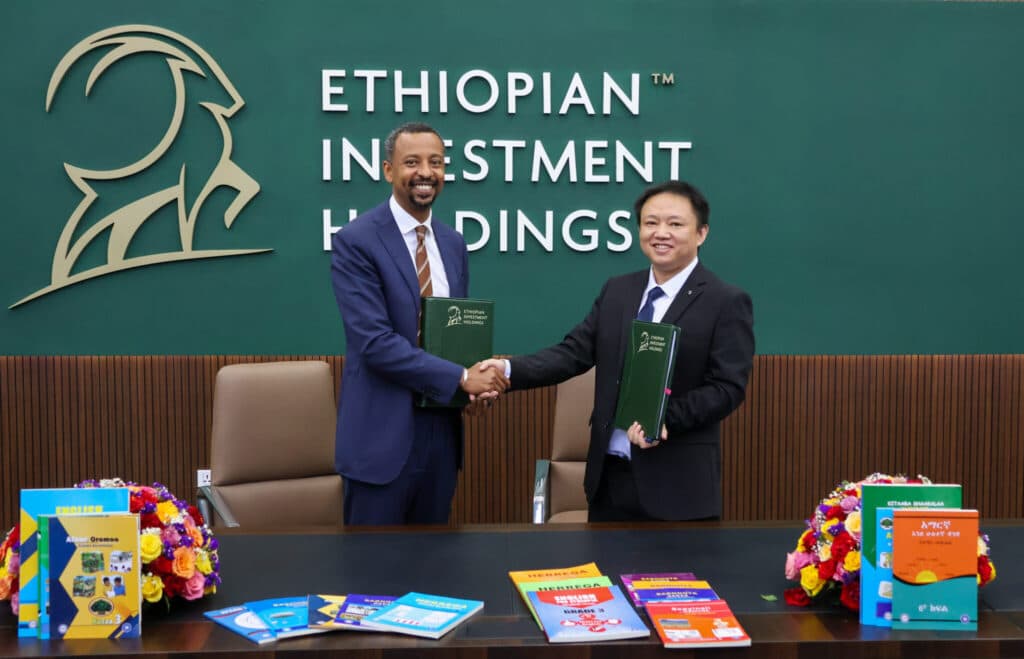
Ethiopian Investment Holdings (EIH), the country’s sovereign wealth fund, has signed a shareholders’ agreement with China-based TW Holding Limited to set up a joint venture that will build and run a commercial textbook printing and publishing facility in Ethiopia, the fund announced on 25 November 2026.
Under the agreement, TW Holding will own 51% of the new company and EIH will own 49%. The first phase of the project is estimated to cost USD 30 million.
Who brings what
TW Holding, as the majority partner, will supply the technical know-how, printing technology, machinery and operating experience, and will lead both the construction of the facility and its day-to-day operation.
The plant is expected to handle the full production chain: printing, binding, finishing, packaging and distribution. Its output will include school textbooks and teachers’ guides, as well as other books.
Closing the textbook gap
EIH frames the deal as a response to a long-standing mismatch between how many textbooks Ethiopia needs and how many it can print locally, a gap that has kept the country dependent on imported finished books. Producing at home, the fund says, should make textbook supply more reliable, improve quality and affordability, strengthen the domestic supply chain and keep more of the value inside the Ethiopian economy.
The timing ties into the growth of the education system, which continues to drive steady demand for learning materials.
Strengthening domestic production capacity is an important part of building a more resilient and competitive economy. This partnership is intended to address critical gaps in our country’s textbook printing industry while supporting the needs of our portfolio companies. It also creates an opportunity to bring in international expertise and technology, develop local capabilities and build a platform with potential to serve markets beyond Ethiopia.
Dr. Brook Taye, CEO, Ethiopian Investment Holdings
Eyes on the wider continent
Beyond the home market, the partners see the venture as a possible base for supplying other African markets, though EIH notes that any expansion will depend on commercial considerations.
The fund says the deal fits its mandate of backing strategic investments that build productive capacity, encourage technology transfer and generate long-term economic value for Ethiopia.


Comments