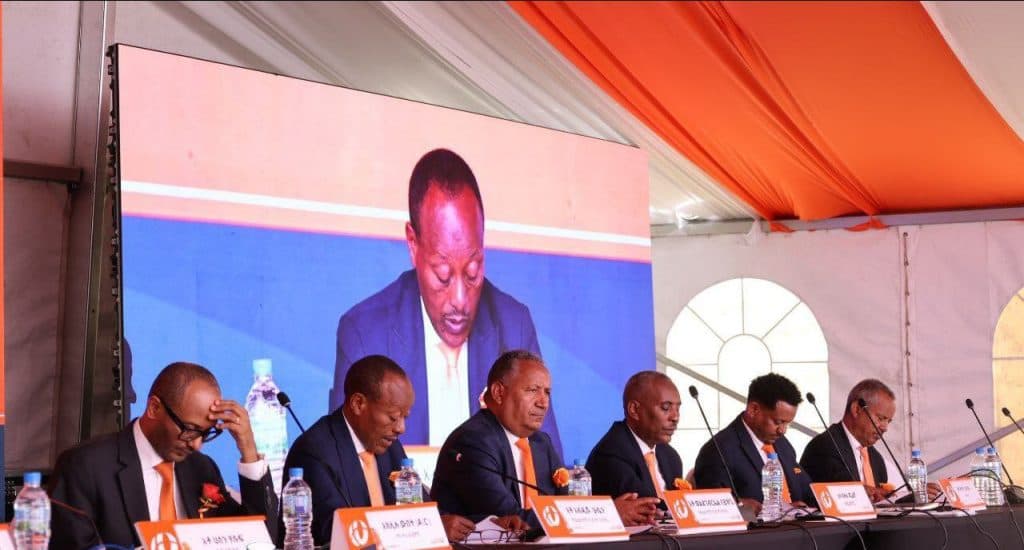
Wegagen Bank S.C. reported a 73% year-on-year surge in gross profit to 3.85 billion birr ($66.5 million), marking one of its strongest financial performances in years, the bank said on Tuesday. At its annual general meeting held at the Hilton Hotel, Board Chairman Abdishu Hussien said the bank’s earnings were driven by robust income growth,
Ethiopia’s Capital Market Authority (ECMA) has launched an Initial Public Offering (IPO) Clinic to help local companies prepare for listings and equity issuance, in a move aimed at accelerating the country’s nascent capital market development. The initiative, backed by the World Bank, seeks to address gaps in regulatory understanding and market readiness as Ethiopia works
Ethiopia’s capital market regulator on Wednesday licensed three new financial services firms, bringing the total number of licensed entities to eleven as the country continues to develop its capital markets. The newly licensed firms are First Addis Investment Bank PLC, which was granted an investment banking license, and Ignite Capital PLC and Zuri Capital S.C.,
Wegagen Capital Investment Bank has boosted its paid-up capital to 1 billion birr, more than doubling its initial 385 million birr, the lender said at its inaugural shareholders’ meeting on Monday. The assembly, held at Kuriftu Hotel & Resorts’ African Village venue, marked the first annual gathering since the institution became the country’s first private
KEFI Gold and Copper Plc said its Tulu Kapi Gold Project in western Ethiopia remains on track to enter full development in October 2025, as a US$340 million financing package nears final commitment. The London-listed company said board approvals for a US$240 million debt facility from two co-lenders have been secured, with formal signing expected
The Ethiopian Commodity Exchange (ECX) has fully implemented an online trading system, allowing market participants to trade agricultural commodities remotely for the first time, officials said. The digital platform, introduced in April, enables traders to buy and sell from any location without physical contact. ECX says the system is designed to improve efficiency, transparency, and
Ethiopia’s interbank money market has surpassed 1 trillion birr (ETB) in total transaction volume less than a year after its launch, marking a major step in efforts to modernize the country’s tightly controlled financial system. The platform, launched in October 2024 and operated by the Ethiopian Securities Exchange (ESX), allows commercial banks to borrow and
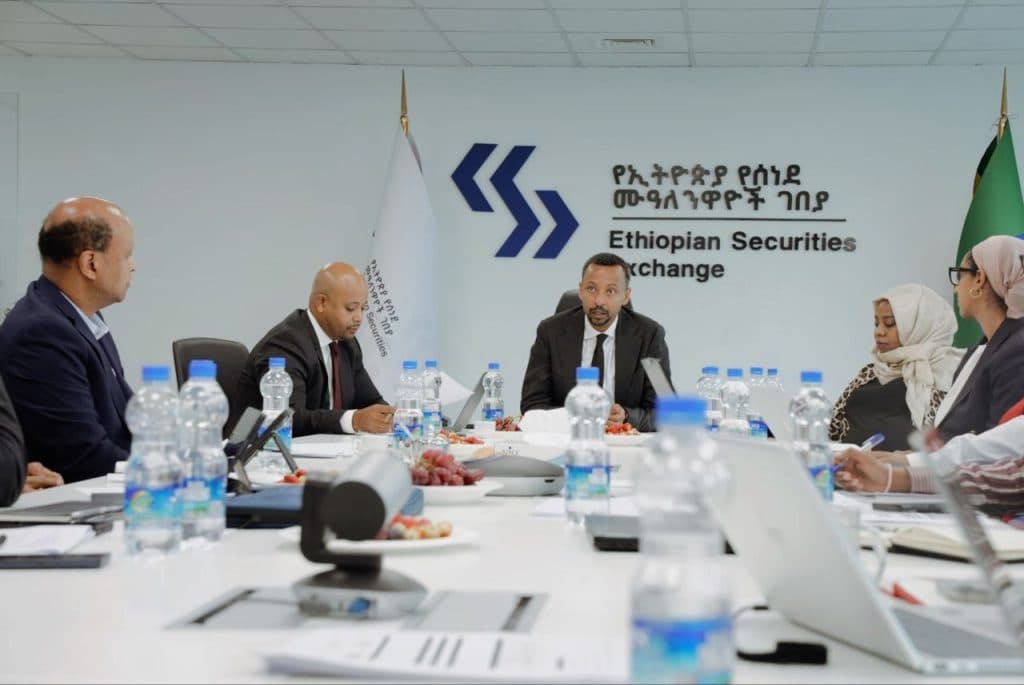
The Ethiopian Securities Exchange (ESX) has announced the appointment of its new Board of Directors, a move that underscores the country’s commitment to building a transparent and inclusive capital market. Dr. Brook Taye, a key figure in Ethiopia’s financial sector reform, has been named Chairperson of the Board, while Mr. Helaway Tadesse will serve as
The African Development Bank (AfDB) and the Ethiopian Capital Market Authority (ECMA) have signed a $400,000 grant agreement to establish Ethiopia’s first public disclosure platform and introduce new financial products at the Ethiopian Securities Exchange (ESX), including exchange-traded funds (ETFs), sukuks, and green bonds. The grant, provided through the Capital Markets Development Trust Fund (CMDTF),
Ethiopia’s capital markets regulator and Nigeria-based Infrastructure Credit Guarantee Company Limited (InfraCredit) signed a memorandum of understanding to explore setting up a credit guarantee facility in the country, a step aimed at boosting long-term financing for infrastructure projects. The Ethiopian Capital Market Authority (ECMA) said InfraCredit will provide technical assistance to draft a concept paper
Ethiopia’s Treasury Bill (T-Bill) market displayed remarkable strength and resilience during July and August 2025, according to the inaugural Monthly Domestic Debt Bulletin released by the Ministry of Finance’s Debt Management Division. The period was marked by strong issuance activity, overwhelming investor interest, and subscription levels that underscore growing confidence in the government’s domestic debt
Ethiopia, a land of striking landscapes and deep cultural heritage, finds itself at a turning point. For generations, the country’s economy has leaned heavily on agriculture. But this reliance also leaves it deeply exposed to the mounting threats of climate change. Droughts, floods, and land degradation are no longer abstract risks—they are lived realities, eroding


 Banking & Finance
 WGBX+5.39%