For decades, COBOL has quietly powered the backbone of the global economy. It runs an estimated 95% of ATM transactions in the United States. It processes airline bookings, government records, insurance claims, and retail payments. Hundreds of billions of lines of COBOL code are still running in production every single day. But there’s a problem:
For fifty years, Ethiopia had no stock exchange. In 1974, private finance was nationalized. Banks became state instruments. Capital allocation was administrative. If you wanted funding, you went to a bank. If the bank didn’t lend, you didn’t grow. That was the system. Then, quietly at first, the architecture began to change. The creation of
Dashen Bank S.C. has opened a new share offering to investors following the approval of its prospectus by the Ethiopian Capital Market Authority (ECMA). According to the approved prospectus, prospective investors can purchase newly issued shares by visiting the bank’s head office and opening a trading account with stock brokers or investment banks licensed by
The Ethiopian Securities Exchange (ESX) has announced significant progress in its listing pipeline, with several major financial institutions moving closer to joining the Exchange’s Main Market. In an official update, ESX confirmed that leading banks have received “Approval in Principle” (AIP) to list their shares, marking a key milestone in Ethiopia’s emerging capital market. Among
The Ethiopian Capital Market Authority (ECMA) has granted a Capital Market Service Provider (CMSP) license to BDO Consulting PLC under the Securities Investment Advisor (Corporate) category. The license, which became effective on February 12, 2026, increases the total number of licensed Capital Market Service Providers in Ethiopia to 16. Of these, nine are authorized to
Ethiopian Airlines Group generated USD 4.4 billion in revenue in the first half of the current fiscal year, marking a 14 percent increase from last year’s record performance, Chief Executive Officer Mesfin Tasew said on Monday. Speaking at a media briefing held at the Ethiopian Skylight Hotel, Mesfin attributed the growth to fleet expansion and
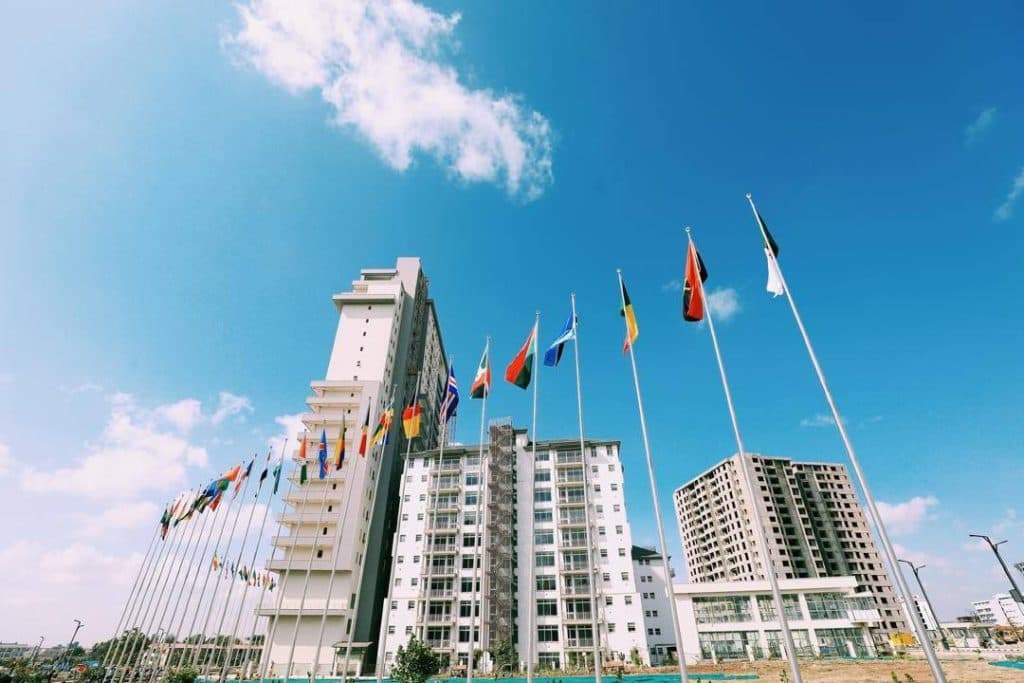
The Ethiopian Capital Market Authority (ECMA) has officially approved and registered the securities of Addis International Convention Center S.C., a key development in Ethiopia’s growing capital market ecosystem. This registration ensures compliance with the Public Offer and Trading of Securities Directive No. 1030/2024, supporting the expansion of Ethiopia’s stock market and securities trading framework. Under
The Ethiopian Capital Market Authority (ECMA) has approved and registered the securities of Bank of Abyssinia S.C., marking an important step in aligning the bank with Ethiopia’s emerging capital market regulatory framework. In a public notice issued pursuant to Articles 4 and 29 of the Public Offer and Trading of Securities Directive No. 1030/2024, the
The National Bank of Ethiopia (NBE) has concluded its largest foreign exchange auction since the July 2024 forex reform, selling USD 500 million to commercial banks in a special auction held on Tuesday. According to the central bank, total bids reached USD 592.3 million, exceeding the allotted amount and underscoring continued strong demand for foreign
Ethiopia’s emerging capital market continues to gain momentum as Gadaa Securities Dealer S.C. and Awash Investment Bank have secured full trading membership at the Ethiopian Securities Exchange (ESX), expanding the roster of licensed market participants. ESX Chief Executive Officer Tilahun Esmael (PhD) described the current phase of the exchange as an “impeccable experience,” highlighting steady
That question sounds abstract, but in an emerging capital market, it cuts to the heart of credibility. As Ethiopia takes its first serious steps toward building a formal securities market, the issue of who regulates, who supervises, and who is supervised is no longer theoretical. It is central to whether investors trust the system at
When you think about stock markets, it’s easy to imagine investors directly buying and selling shares at will. In reality, there’s a crucial middleman making these trades possible: the broker. Brokers are the hidden engines of the financial markets. They connect buyers and sellers, provide market knowledge, and help ensure transactions happen smoothly. In Ethiopia,


 Capital Market