


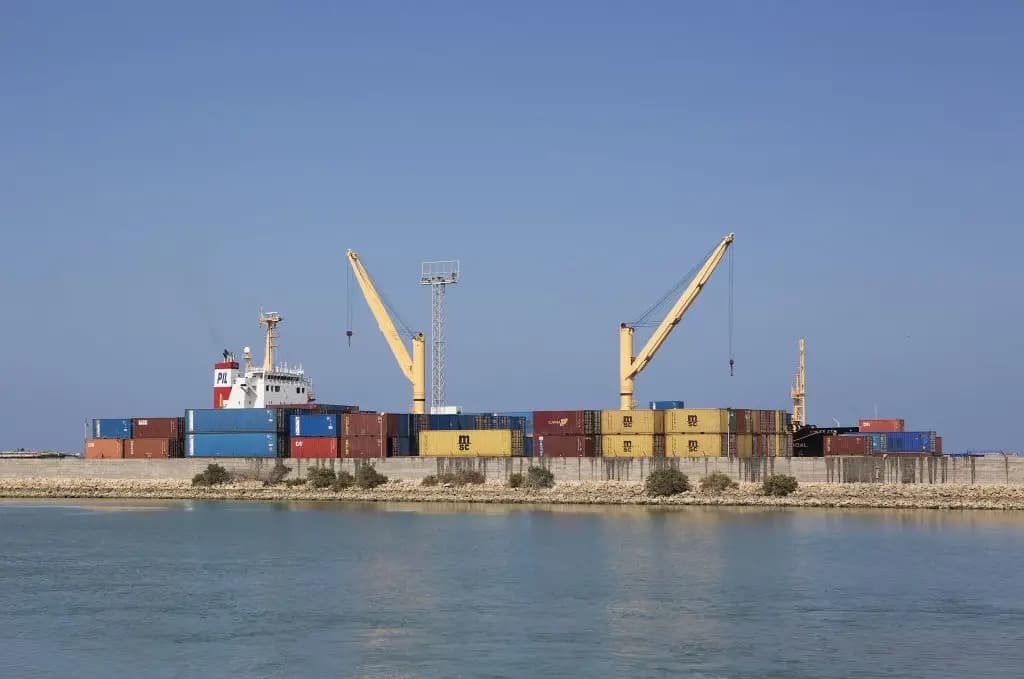
As Ethiopia races to industrialise and plug itself into East Africa’s emerging trade corridors, one structural constraint shapes its economic reality more than any other: maritime access. The country once relied on two Red Sea ports, Assab and Massawa, as its commercial lifeline. By the early 1990s, Assab alone handled more than 80% of Ethiopia’s trade. Independence changed everything. When Eritrea gained its independence in 1993, Ethiopia lost its direct access to the sea. The shift to Djibouti was abrupt, and over time, it became permanent.
Today, over 95% of Ethiopia’s international trade depends on a single foreign port. The implications are not just financial; they shape geopolitics, bargaining power, industrial growth, and the predictability of supply chains.
The Cost of Dependence: When One Port Controls an Economy
Ethiopia spends roughly US$1.5 billion annually on logistics payments tied to Djibouti. That price tag goes beyond port fees. Long inland distances, repeated handling, and limited competition make each container more expensive than it should be. Single-route logistics are efficient only in theory; in practice, they create fragility. A bottleneck in Djibouti, whether political tension, labor strikes, or an infrastructure breakdown, could paralyze Ethiopia’s trade.
More importantly, monopoly dependency weakens Ethiopia’s bargaining position. Without alternatives, tariff negotiations tilt toward Djibouti. Strategic vulnerability turns into financial obligation. Policymakers understand that a logistics system without redundancy is not stable; it’s one incident away from crisis.
How Ethiopia Is Responding: Diversification and Strategic Access
Ethiopia’s strategy has evolved into a two-track approach: short-term diversification and long-term structural access. The debate is framed not merely as economic policy but as an “existential question of sovereignty,” as the government of Ethiopia stated it.
Short-Term Measures: Pragmatic Alternatives
- Berbera as a Hedge
Ethiopia has moved to use the Port of Berbera as a complementary route. Somaliland welcomes the partnership, seeing economic and political recognition benefits. Somalia, however, opposes the arrangement, calling it a violation of territorial integrity and lobbying regional organizations to block it. Despite these reactions, Berbera remains Ethiopia’s most practical short-term relief valve, expanding and backed by international investment.
- Strengthening Inland Logistics
Diversification is meaningless if cargo can’t move efficiently inside the country. Ethiopia is expanding dry ports and multimodal links to absorb trade coming through non-Djibouti routes. Higher utilization of the Ethio-Djibouti Railway also helps cut costs per ton compared to trucking.
Long-Term Measures: Securing Structural Access
- Leases and Joint Operations
Ethiopia’s strategic goal is to secure port access under commercial lease or joint-operation models. The most economically transformative option is Assab. Analysts estimate a well-negotiated arrangement could reduce logistics expenses by up to 40%, improving export competitiveness and reducing import costs.
Eritrea agrees in principleonly under sovereign equality and depoliticized negotiation. The greatest obstacle is mistrust, not economics.
- Infrastructure Equity Swaps
To align incentives, Ethiopia is proposing asset-swap deals: equity in national infrastructure (such as airlines or logistics parks) exchanged for favorable Red Sea access. Shared stakes create mutual benefits, reducing political suspicion and building long-term economic partnerships
What Analysts Are Saying: An Economic Inevitability
Economists increasingly argue that the port question is not political ambition but economic necessity.
Logistics Costs are Choking Growth
Ethiopia’s logistics burden represents 20–30% of product value, far above the global average of 8–12%. High costs make exports like coffee, textiles, and oilseeds less competitive.
Assab Offers the Greatest Long-Term Impact
Assab offers Ethiopia the most transformative long-term economic impact among all potential alternatives. Studies indicate that preferential access to Assab and Massawa could reduce logistics expenses by 15–25%, boosting Ethiopia’s trade volume by 20-30% within five years, per World Bank modeling of similar corridors. This can save the country an estimated US$300–500 million annually by cutting transport and handling costs. The gains go beyond savings: improved access to Red Sea ports would boost export competitiveness, particularly for bulk goods such as fuel, agricultural products, and manufactured exports. Bilateral trade between the two countries could also jump to as much as US$1 billion by 2030, creating a mutually beneficial economic corridor.
Eritrea stands to benefit significantly as well, through increased port revenue, infrastructure investment, local job creation, and expanded market access to Ethiopia’s 120 million consumers. The economic logic is clear: Assab is not just an outlet for Ethiopia’s goods; it is a potential engine of growth for both economies.
Berbera: The Best Short-Term Bet
Berbera stands out as Ethiopia’s most realistic short-term alternative to Djibouti, mainly due to its lower congestion and attractive investment potential. Analysts argue that ongoing expansions, backed by international investors, could significantly reshape Ethiopia’s trade logistics. A report by British International Investment (BII) projects that the port’s growth could support trade equivalent to about 8% of Ethiopia’s GDP, handle up to 32% of the country’s national trade by 2035, and generate positive economic spillovers that support nearly 1.2 million jobs across the wider economy. This makes Berbera not just a complementary route, but a strategic hedge capable of shifting the balance of Ethiopia’s maritime dependence in the short to medium term.
Why Maritime Access Still Matters for Ethiopia
Despite rapid digital expansion and growing inland manufacturing, sea access remains the foundation of Ethiopia’s industrial competitiveness, making diversified port options a necessity rather than an ambition. Broader maritime access would lower transport and import costs, strengthen Ethiopia’s negotiating position with port states, and create a more resilient supply chain less vulnerable to disruptions or tariff shifts. It would also enhance the global competitiveness of Ethiopian exporters, who currently struggle under some of the world’s highest logistics expenses.
Ethiopia may be landlocked, but it does not have to remain economically constrained; access to multiple ports is the strategic hinge on which its industrial future depends. Diversifying ports today builds economic sovereignty for tomorrow, and the direction Ethiopia takes over the next decade will be shaped largely by how it manages to secure the maritime routes it no longer physically controls.


Comments