


Time to sip your coffee and catch up, because while you were hitting snooze, Africa’s cement was flying off trucks, banks were playing chess with your money, and Ethiopian Airlines was dreaming of calmer skies. Let’s break down the week’s biggest stories by sector so you can start your Monday smarter… and slightly more entertained.
Business & Industry
Dangote Cement Hits Record $743M Profit, Eyes Expansion in Ethiopia & South Africa
Africa’s largest cement producer, Dangote Cement, posted a record ₦1.01 trillion ($743 million) profit after tax in 2025, more than double the previous year’s earnings. Revenue grew over 20% to ₦4.31 trillion ($3.17 billion), with EBITDA up 40% to ₦1.98 trillion, pushing margins to 46%. Key growth drivers included operational efficiency, strict cost management, and rising export volumes. The company commissioned a 3-million-tonne grinding plant in Ivory Coast, boosting total African production to 55 million tonnes annually. Export volumes from Nigeria surged nearly 19%, aided by logistics upgrades and the deployment of 3,000+ CNG trucks that cut fuel costs. Looking ahead, Dangote Cement plans further investments across Ethiopia, South Africa, Cameroon, Zambia, and Senegal to strengthen its position as Africa’s leading low-cost cement producer.
Ethiopian Investment Holdings Launches $25.6M BPO Project
EIH announced a $25.56 million Business Process Outsourcing project during Elevate Africa 2026 in Addis Ababa. Led by CEO Brook Taye, the initiative aims to expand Ethiopia’s global services footprint in customer support, back-office, and IT-enabled services. It leverages the young workforce, competitive labor costs, and digital infrastructure to create jobs, generate export revenue, and build digital skills, supporting the country’s economic diversification goals.
Finance & Capital Markets
Ethiopia to Launch OTC Debt Market for Institutional Investors
The Ethiopian Securities Exchange (ESX) will soon open a regulated over-the-counter (OTC) debt market, allowing banks and pension funds to trade debt instruments directly. The platform complements the existing multilateral order-book system and the Neway trading app, which now serves retail investors. Twelve banks have received regulatory approval, with onboarding underway. Analysts say the OTC market could improve liquidity, price discovery, and activate Ethiopia’s secondary debt market. Source: Birrmetrics
Interbank Market Surpasses 2 Trillion Birr in Transactions
Ethiopia’s interbank money market, launched in October 2024 by the National Bank of Ethiopia (NBE), has exceeded 2 trillion birr in cumulative transactions. The electronic platform allows banks to lend and borrow short-term funds among themselves, enhancing liquidity management and reducing central bank reliance. Weekly trading has reached over 87 billion birr in overnight funds, laying the foundation for advanced financial markets, including treasury securities, corporate bonds, and equities. Read more
ESX Launches “Neway” Mobile App
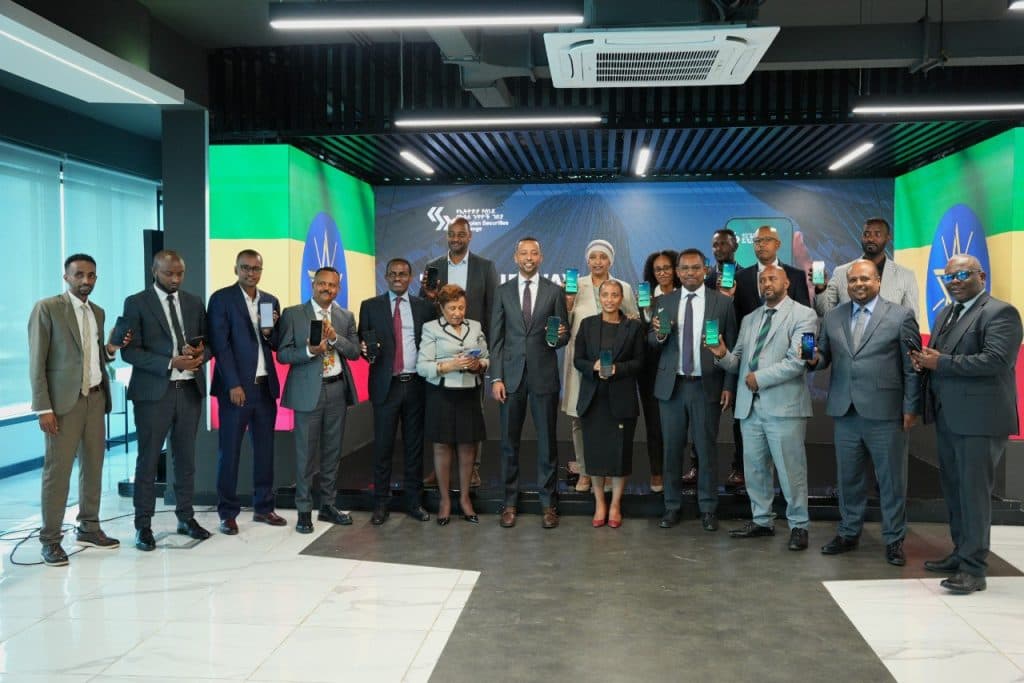
ESX introduced “Neway,” a mobile and web trading application to expand capital market access. Developed with Infotech Private Limited, it enables investors to open accounts, execute trades, track portfolios, and monitor market trends in real time. According to CEO Tilahun Esmael Kassahun, this step lowers barriers to entry and promotes wider participation in Ethiopia’s emerging capital market.
NBE FX Auction No. 20 Clears at 155.88 Birr/USD
The National Bank of Ethiopia allotted $70 million in Foreign Exchange Auction No. 20, with the marginal rate at 155.88 birr/USD. Demand was strong, with bids totaling $177.1 million—more than double supply. Nine of twenty banks received allocations, with a weighted average rate of 155.94 birr/USD, reflecting ongoing FX pressures. The auction supports Ethiopia’s exchange rate reforms and market-based allocation efforts.
Investigation Highlights “Bank Capture” Risks in Ethiopia
The Reporter investigation reveals that influential borrowers and shareholders may dominate credit decisions in Ethiopian banks, weakening governance. Amhara Bank is cited as an example, where the top ten borrowers account for billions of birr in exposure, approaching regulatory limits. Auditors flagged loan restructuring issues, collateral weaknesses, and rising credit risks. Analysts warn that these challenges could threaten bank stability and access to finance for smaller businesses, underscoring the need for stronger regulatory oversight.
Investment & Economic Policy
Ethiopia Targets $2.4B in Investment Deals at Forum
The 4th “Invest in Ethiopia 2026” Forum, set for March 26–27 in Addis Ababa, aims to secure $2.4 billion in new investment commitments under the theme “Ethiopia is Ready for Investment.” Over 800 investors, executives, and policymakers are expected. The event focuses on attracting anchor investors and finalizing major deals. Last year, $1.6 billion was signed with companies in mining and solar energy.
Ethiopia Approves AI University, Energy Loans, and New Tourism Policy
The Council of Ministers approved the Mademer Artificial Intelligence University to train professionals in AI and advanced technologies. Additionally, three concessional loan agreements were endorsed: $60.2M from Korea’s Ex-Im Bank for power expansion, €80M from the French Development Agency for renewable energy and digitalization, and 84.1M SDR from the IDA for urban development and entrepreneurship. Other approvals included a revised warehouse receipt law, mining licenses for gold and iron ore, and a new national tourism policy replacing the 2001 framework to modernize the sector and attract investment.
Energy & Infrastructure
Ethio Telecom, Ericsson Sign Deal to Upgrade 1,500 Mobile Sites
Ethio telecom and Ericsson signed a network expansion and modernization agreement at MWC Barcelona. The deal covers 1,500 sites, including 4G layering, network expansion, and advanced technology deployment, plus modernization of 502 3G sites. The three-year Next Horizon Strategy aims to add 2.8 million new 4G subscribers, expand LTE coverage to 157 towns, and reach 85% population coverage, strengthening digital connectivity.
Hormuz Disruption Could Trigger Inflation in Ethiopia
Closure of the Strait of Hormuz, which carries nearly 20% of global oil supply, could push oil prices to $120–$150 per barrel. For Ethiopia, heavily reliant on imported petroleum, this would increase fuel import bills, strain FX reserves, depreciate the birr, raise transport and food costs, and intensify domestic inflationary pressures. Analysts stress the urgency of energy diversification and efficiency improvements. Read more
Transport & Aviation
Ethiopian Airlines Losing Up to $13.5M Weekly Amid Middle East Conflict
Suspended flights to several Middle East destinations due to the US-Israel-Iran conflict are costing Ethiopian Airlines up to $13.5 million per week in passenger revenue, plus around $2 million in cargo losses. About 160 flights per week are affected. The airline is redeploying aircraft to other routes, but rising global fuel prices could worsen the financial impact if the conflict continues.
That’s your Monday morning!
From booming cement profits to FX auctions and airline headaches, Ethiopia’s week is already full of action. Keep your coffee close, your eyes open, and remember: the markets may move fast, but you’re now one step ahead.
See you next Monday for the next round of breakfast stories!