


Sunday, April 12, 2026
Jobs
  • Login
  • Register
StockMarket.et
Weekly Newsletter
  • News
    • Stock News
    • Business
    • Economy
  • Capital Market
    • Learn Stock Market
  • Crypto
    • Crypto News
    • Learn Crypto
    • Crypto Glossary
  • Tech
  • Regulation
  • Birr FX Rate
  • Publications
  • Tools
    • Stock Market Data
    • Birr FX Rate
  • Biritu l ብሪቱ
  • Data Hub
No Result
View All Result
  • News
    • Stock News
    • Business
    • Economy
  • Capital Market
    • Learn Stock Market
  • Crypto
    • Crypto News
    • Learn Crypto
    • Crypto Glossary
  • Tech
  • Regulation
  • Birr FX Rate
  • Publications
  • Tools
    • Stock Market Data
    • Birr FX Rate
  • Biritu l ብሪቱ
  • Data Hub
No Result
View All Result
StockMarket.et
No Result
View All Result

Ethiopia’s Interbank Market Crosses 2 Trillion Birr: The Quiet System Powering Financial Reform

Yesuf Hadji by Yesuf Hadji
March 5, 2026
in Capital Market, Deep Dive, Stock News
Reading Time: 5 mins read
2
A A
0
Monday Breakfast Stories: Capital Markets Unlocked

Source: ENA

AI is thinking...

In modern financial systems, some of the most important changes happen far from public attention. They occur not on trading floors or stock exchanges, but in the quiet, technical infrastructure that keeps money moving between institutions.

In Ethiopia, one such system has been expanding rapidly.

Related articles

The Data Problem: Why No One Really Knows What’s Happening

The Data Problem: Why No One Really Knows What’s Happening

April 9, 2026
Ethiopia’s Pension Funds Move From Safety to Strategy in Market Shift

Ethiopia’s Pension Funds Move From Safety to Strategy in Market Shift

March 24, 2026
Awash bank

Awash Bank Registers 54 Million Shares with Capital Market Authority

March 17, 2026
National Bank of Ethiopia Office Building

Ethiopia’s Financial System Strengthens, but Structural Risks Persist

March 17, 2026
Load More

The country’s interbank money market has now surpassed 2 trillion birr in cumulative transactions, marking a significant moment in the ongoing transformation of the financial sector.

The milestone is more than a symbolic figure. It reflects a structural shift in how banks manage liquidity, how monetary policy is transmitted, and how Ethiopia is building the foundational layers of a modern financial system.

The interbank market was introduced in October 2024 by the National Bank of Ethiopia as part of broader financial reforms designed to modernize the country’s monetary policy framework.

At its core, the system allows commercial banks to lend and borrow short-term funds from one another rather than relying solely on the central bank. This seemingly simple change carries profound implications. It moves liquidity management from a centralized administrative structure toward a market-based mechanism where prices, demand, and supply play a greater role.

In practical terms, banks frequently face temporary mismatches in their liquidity positions. On some days, a bank may hold excess reserves due to strong deposit inflows or delayed loan disbursements.

On other days, it may face short-term shortages as payments clear or lending increases. In mature financial systems, these gaps are resolved through interbank markets where institutions with excess liquidity lend to those that need it, often overnight.

Ethiopia’s new interbank framework allows exactly this. Banks can trade short-term funds electronically, primarily through overnight and short-term repurchase agreements, enabling liquidity to circulate efficiently within the banking system.

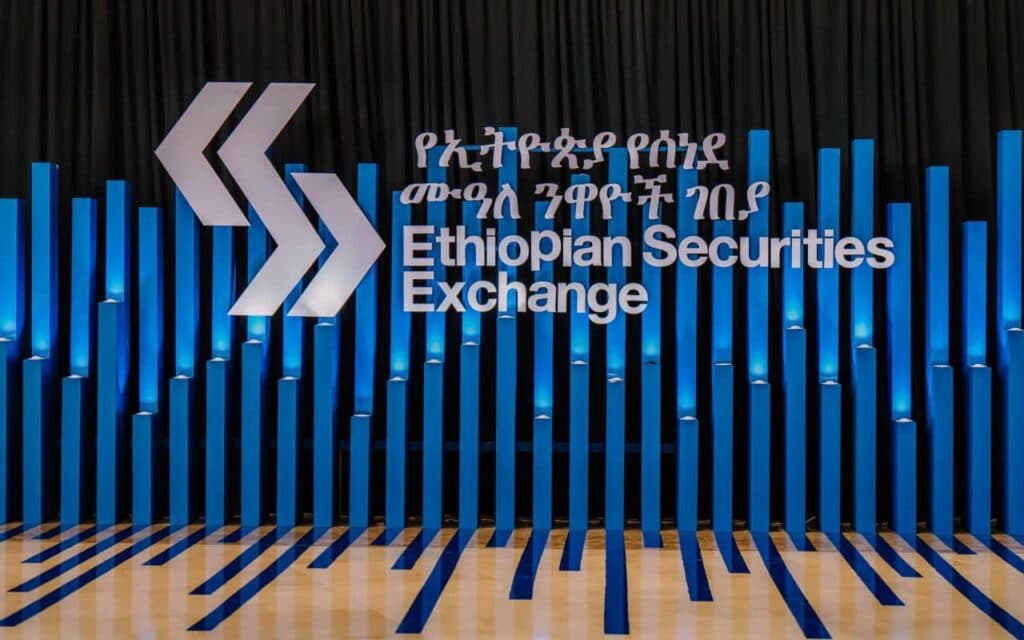
The technological backbone of this market is provided by the Ethiopian Securities Exchange, which operates the electronic trading platform used by participating banks.

The platform ensures transparent transactions, standardized trading rules, and real-time reporting. In doing so, it connects Ethiopia’s banking sector with the kind of digital market infrastructure commonly found in more advanced financial systems.

What makes the recent 2 trillion birr milestone remarkable is the speed at which the market has grown. When the interbank system first launched, participation was cautious.

Banks were adjusting to the new framework, learning how to incorporate market-based liquidity management into their treasury operations. Over time, however, activity accelerated sharply.

Recent weekly data illustrates this shift. During one week in late February, banks traded more than 87 billion birr in overnight funds across more than one hundred repurchase agreements.

That figure represented the largest weekly transaction volume recorded since the market’s creation and significantly exceeded previous highs.

Such rapid growth signals a deeper transformation inside Ethiopia’s banking sector. Institutions are increasingly relying on market funding rather than administrative mechanisms to manage daily liquidity.

Overnight transactions, in particular, have become more prominent, suggesting that banks are turning to the interbank market as a primary tool for managing short-term cash positions.

This shift is closely tied to the evolution of Ethiopia’s monetary policy framework. Historically, the financial system relied heavily on direct controls and administrative tools.

Liquidity shortages were often resolved through central bank interventions, while interest rates were influenced by policy directives rather than market dynamics.

The introduction of an active interbank market changes that dynamic. In modern monetary systems, the interbank rate functions as a key channel through which policy decisions influence the broader economy.

When the central bank adjusts its policy rate, the change filters through the interbank market and eventually affects lending rates, deposit rates, and credit conditions across the banking system.

By encouraging banks to trade liquidity among themselves, policymakers are strengthening this transmission mechanism. The interbank market becomes a bridge between central bank policy and real economic activity.

Beyond monetary policy, the growth of the interbank market also reflects increasing confidence among financial institutions. Lending to another bank, even for a single night, requires trust in the system’s stability and regulatory framework. Rising volumes therefore suggest that banks are becoming more comfortable operating within a shared liquidity marketplace.

For Ethiopia, the development carries broader strategic significance. Interbank markets are often the first layer in the architecture of modern financial systems. They provide the foundation upon which more complex markets, such as treasury securities, corporate bonds, and equity exchanges are eventually built.

In that sense, the 2 trillion birr milestone is not an isolated achievement but part of a larger sequence of financial reforms unfolding across the country.

The launch of the securities exchange, the modernization of monetary policy instruments, and the expansion of digital financial infrastructure all point toward a system that is gradually aligning with global financial standards.

Yet the interbank market’s growth also highlights the growing sophistication of bank treasury operations. Liquidity management is becoming more dynamic, more responsive, and more integrated with market signals.

Banks must now actively monitor short-term funding conditions, evaluate counterparty risk, and manage daily liquidity flows in ways that were previously less central to their operations.

As participation deepens, the market itself is likely to evolve further. New instruments could emerge, trading volumes could expand, and interest rate benchmarks may gradually become more influential across the financial system.

Each of these developments would strengthen Ethiopia’s capacity to manage liquidity, stabilize markets, and support economic growth.

For now, the crossing of the two trillion birr threshold offers a glimpse into how quietly but decisively the financial system is changing. While headlines often focus on stock market launches or foreign investment inflows, the real machinery of financial modernization frequently operates behind the scenes.

In Ethiopia’s case, trillions of birr moving between banks each night are helping build the infrastructure of a more flexible, resilient, and market-driven financial system.


Tweet2ShareShare1Share3
Yesuf Hadji

Yesuf Hadji

As Editor-in-Chief, I am passionate about crafting impactful narratives, leading creative teams, and delivering insightful content. With experience in developing strategies that engage diverse audiences, I aim to drive meaningful conversations and inspire innovation.

Related Posts

The Data Problem: Why No One Really Knows What’s Happening
Deep Dive

The Data Problem: Why No One Really Knows What’s Happening

by StockMarket.et
April 9, 2026
0

There is a particular kind of frustration that has become routine for anyone trying to make a serious financial decision...

Ethiopia’s Pension Funds Move From Safety to Strategy in Market Shift
Capital Market

Ethiopia’s Pension Funds Move From Safety to Strategy in Market Shift

by StockMarket.et
March 24, 2026
0

Ethiopia’s pension funds are approaching a pivotal shift, but this time the story is more nuanced than simply “low returns...

Awash bank

Awash Bank Registers 54 Million Shares with Capital Market Authority

March 17, 2026
National Bank of Ethiopia Office Building

Ethiopia’s Financial System Strengthens, but Structural Risks Persist

March 17, 2026
ESX Launches “Neway” Mobile Trading App to Expand Access to Ethiopia’s Capital Market

ESX Launches “Neway” Mobile Trading App to Expand Access to Ethiopia’s Capital Market

March 23, 2026
Rahel Kassa Appointed Deputy Director General of Ethiopian Capital Market Authority

Rahel Kassa Appointed Deputy Director General of Ethiopian Capital Market Authority

February 27, 2026
Load More
  • Trending
  • Comments
  • Latest
Ethiopia Revokes Licenses of All Sports Betting Companies

Ethiopia Revokes Licenses of All Sports Betting Companies

December 15, 2025
Ethiopian Federal Police Charges Fintech Investment plc Founders in 1.7 Billion Birr Fraud Case

Ethiopian Federal Police Charges Fintech Investment plc Founders in 1.7 Billion Birr Fraud Case

March 28, 2026
EIH Deputy CEOs on Ethiopian digital lottery inauguration

Ethiopia Launches Its First-Ever Digital Lottery

April 13, 2025
AliExpress Set to Enter Ethiopian Market, Signaling Major Shift in E-Commerce

AliExpress Set to Enter Ethiopian Market, Signaling Major Shift in E-Commerce

August 8, 2024
Ports, Land-Lock, and Logistics: Ethiopia’s Strategic Maritime Dilemma

Ports, Land-Lock, and Logistics: Ethiopia’s Strategic Maritime Dilemma

1
Ethiopia’s Capital Market Authority (ECMA) Launches Three Draft Directives to Strengthen Regulation of Capital Markets

Ethiopia’s Capital Market Authority (ECMA) Launches Three Draft Directives to Strengthen Regulation of Capital Markets

0
Ethiopia Enacts Proclamation to Establish Capital Markets System, Paving the Way for Economic Growth

Ethiopia Enacts Proclamation to Establish Capital Markets System, Paving the Way for Economic Growth

0
What is Cryptocurrency?

What is Cryptocurrency?

0
The Data Problem: Why No One Really Knows What’s Happening

The Data Problem: Why No One Really Knows What’s Happening

April 9, 2026
New Player Destta Targets Informal Remittance Market with Transparent Transfers

New Player Destta Targets Informal Remittance Market with Transparent Transfers

April 9, 2026
Mastercard Deepens Ethiopia Push as StarPay and Choice Microfinance Seal Strategic Digital Finance Deals

Mastercard Deepens Ethiopia Push as StarPay and Choice Microfinance Seal Strategic Digital Finance Deals

April 8, 2026
Ethiopian Investment Holdings Logo

$720M Boost: Ethiopia’s SOE Reforms Shift from Risk Control to Growth Engine, Says World Bank

April 8, 2026

Empower individuals with the knowledge and tools necessary for successful participation in the Ethiopian Capital Market.

NEWS

  • Markets
  • Business
  • Economy
  • Tech

IN DEPTH

  • Magazine
  • Interview
  • Opinion

EXPLORE

  • Data Hub
  • Biritu I ብሪቱ
  • Newsletter
  • Birr FX rate

Mobile Apps 

StockMarket Weekly

Stockmarket.et covers economy, business, finance and capital market. 

Haile Kenenisa
Haile Kenenisa@example.com
  • About Us
  • Privacy Policy
  • Terms & Conditions
  • Disclaimer
  • Contact Us

© 2026 StockMarket.et by PiSpace

Welcome Back!

Sign In with Google
OR

Login to your account below

Forgotten Password? Sign Up

Create New Account!

Sign Up with Google
OR

Fill the forms bellow to register

*By registering into our website, you agree to the Terms & Conditions and Privacy Policy.
All fields are required. Log In

Retrieve your password

Please enter your username or email address to reset your password.

Log In
  • Login
  • Sign Up
Forgot Password?
Lost your password? Please enter your username or email address. You will receive a link to create a new password via email.
body::-webkit-scrollbar { width: 7px; } body::-webkit-scrollbar-track { border-radius: 10px; background: #f0f0f0; } body::-webkit-scrollbar-thumb { border-radius: 50px; background: #dfdbdb }
No Result
View All Result
  • News
    • Stock News
    • Finance
    • Crypto News
    • Regulation
  • Learn
    • Learn Stock Market
    • Learn Crypto
    • Crypto Glossary
  • Market Data
    • Stock Market Data
  • Business
  • Publications
  • Data Hub
  • Birr FX Rate
  • Biritu l ብሪቱ
  • Jobs
  • Contact Us
  • Login
  • Sign Up

© 2025 StockMarket.et by PiSpace.

Weekly Newsletter
This website uses cookies. By continuing to use this website you are giving consent to cookies being used. Visit our Terms & Conditions and Privacy Policy.