


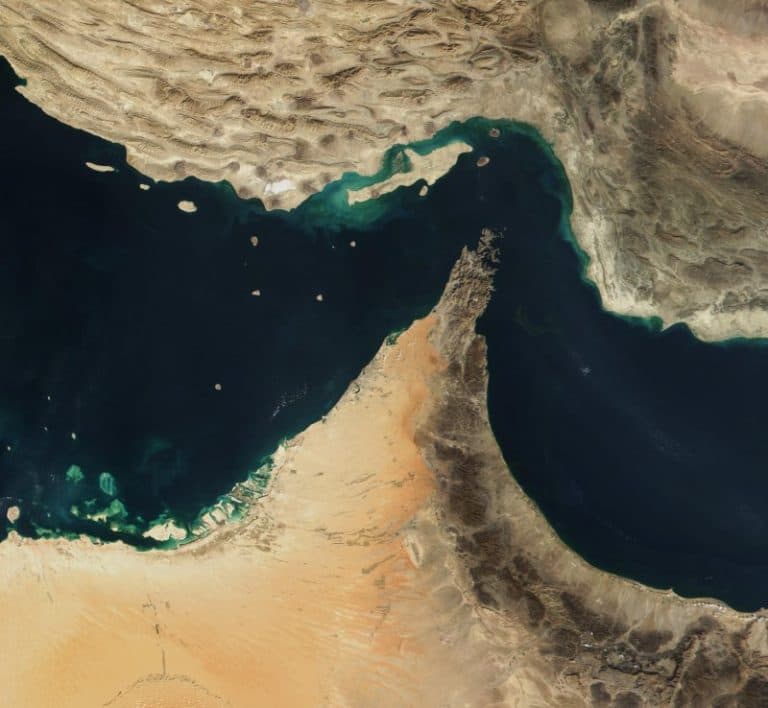
Strait of Hormuz Officially Closed: What This Means for the Global Economy, and Ethiopia
The Iranian government has officially announced the closure of the Strait of Hormuz following escalating military strikes between Iran and the United States. What began as a geopolitical confrontation has now transformed into a major economic shock with global implications.
While the conflict itself is rooted in longstanding strategic tensions, the closure of the Strait shifts the issue from military escalation to economic disruption. The Strait of Hormuz is not just a regional waterway; it is one of the most critical arteries of the global energy system. When that artery is blocked, the consequences travel far beyond the Middle East.
Financial markets respond not only to actual supply shortages but to the fear of prolonged disruption. With the Strait officially closed, that fear is no longer hypothetical. The economic transmission mechanism has been activated.
The Strait of Hormuz: A Narrow Passage with Massive Global Weight
The Strait of Hormuz connects the Persian Gulf to the Gulf of Oman and the Arabian Sea. At its narrowest point, it is roughly 33 kilometres wide. Despite its size, it carries approximately 17–20 million barrels of oil per day, nearly 20% of global oil trade.
Major oil-exporting countries in the Persian Gulf, including Iran, Iraq, Kuwait, Bahrain, Qatar, Saudi Arabia, and the United Arab Emirates, rely heavily on this corridor to ship crude oil to international markets.
For countries such as the UAE, Saudi Arabia, Kuwait, and Qatar, as much as 80–90% of their oil exports pass through this route. The Strait is therefore not just important; it is foundational to the global energy supply chain.
With Iran now officially blocking the Strait, the impact extends across multiple continents.
Countries Most Exposed to the Closure
If the Strait of Hormuz were to close, the countries most exposed would be those heavily dependent on Middle Eastern oil flows transiting that narrow corridor. At the top of the list is India, which imports roughly 85% of its crude oil needs, with a significant share sourced from Iraq, Saudi Arabia, Kuwait, and the UAE. A closure would immediately tighten supply and push global oil benchmarks higher, translating into rising fuel costs, wider trade deficits, pressure on the rupee, and higher inflation.
For India, the macroeconomic effects would be substantial: increased subsidy burdens, fiscal strain, higher transportation costs, and upward pressure on food prices. Manufacturing and logistics sectors would face cost escalation, potentially slowing GDP growth. Financial markets would also react negatively, especially if inflation forces the central bank to tighten monetary policy.
Closely following India in exposure is China, the world’s largest crude oil importer. Around 40% of its oil imports pass through the Strait. Although China has diversified through Russian and Central Asian pipelines, these alternatives cannot fully offset a major Gulf disruption. A prolonged closure would raise energy input costs across China’s vast industrial base, impacting global supply chains. Higher production costs in China would ripple into global goods prices, affecting electronics, machinery, and consumer products worldwide.
Japan is another highly vulnerable economy. It imports around 90% of its oil, and roughly three-quarters of that transits through Hormuz. A supply disruption would sharply increase energy prices, widening Japan’s trade deficit and raising electricity and transportation costs domestically. Given Japan’s limited natural resources, sustained high energy prices could weigh heavily on industrial output and consumer spending.
Among exporters, Saudi Arabia is paradoxically exposed despite being a major oil producer. Around 80–90% of its oil exports typically pass through the Strait. While the kingdom has some alternative export routes via the Red Sea, these cannot fully compensate for Hormuz capacity. A prolonged closure would constrain export volumes, reduce government revenue, and disrupt global supply balances, further intensifying upward price pressures.
Similarly, the United Arab Emirates relies on Hormuz for nearly three-quarters of its oil exports. Although it has invested in limited pipeline infrastructure bypassing the Strait, the majority of exports would still be affected, leading to revenue losses and tighter global markets.
Pakistan would also face serious consequences. A substantial portion of its oil imports moves through Hormuz, and energy constitutes a large share of its import bill. Any supply shock would likely trigger immediate domestic fuel price hikes, increase fiscal pressure due to subsidies, and deepen external account vulnerabilities.
European countries such as France, Germany, and Italy are comparatively less directly exposed, with roughly 10% of their oil imports tied to this route. However, oil markets are globally integrated. Even limited physical exposure does not shield them from higher benchmark prices. As global crude prices rise, Europe would experience increased fuel costs, industrial input inflation, and potential pressure on monetary policy decisions.
In short, while Asia bears the heaviest direct exposure due to its dependence on Gulf energy supplies, the economic shock would be global. Oil is priced on international benchmarks; once supply expectations tighten, prices rise everywhere, regardless of whether a country physically imports oil through the Strait or not.
Global Consequences: Oil Shock and Inflation Risk
Oil markets function on expectations. With a major supply corridor closed, global crude prices can spike rapidly. Analysts warn that oil could surge toward or beyond $150 per barrel if the disruption persists.
When oil prices rise sharply:
- Transport costs increase globally
- Production costs rise across industries
- Food prices climb due to higher logistics expenses
- Inflation accelerates
- Central banks face tightening pressure
- Growth slows
History shows that severe oil shocks can trigger global recessions. The world economy is deeply interconnected, and energy remains its core input.
This creates a clear transmission chain:
Geopolitical escalation → Closure of energy chokepoint → Supply shock → Oil price surge → Global inflationary pressure → Economic slowdown risk
Even countries that do not import directly from the Gulf are affected because oil benchmarks are global. And this is where Ethiopia enters the picture.
The Specific Impact on Ethiopia
Ethiopia does not produce oil at commercial scale and depends almost entirely on imported petroleum products. This structural reliance makes the country highly vulnerable to global oil price volatility.
When global crude prices rise, Ethiopia pays more. There is no pricing shield.
If oil prices climb toward $120 or $150 per barrel, Ethiopia’s fuel import bill would rise significantly. Petroleum imports already consume a substantial share of the country’s foreign exchange reserves. A sustained spike would widen the trade deficit and intensify pressure on foreign currency availability.
The economic effects would unfold through several channels:
1. Higher Domestic Fuel Prices
Diesel, gasoline, and jet fuel prices would increase. Diesel is particularly critical because it powers trucks, agricultural machinery, construction equipment, and backup generators. Transport costs would rise quickly.
2. Logistics and Import Costs
Ethiopia is landlocked and depends heavily on maritime trade through Djibouti. Higher global oil prices mean higher freight costs, increased shipping insurance premiums, and more expensive inland transport.
As a result:
- Imported machinery becomes more expensive
- Industrial inputs cost more
- Consumer goods prices rise
- Food imports become costlier
3. Inflationary Pressure
In Ethiopia, transport costs directly influence food prices. When diesel becomes expensive, moving crops from rural areas to urban markets costs more. Traders pass these costs to consumers. Manufacturers face higher operating costs. Retail prices increase. Purchasing power declines.
This is cost-push inflation, where rising input costs drive broader price increases across the economy. Lower-income households are disproportionately affected, as food and transport constitute a large share of their spending.
4. Exchange Rate Pressure and Birr Depreciation
A higher fuel import bill increases demand for foreign currency. If export earnings do not increase proportionally, the foreign exchange gap widens. That imbalance places downward pressure on the Birr. Currency depreciation then makes imports even more expensive, reinforcing inflation. This creates a dangerous feedback loop:
A rise in global oil prices would set off a chain reaction in Ethiopia’s economy. As fuel becomes more expensive on international markets, the country’s import bill would expand significantly, since Ethiopia relies entirely on imported petroleum. A larger import bill increases demand for foreign currency, putting additional strain on already limited foreign exchange reserves.
As pressure builds, the Ethiopian birr would likely depreciate further against major currencies. Currency depreciation then makes all imports, not just fuel, more expensive in local terms, pushing up domestic prices across goods and services. The result is a renewed wave of inflation, which erodes purchasing power and intensifies cost-of-living pressures throughout the economy.
For policymakers, this becomes a delicate balancing act. Tightening monetary policy may slow inflation, but risks constraining growth. Subsidizing fuel may protect consumers, but it strains fiscal resources. The shock is external, but its consequences are domestic.
A Distant Strait, A Direct Economic Impact
The closure of the Strait of Hormuz illustrates how tightly interconnected the modern global economy has become. A military escalation in one region can disrupt energy flows that power industries thousands of kilometres away.
For Ethiopia, the risk is not military; it is macroeconomic. Higher oil prices threaten to increase inflation, strain foreign exchange reserves, raise import costs, and potentially accelerate currency depreciation. The Birr’s stability becomes intertwined with global energy markets.
This episode underscores a broader structural vulnerability: heavy dependence on imported energy exposes the economy to shocks beyond its control.
In the short term, Ethiopia faces the challenge of managing inflationary and exchange rate pressures. In the long term, the crisis may serve as a reminder of the strategic importance of energy diversification, efficiency, and alternative sources.
The Strait of Hormuz may be geographically distant from Addis Ababa, but economically, it is closer than ever.



Comments