


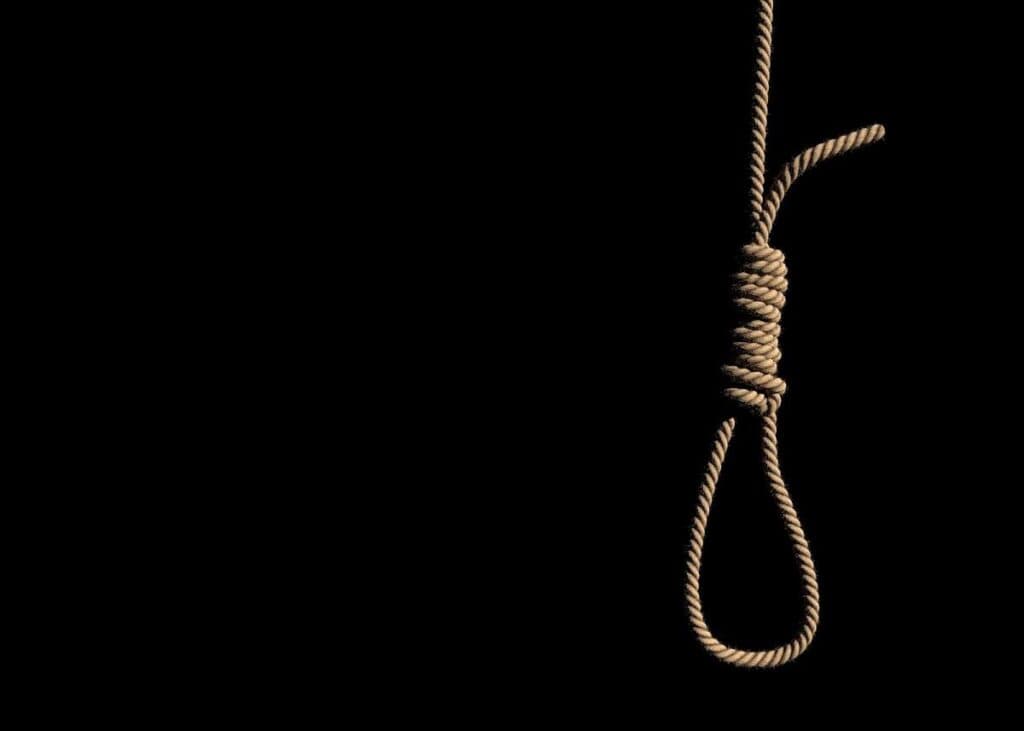
For his privacy, his name stays unknown.
Young. A very unrun race of life, quit short. A family mourns the decision of a child.
His brother carries the regret. “I was listening to a voice craving to be saved, or someone willing to take his life away,” he says. “But I didn’t expect my brother would do such a thing. Not as far as I knew him.”
After a few minutes the back of the house went silent, and the silence was confusing. He went out to check upon what was going on, and he never expected what he just witnessed. His brother was gone, and he would not be coming back, leaving his brother and his family in deep grief.
“Over the days he was feeling too much stress about what he could have achieved and what he didn’t,” the brother admits. “He spent his whole day over his phone, day and night, scrolling over TikTok and Instagram.”
That is the whole story. It takes six sentences. Everything after this is a country trying to explain itself.
We can mention data. This amount of death, that amount of men and women who died by suicide. And how does that even help? Should we even put things in numbers, to say out of this number? Isn’t one soul, a lived life, a life worth living?
So let the numbers stay small here, and only where they are needed.
One: more than a quarter of young people in Ethiopia’s cities are looking for work and not finding it. Two: Ethiopia has roughly one psychiatrist for every two million citizens. Those two facts, standing next to each other, describe a country that manufactures pressure at scale and has almost nowhere to send the people it breaks.
The reality of our generation is to crave success rather than to live. The economy is not capable of giving relief to one’s existence.
Think about what the last two years have actually felt like from inside a young person’s life. The birr was floated. Prices moved. They moved again. A salary that was thin in the morning was thinner by the evening, and the number at the bottom of the receipt kept changing faster than anyone could plan around it. Growth was announced. Corridors were built. Towers went up along roads that young men walk down every day on their way to interviews that go nowhere.
And here is the cruelty in it: nobody explains to a twenty-three-year-old that a floated currency and a jobless growth pattern are policy outcomes. He does not experience them as policy. He experiences them as a verdict on himself. He looks at what he could not afford this month and calls it his own failure, privately, without appeal, and he tells no one, because in the story he has been handed there is no version of a man who is doing everything right and still cannot arrive.
Researchers who study this have found the same thing in rich countries and poor ones alike: financial stress raises the risk of death by suicide, and it raises it by roughly the same amount whether the country has a large economy or a small one. Hardship does not need to be extreme to be lethal. It only needs to be inescapable, and to feel personal.
Then there is the phone.
Social media: a place where you witness unlived lives, facial success stories, instant blow-ups of success. Why is it even that the whole media stream is all about successful people only?
Do other people not have a story to tell? Why does it have to be that all success must be counted in financial terms?
Something particular happens in a country like ours. Only about one in five Ethiopians is online at all, and far fewer are on social media. So the feed is not a picture of the country. It is a small, curated, city-weighted, monetised sliver of it, a few thousand people who arrived, or who are paid to look like they arrived, playing on loop.
A young man scrolling at two in the morning is not comparing himself to his neighbours, who are struggling exactly as he is. He is comparing himself to a highlight reel of his own nation that almost nobody in his nation actually lives. He loses that comparison every single night. And the loss is quiet. There is no argument, no insult, nothing anyone would notice from the next room. Just a boy in the dark, being told a hundred times an hour that everyone made it except him.
The researchers are careful here, and we should be too. Sadness may drive the scrolling as much as the scrolling drives the sadness. But nobody disputes whether the loop exists, or that it tightens.
Many young people are also leaving the country for a better life.
Hundreds of thousands of them, and the numbers rise every year. They walk to Djibouti. They pay smugglers for a place on a boat that sinks often enough that everyone has heard the stories, and they get on it anyway, because a wage seven times larger on the other side is worth a risk that a person with options would never take.
That is not an adventure. That is an exit calculation. When a generation would rather cross the Gulf of Aden than stay, staying has stopped offering anything.
For whom are we even making this country? For whom are we building this?
And when it becomes too much, who does he tell?
Not his father, who has his own unnamed grief and no language for this, because nobody gave him one either. Not his friends, who are performing the same fine that he is performing. Not a counsellor, because there is no counsellor. He would have to know the words, and know where to go, and be willing to be the one in the family who went there.
Hopelessness. A fragile nation. Parental trauma moving down through generations, unnamed, because naming it was never an option either.
So the silence holds. Right up until the moment it doesn’t.
This is the part that gets written least, and it is the part that matters most.
We know that this is not fixed. Countries that put money into jobs, into wages, into the ordinary business of making it possible to live, see fewer of these deaths. Countries that train the health workers they already have, at the health posts that already exist, close the gap. It is slow, unglamorous, entirely achievable work, and it is a choice, which means the current situation is also a choice, and choices can be made differently.
And there is something for the person reading this at 2am with a phone in his hand and a number in his head that he has decided is the measure of him.
You are not the sum of what you have not yet achieved. The economy you were born into is not a judgment on your worth. You did not build it. You inherited it, along with everyone else your age who is lying awake right now believing the same lie about themselves in a different bedroom in the same city.
The feed is not the country. It is a few million curated seconds, sold to you by people who profit from you feeling behind.
And the hour you are in is temporary, even when it does not feel temporary. That is not comfort, it is the most consistent finding there is. People who get through the worst night go on to have long, ordinary, complicated, good lives. The version of you that would have been lost is not the version that would have lasted.
Tell someone. Today. A brother, a mother, a friend, a teacher, a priest, a sheikh, a doctor at the nearest health centre. Say it badly if that is the only way it comes out. The one thing that reliably breaks this is another person knowing.
And the rest of us, the ones writing about this country, financing it, governing it, building it, owe this generation more than a highlight reel and a departure lounge. We owe them a place where ordinary life counts. Where a young man is allowed to simply live, and be a son, and be here, without having arrived at anything yet.
One soul. A lived life. A life worth living.
This should have never been an option.
Comments