


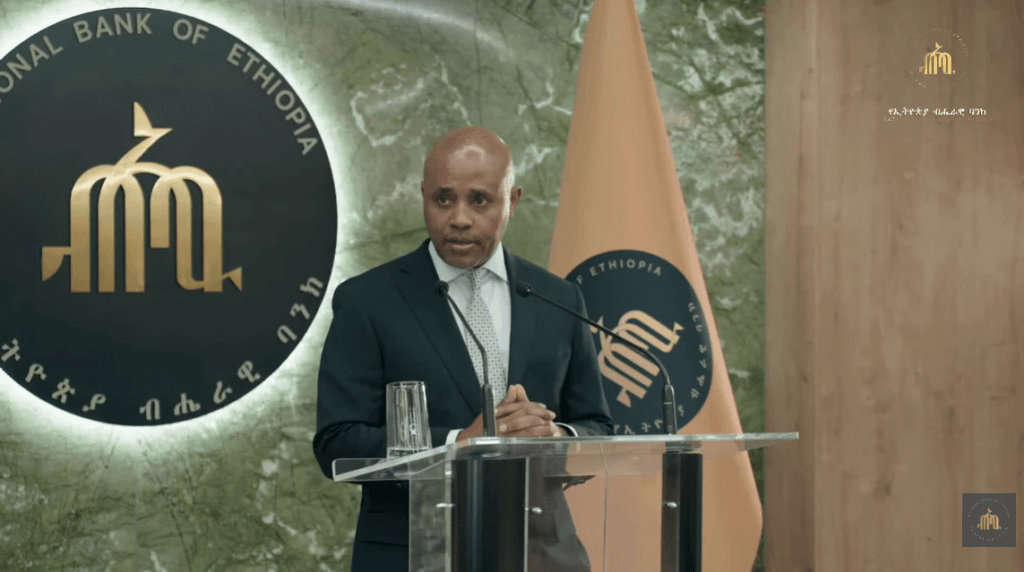
The National Bank of Ethiopia (NBE) today issued two directives that give the country’s interest-free banks their own set of central bank liquidity tools and a dedicated interbank market. Both took effect on 12 November 2026.
The first, the Interest-Free Open Market Operations and Standing Facilities Directive No. EPD/01/2026, lets interest-free banks deposit surplus cash with, and draw funding from, the central bank without paying or earning interest. The second, the Interest-Free Interbank Money Market Directive No. EPD/02/2026, sets up a market where interest-free banks and interest-free windows can lend short-term funds to each other.
Until now, Ethiopia’s monetary policy plumbing, open market operations, standing facilities and the interbank market — was built on interest. That left interest-free lenders with few Sharia-compliant ways to park excess liquidity or cover a shortfall.
Central bank tools: EPD/01/2026
The 43-page directive gives the NBE interest-free versions of the instruments it already uses with conventional banks. It applies to licensed interest-free banks that keep reserve requirements with the NBE, and each must sign a master agency agreement before taking part.
The NBE can run three kinds of operations: regular main operations on a pre-announced schedule, quick fine-tuning operations, and structural operations for longer-lasting imbalances. Its instruments are:
- Interest-Free Funding Facility with Collateral: the NBE injects cash against eligible collateral; the directive says it works like a conventional repo.
- Interest-Free Deposit Facility with Collateral: banks place funds with the NBE and receive collateral; described as the equivalent of a reverse repo.
- Interest-Free NBE Certificates: issued at Birr 1 million each, tradable on the secondary market only among interest-free banks.
- Collateralized financing, outright purchases and sales of interest-free securities, and term deposits of up to one year.
Two overnight standing facilities sit alongside these. Under the Standing Deposit Facility, a bank can place any amount with the NBE during business hours without notice, and gets its money back by 10:00 AM the next business day. Under the Standing Finance Facility, a bank submits a signed written request and pledges collateral, and the NBE credits the funds the same business day.
Most operations run through auctions. The NBE can use fixed-rate auctions, where banks bid on amounts, or variable-rate auctions, where banks bid an expected profit rate to four decimal places. Standard auctions settle the next business day and quick auctions the same day. Results are published on the NBE website the same day.
Collateral must be owned by the bank, unencumbered, interest-free and longer-dated than the operation. It cannot be issued or guaranteed by the bank or a related party, although government and NBE securities are always eligible. Haircuts apply, and the NBE can call for more collateral if values fall.
Bank-to-bank market: EPD/02/2026
The second directive creates an Interest-Free Interbank Money Market for transactions in birr. Unlike the central bank facilities, it is open to both full-fledged interest-free banks and interest-free banking windows of conventional banks. Each must apply in writing for membership, and the NBE has five working days to respond.
Trading runs from 8:30 AM to 4:00 PM on business days on an NBE-approved electronic platform. A master agreement annexed to the directive identifies that platform as a system provided by the Ethiopian Stock Exchange. The directive says the market should reuse the processes, reporting channels and settlement infrastructure of the existing interbank money market.
Banks with surplus cash post quotes showing the amount, the expected profit rate and the tenor. Banks short of funds pick from those quotes on the most favourable terms. Deals are overnight or seven days unless the NBE says otherwise, with a minimum size of Birr 25 million in steps of Birr 1 million. Settlement is gross, through the NBE’s RTGS system.
Deals can be secured or unsecured. Unsecured deals require notification to the NBE. Secured deals must be covered by eligible interest-free collateral after haircuts, but that collateral only protects against misconduct, negligence or default. It cannot be used to guarantee a return.
Members that want to leave must give ten days’ written notice and clear their obligations first. The NBE can revoke membership immediately for breaches of the directive, the transaction documents or the interbank code of conduct.
How profit replaces interest
Both directives rest on the same structure: an investment agency, known in Islamic finance as wakala. The party with cash, the principal, appoints the party that needs it, the agent, to invest the money. In the interbank market, a surplus bank is the principal. At the NBE, roles flip by direction: when banks place money, the NBE is the agent; when the NBE injects funds, the bank is the agent.
Pricing is quoted as an expected profit rate, annualised on an actual/364 day count. Both directives stress the rate is indicative and not a guaranteed return. The agent’s payout at maturity follows set rules in the master agreements:
- If actual profit meets or beats the expected profit, the principal receives its money plus the expected profit. The agent keeps any excess as a performance reward.
- If actual profit falls short, the principal receives its money plus whatever was actually earned.
- If the investment makes a loss with no fault by the agent, the principal bears it.
- If the loss comes from the agent’s negligence, misconduct or breach, the principal is entitled to its full investment back.
As an illustration, Birr 100 million placed for seven days at a hypothetical 12% expected profit rate would earn about Birr 230,800 if the target is met (100 million × 12% × 7/364).
Agents must monitor investments daily. If they expect to miss the target rate, they must offer the principal a choice to exit or continue at a lower rate. If they foresee a loss, they must terminate early and return the funds. In the interbank market, a principal whose target was missed can order an audit at the agent’s cost.
Penalties and safeguards
The interbank directive bans using an investment transaction to disguise an interest-bearing loan or to guarantee a return. Both directives require operations to comply with the NBE’s Sharia Governance Directive, overseen by a Central Sharia Board appointed by the central bank. A Sharia breach that undermines a deal counts as an event of default in the interbank market.
For auctions, EPD/01/2026 bans collusion, sharing bids before an auction closes, bidding for one another and using insider information. Banks that break these rules face escalating fines and suspensions:
| Offence | Fine | Auction ban |
|---|---|---|
| First | Birr 500,000 | Six months |
| Second | Birr 1,000,000 | One year |
| Third | Birr 2,000,000 | Permanent |
Late payments also carry costs under the central bank’s master agreement. A bank that misses the maturity payment on the standing finance facility pays a 3% sanction on the amount. Late repayment under the repo-style funding facility is charged at the expected profit rate plus 0.3% until paid. Failing to post collateral can cancel a deal with a 0.2% charge, and late transfer of funds also draws a fee. Some of these fees may only cover the other side’s actual costs, with any remainder donated to charity rather than kept as income.
In the interbank master agreement, an agent that fails to pay on time can face a revised rate of the expected profit rate plus 5%. On default, the NBE can suspend a bank from open market operations for up to 30 days, terminate its trades and seize collateral. Broader breaches fall under Article 51 of NBE Proclamation No. 1359/2025.
Why it matters
The directives deliver on a promise more than two years old. When the NBE moved to an interest-rate-based policy framework in July 2024, it launched open market auctions, overnight standing facilities and plans for an electronic interbank market. It said at the time that specific instruments for interest-free banking providers would follow “in the near future.”
For interest-free banks, the practical gain is a place to put idle cash that can earn a return, and a backstop when they run short. That should let them hold less unproductive liquidity and compete more evenly with conventional lenders. For the NBE, it extends the reach of monetary policy to a segment that its interest-based tools could not touch.
The interbank directive also says the new market should support the effective transmission of monetary policy. How closely interest-free profit rates will track the National Bank Rate is not spelled out in either text.
Several details remain open. The directives leave the standing facility profit rates, haircut levels, the auction calendar and operational guidelines to later NBE announcements. Banks must also sign the master agreements and, for the interbank market, win membership before trading begins.
Key numbers at a glance
| Item | EPD/01/2026 (NBE facilities) | EPD/02/2026 (interbank market) |
|---|---|---|
| Who can take part | Interest-free banks holding reserves at the NBE | Interest-free banks and interest-free windows |
| Effective date | 12 November 2026 | 12 November 2026 |
| Tenors | Overnight standing facilities; term deposits up to one year | Overnight or seven days |
| Minimum size | NBE Certificates at Birr 1 million each | Birr 25 million, then steps of Birr 1 million |
| Pricing | Expected profit rate, actual/364 | Expected profit rate, actual/364 |
| Hours | Standing deposits any time in business hours; repayment by 10:00 AM next day | Trading 8:30 AM to 4:00 PM |
| Collateral | Required for funding; government and NBE securities eligible | Optional; unsecured deals notified to the NBE |
| Key sanctions | Birr 0.5m, 1m and 2m fines with auction bans; 3% for missed standing facility repayment | Expected profit rate + 5% on late payment; membership revocation |
Comments