


Ethiopia pulled in $6.76 billion in export revenue in the first eight months of the current fiscal year. That is a $2.4 billion jump from the same period last year and a figure the government is calling unprecedented in the country’s history.
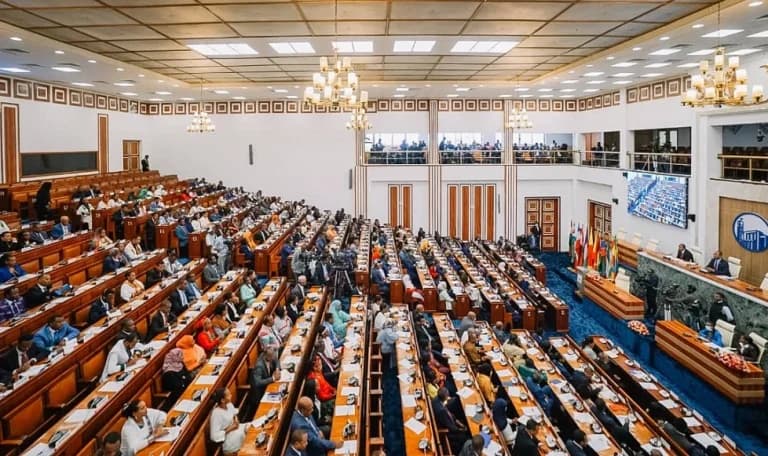
“This year’s eight-month revenue is unprecedented in the history of Ethiopia,” Minister of Trade and Regional Cooperation Dr. Kassahun Gofe told the House of People’s Representatives’ Standing Committee on Trade and Tourism on Wednesday. He added that the export revenue Ethiopia used to collect over two full years during the “post-transition” period has now been achieved in just eight months.
The numbers tell a story of momentum. A $2.4 billion year-on-year increase suggests Ethiopia’s export engine is accelerating, likely driven by strong performances in coffee, gold, and other key commodities. At this pace, the country is on track to challenge its full-year export records with four months still remaining.
But Parliament is not celebrating just yet.
Members of the Standing Committee on Trade and Tourism pushed back, pointing out that the eight-month performance still falls short of the country’s three-year medium-term plan targets set for 2018. They also flagged underperformance in oilseeds, pulses, and animal feed, sectors directly under the ministry’s watch, where export revenue has declined compared to last year.
Dr. Kassahun pushed back on the framing. The $6.76 billion figure “cannot be called low,” he argued, except when measured against the ambitious three-year plan. His message to lawmakers was clear: judge the trajectory, not just the gap.
On oilseeds and pulses, the minister pointed to forces beyond Ethiopia’s control. Global demand for these commodities has slowed and prices have fallen, dragging down revenue even as Ethiopia’s export volumes have actually exceeded targets. In other words, Ethiopia is shipping more but earning less per unit, a classic price-volume squeeze that commodity-dependent economies know all too well.
The $6.76 billion figure lands at a critical moment. Ethiopia is navigating foreign exchange pressures, managing a liberalizing economy, and working to prove to international creditors and investors that its reform agenda is delivering results. Record export revenue strengthens that case.
The tension between the ministry and Parliament, however, reveals a deeper question: Is Ethiopia growing fast enough to meet its own ambitions? A record is only as good as the benchmark it is measured against. And when the benchmark is a three-year plan designed to structurally transform the economy, even $6.76 billion can look like unfinished business.
The remaining four months of the fiscal year will determine whether this unprecedented pace holds or whether the oilseeds slump and global commodity headwinds start dragging the headline number down.


Comments