


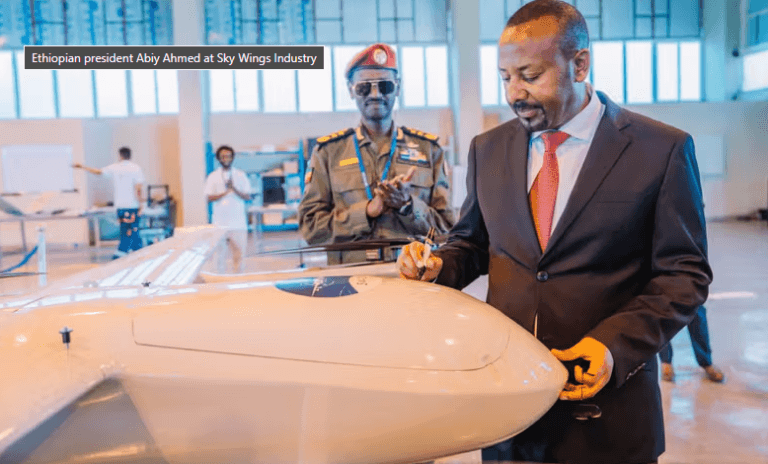
Ethiopia’s House of Peoples’ Representatives has re-elected Abiy Ahmed as Prime Minister for a new five-year term, following the ruling Prosperity Party’s decisive victory in the country’s June 1 general election.
Abiy was sworn in before lawmakers during the opening of the seventh parliamentary term.
The Prosperity Party won 438 of the 501 contested seats in the House, according to official results from the National Election Board of Ethiopia, giving it a substantial majority above the 274 seats required to form a government.
Under Ethiopia’s parliamentary system, voters elect members of parliament, who subsequently elect the prime minister.
The parliamentary session earlier elected outgoing Finance Minister Ahmed Shide as Speaker of the House.
A third term
Abiy, who first became prime minister in 2018 following widespread protests against the long-ruling EPRDF coalition, will now begin his third term in office.
He established the Prosperity Party in 2019 by bringing together several parties that had been part of the former ruling coalition. In 2019, he was awarded the Nobel Peace Prize for his efforts to resolve Ethiopia’s longstanding conflict with neighbouring Eritrea.
He began his second term in October 2021.
Economic and security challenges
Abiy’s new term begins as the government faces significant economic and security challenges.
The government projects economic growth of more than 10% in 2026, placing Ethiopia among Africa’s fastest-growing economies. At the same time, the administration faces continued pressure from public debt, inflation and the implementation of major economic reforms.
Security remains another major challenge, including efforts to consolidate peace, rebuild conflict-affected areas in Tigray and address ongoing armed conflicts in other parts of the country.
The June election was also held under difficult security conditions. According to reports, 143 polling stations in Ethiopia’s two most populous regions were unable to open because of security concerns linked to armed groups fighting the government. Voting was also not held in Tigray, as was the case in the 2021 election.
With a new five-year mandate and a large parliamentary majority, Abiy’s government is expected to focus on economic reforms, reconstruction and efforts to address the country’s continuing security challenges.
Comments