


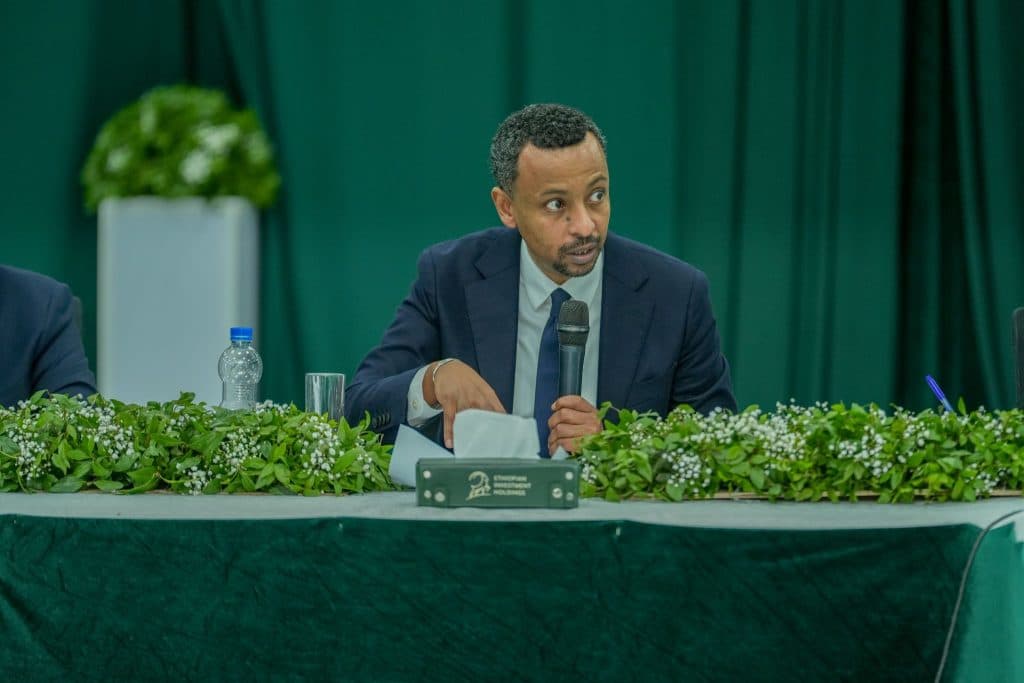
Ethiopian Investment Holdings (EIH) kicked off its annual performance dialogue this week, and day one packed a double feature: the heavyweight Ethiopian Shipping and Logistics (ESL) and the Ethiopian Sugar Industry Group (ESIG) with its three flagship factories. Together, they set the tone for a year of growth and a glimpse at the work still ahead.
Shipping: ESL sails past targets
ESL came in swinging. In the 2017 Ethiopian fiscal year (2023/24 G.C.), the state-owned logistics giant clocked 57.14 billion birr in revenue, beating targets by 20%. Profit before tax surged to 8.8 billion birr up 46% year-on-year and 32% above plan. Cargo volumes told a similar story: 7.7 million tons moved (up 40%), exports jumped 35.6%, and container handling hit 407,000 TEUs, beating expectations by 7%. Vessel utilization averaged a sharp 89%, reflecting operational efficiency few regional rivals can match.
On top of that, ESL pumped USD 421 million in foreign currency into Ethiopia’s reserves, 118% of its goal while bracing for renewed vehicle logistics growth as import restrictions ease. Looking forward, the company is doubling down with six new bulk cargo ships to keep pace with Ethiopia’s rising import-export needs.
Sugar: a sweeter turnaround
Meanwhile, on the agro-industrial side, the Ethiopian Sugar Industry Group (ESIG) and three independent factories, Wonji Shoa, Metehara, and Fincha, reported a stronger year. Output hit 163,290 tons of sugar, up 34.8% from last year, while sales reached 166,603 tons, generating 15.6 billion birr in revenue. That’s a staggering 91.9% leap year-on-year.
Still, challenges linger. Capacity utilization remains below potential, and EIH pressed factories to modernize operations, invest in mechanization, and raise efficiency to tackle Ethiopia’s chronic sugar supply gap.
The big picture
Day one made it clear: EIH’s portfolio companies are leaning into growth, reform, and efficiency. ESL is proving itself a foreign exchange powerhouse and logistics anchor, while ESIG is clawing its way toward meeting domestic demand. Both stories point to the same takeaway, EIH wants its enterprises to not only grow but also transform into leaner, more competitive players shaping Ethiopia’s economic future.

Comments