


Safaricom Ethiopia is negotiating a new local-currency financing facility of between $100 million and $150 million with the International Finance Corporation (IFC), as the telecom operator seeks to accelerate network expansion while reducing its exposure to Ethiopia’s foreign exchange risks. The discussions come at a time when domestic lending restrictions are limiting access to large-scale local financing.
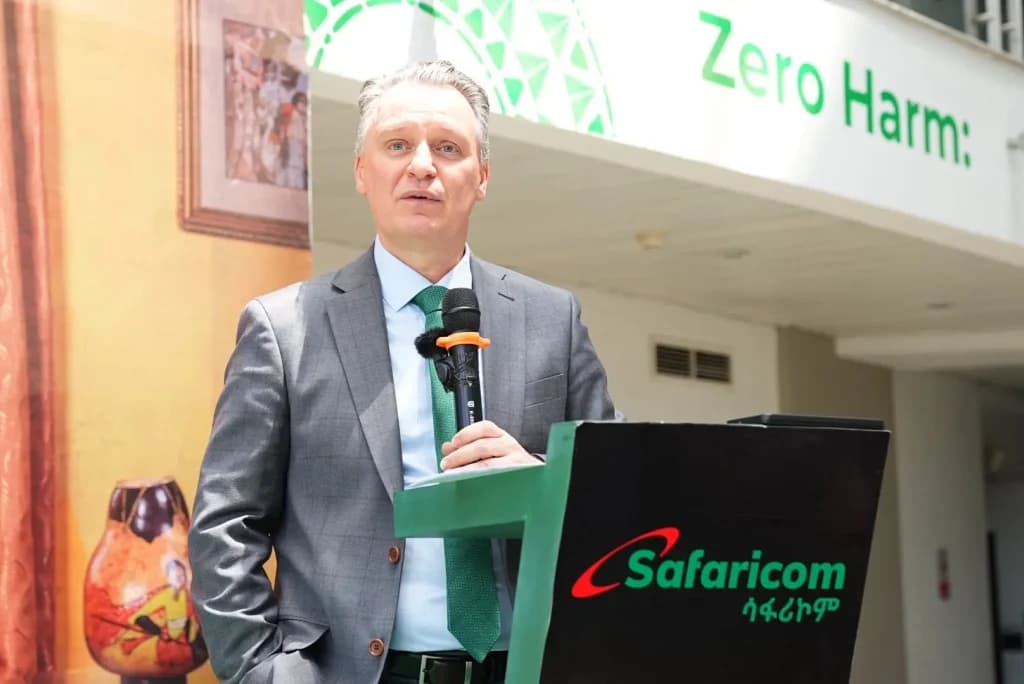
Speaking at an investor forum in Mombasa, Safaricom Ethiopia CEO Wim Vanhelleputte said the company is working with the IFC to structure a syndicated loan denominated in Ethiopian birr. The move would allow the operator to finance capital expenditure using local currency revenues, reducing the currency mismatch that has challenged many foreign investors operating in Ethiopia.
The proposed facility follows Safaricom Ethiopia’s recent decision to raise $134 million in external debt after finding it difficult to secure sufficient funding from local banks. According to company executives, Ethiopia’s credit market remains constrained by regulatory limits on annual loan growth and single-borrower exposure, making it difficult for large projects to obtain long-term financing from domestic lenders.
The financing discussions underscore a broader challenge facing Ethiopia’s private sector. Although the country has embarked on sweeping economic reforms and financial-sector liberalization, the domestic capital market remains shallow, forcing large infrastructure investors to rely heavily on shareholder funding or foreign-currency borrowing.
For Safaricom Ethiopia, access to birr-denominated funding has become increasingly important as the company transitions from its initial network rollout phase to a growth and monetization stage. Since launching commercial operations in 2022, the operator has invested billions of dollars in telecom infrastructure and expanded its network across much of the country while rapidly growing its subscriber base. The company recently surpassed 10 million customers and has indicated that operational breakeven is approaching.
The IFC is already one of Safaricom Ethiopia’s key financial partners. In 2023, the World Bank Group member invested $157.4 million in equity and provided a $100 million loan to support the rollout of Safaricom’s telecommunications network in Ethiopia. The investment formed part of a broader financing package that included guarantees from the Multilateral Investment Guarantee Agency (MIGA).
If approved, the new facility would represent one of the largest local-currency syndicated loans arranged for a private-sector company in Ethiopia. Such a structure would also align with the IFC’s growing focus on mobilizing local-currency financing in emerging markets to reduce exchange-rate risks for businesses operating in volatile currency environments.
The outcome of the negotiations could become an important test case for Ethiopia’s evolving financial system. A successful syndication would demonstrate the capacity of development finance institutions and local banks to jointly fund large-scale private investments in local currency, potentially creating a model for future infrastructure, telecom, energy, and manufacturing projects.
For Ethiopia’s second telecom operator, the financing would provide fresh capital to deepen network coverage, expand digital services, and strengthen its position in one of Africa’s fastest-growing telecommunications markets.
Comments