


Good morning!
Two numbers frame this week, and they are almost the same size.
The first is 126.9 billion birr. That is what Ethio telecom’s plan puts on the table for the 2026/27 fiscal year: 83.8 billion in direct and indirect taxes, and 43.1 billion in dividends. The tax goes to the treasury. The dividend goes to the share register, overwhelmingly the state, but as of May, not only the state.
The second is 100 billion birr. That is the capital the National Bank and the IFC agreed on Thursday to put behind Ethiopia’s first Mortgage Refinance Company, an institution that will not lend to a single homebuyer and will not take a single deposit. Its only job is to lend long-term money to the banks that do.
The difference between those two numbers is the difference between money being paid out and money being put to work. Ethio telecom’s 126.9 billion is a company that already exists sending its earnings somewhere. The 100 billion is an institution that does not exist yet, being built so that other people can borrow.
Most weeks the first kind of number gets the headline. This week the second one is the better story, and versions of it turn up all through the rest of this edition: a gold plant, a brewery’s power supply, a telecom network, a cargo fleet. Things being built rather than counted.
Now grab your buna.
The Fiscal Engine
Ethio telecom’s plan puts 126.9 billion birr on the table
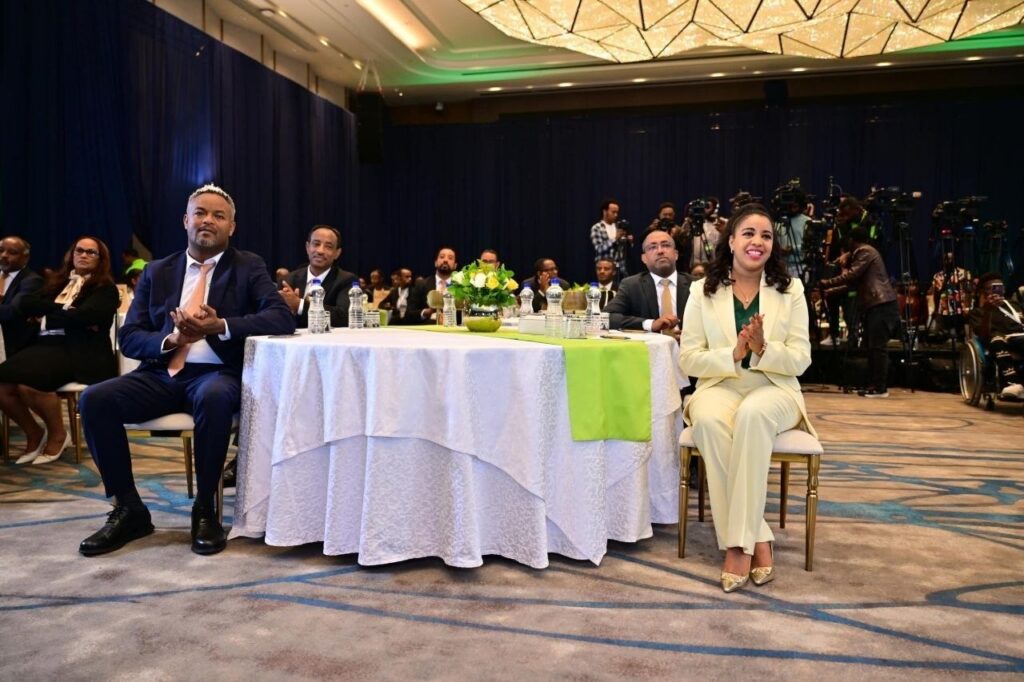
Ethio telecom’s Next Horizon Year II annual business plan puts dividends at 43.1 billion birr for 2026/27, alongside 83.8 billion birr in direct and indirect tax contributions covering corporate income tax, VAT, employment and withholding taxes, and customs duties. A further 8.1 billion birr of that tax contribution is earmarked for the National Disaster Risk Response Fund.
The plan also commits to supporting more than 644,000 ecosystem partners, agents, local suppliers, franchisees and value-added service partners, while sustaining a workforce of 49,200. Against a claimed historic contribution of 2.4 million direct and indirect livelihood opportunities, it targets a further 163,375 direct jobs and income streams this year, and puts CSR spending at 533 million birr, separate from the national development commitments.
All of it rests on the revenue line. At a press conference on 3 September, CEO Frehiwot Tamiru set the 2026/27 target at 295 billion birr, a 36.7 percent jump from 215.82 billion birr, with the customer base going to 96.2 million from 90.12 million. Mobile data and internet are expected to deliver 34.6 percent of revenue. Telebirr, which moved 4.19 trillion birr last year, is targeted at 67.69 million users, up 11.7 percent.
Sources: EBR, StockMarket.et, Ethiopia Insider
Inside the Banking System
Ethiopia gets a mortgage refinance company before it has a mortgage market
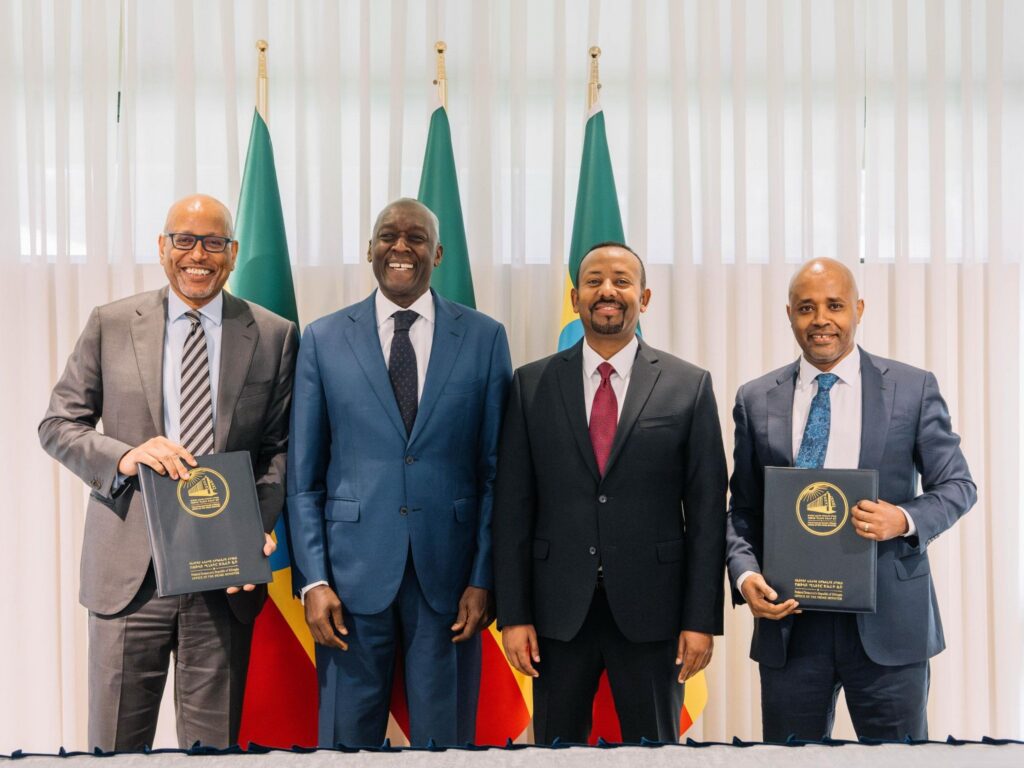
Prime Minister Abiy Ahmed oversaw the signing on 3 September of a Framework for Cooperation between the National Bank of Ethiopia and the International Finance Corporation to establish the country’s first dedicated Mortgage Refinance Company, capitalised at 100 billion birr, with the IFC contributing a minimum of USD 200 million.
The institution will be a wholesale, non-deposit-taking lender. It will not write mortgages. It will provide long-term funding to the banks that do, refinancing existing home loans so those banks are not trying to fund twenty-year assets with one-year deposits. The government links it to a target of 1.5 million affordable homes over five years.
This is the most important Ethiopian financial story of the week, and it will get a fraction of the attention the Ethio telecom numbers get.
Here is the problem it solves, in plain terms. A bank’s money is short-term: customers deposit it and can take it back next month. A mortgage is long-term: the borrower repays over twenty years. Lending money you might have to hand back next month to someone who will not repay for twenty years is dangerous, so Ethiopian banks mostly do not do it. A refinance company sits in between. It takes the mortgage off the bank’s books and gives the bank its money back, so the bank can write another one.
And here is why it belongs in a capital markets newsletter. If this company cannot take deposits, where does its own long-term money come from? It borrows it, by issuing bonds. That makes a mortgage refinance company a regular bond issuer with government backing and an IFC anchor behind it. Nigeria’s NMRC and Tanzania’s TMRC both work this way. If it does what it is designed to do, the ESX debt board gains an issuer it does not currently have. Watch that as closely as the housing target.
The central bank eases off the liquidity brake
The NBE has sharply cut the size of its liquidity-absorbing auction, offering to take 40 billion birr from commercial banks as a 100.7 billion birr deposit operation matures. The previous operation, on 20 August, drew 160 billion birr in bids; the NBE accepted the full 100.7 billion at a uniform marginal rate of 8 percent, with accepted rates ranging from 4 to 8 percent. Only two institutions participated. The new two-week deposits mature on 17 September.
Two banks. One hundred billion birr. That single detail is worth more than most of the macro commentary published in Ethiopia this month.
It also explains August. For the first two weeks of the month, overnight and seven-day money both cleared at exactly 13.000 percent, the corridor floor, with zero change twice, a system holding more birr than it needed. Then in the week of 17–21 August the overnight rate jumped 311.9 basis points to 16.119 percent, above the policy rate itself, and the curve inverted. Across the month the NBE drained roughly 120 billion birr from the banking system through the FX window, including 80 billion in the 20 August special sale alone.
The surplus birr in this system is not spread across the system. It sits in a very small number of accounts, and when the central bank moves it, the price of cash moves with it. Two auctions are scheduled this month, on 9 and 23 September. If the interbank rate settles back at 13.000 and holds, August was a liquidity event with a short half-life. If it does not, the surplus has been structurally drained. Sources: Birrmetrics, StockMarket.et
The Books Close
ECX finishes the year at 48.83 billion birr
The Ethiopian Commodity Exchange traded commodities worth 48.83 billion birr in 2025/26 against a plan of 29.1 billion, reaching 167.8 percent of target. The figure is up 21.63 billion birr, or 79 percent, on the previous year.
Behind the trading number sits the certification machinery: quality assurance certificates for 8,499 coffee samples and 5,828 oilseed and pulse samples, 14,327 in total; grade certification for 2,314 vehicles carrying 38,710 tonnes moving outside the exchange floor for cooperative unions and direct market linkage participants; and weighing services for 17,648 vehicles carrying 695,073 tonnes. ECX has also finalised product quality grading contracts to bring opal, cotton, and hides and skins into the trading system.
Sources: Ministry of Trade and Regional Integration,
EIC revenue up 40 percent, market share up two points
The Ethiopian Insurance Corporation reported total revenue of 18.6 billion birr for the fiscal year ended July, a 40 percent increase and 98 percent of its annual target. Market share rose from 32.5 to 34.5 percent. The results were presented at the corporation’s 39th Annual Management Conference in Addis Ababa.
The prior audited year gives the pressure point: claims paid rose roughly 138 percent to about 6.56 billion birr, driven by spare parts, vehicle repairs, paint and medical costs, while investment income rose about 75 percent to 1.27 billion. Source: Birrmetrics
Agriculture earns USD 4.55 billion, and coffee is two-thirds of it
Agricultural exports generated USD 4.55 billion in 2025/26, with coffee alone bringing in USD 3.1 billion. State Minister of Agriculture Sofia Kassa told the ministry’s annual review in Bishoftu that more than 33.5 million hectares were cultivated, producing over 1.85 billion quintals. Milk output reached 15.83 billion litres, honey 427,900 tonnes, and eggs 11.7 billion. The ministry did not break down the remaining USD 1.45 billion across other commodities.
Sources: Birrmetrics
Gold, in Three Stages
Benishangul-Gumuz delivered 8,985 kilograms
The Benishangul-Gumuz Mineral Resources Development Bureau reported deliveries of 8,985 kilograms of gold to the National Bank of Ethiopia in 2025/26, against roughly 4,700 kilograms the year before and a regional target of 7,000. Officials attribute the increase to licensing enforcement, a framework letting licensed suppliers buy and channel gold formally, and coordinated security operations.
Midroc buys the machine that industrialises it
MIDROC Gold Mine, part of MIDROC Investment Group, signed an agreement on 29 August with Austria’s CEMTEC Cement and Mining Technology GmbH to manufacture, install and supply machinery for a gold processing plant in Metekel Zone, Benishangul-Gumuz, designed to handle 1.25 million tonnes of gold-bearing ore a year. The deal was signed by Dula Mekonnen, Deputy CEO of MIDROC’s Mining Sector, and CEMTEC CEO Thomas Plochberger. Delivery is expected within a year.
And KEFI hires a mine builder for the board
KEFI Gold and Copper, the AIM-listed developer behind Tulu Kapi, appointed Danny Callow as independent Non-Executive Director on 1 September, disclosed in a London Stock Exchange filing. Callow was Head of African Copper Operations at Glencore, CEO of Mopani Copper Mines in Zambia and Mutanda in the DRC, COO of Consolidated Copper Corp, and spent seven years at Toubani Resources through COO, CEO and Executive Chairman. He will chair a newly created Operations and Physical Risks Committee, built specifically to monitor development and, later, production at Tulu Kapi, targeted for mid-2028.
Two Ethiopians hold senior committee chairs on the board: Addis Alemayehou, founder of Kana TV, Afro FM and 251 Communications and Chairman of Kazana Group, chairs Nomination and Remuneration; Maleda Bisrat, Ethiopia Country Director at the Tony Blair Institute and formerly an adviser to the Ethiopian Investment Commission, chairs Audit and Risk. All four Non-Executive Directors will join the boards of KEFI’s Ethiopian subsidiaries. Executive Chairman Harry Anagnostaras-Adams is expected to move to Non-Executive Chairman around the start of production, when a CEO is appointed and Finance Director John Leach retires.
Sources: EBR, Addis Standard
What Is Being Built
Safaricom Ethiopia crosses 15 million and closes on breakeven
Safaricom Ethiopia has passed 15 million 90-day active subscribers, five years after receiving its unified licence on 9 July 2021 and less than four years after commercial launch in October 2022. CEO Wim Vanhelleputte said the company has built more than 3,500 network sites reaching roughly 60 percent of the population, all 4G-enabled and 5G-ready. The company says growing revenue is bringing it close to financial breakeven.
Ethiopian Airlines is close to ten more freighters
Reuters reports, citing two industry sources, that Ethiopian Airlines is nearing a deal for eight to ten long-haul Boeing freighters, likely two current-generation 777Fs plus the delayed 777-8F for the balance, as it advances plans for a new mega-hub to compete with Gulf carriers. Boeing declined to comment; Ethiopian had no immediate comment. The airline already flies twelve 777Fs within a 147-aircraft fleet, and in March leased two 777-300ERs from AerCap for freighter conversion. Boeing must stop building the 777F at the end of 2027 under emissions rules and has asked the FAA for a waiver to deliver 35 more; the FAA says no decision has been made.
Heineken switches Kilinto off heavy fuel oil
Heineken Ethiopia will formally inaugurate a 4 billion birr (about USD 24.5 million) energy project at its Kilinto brewery in the second half of October, replacing heavy fuel oil with green electricity. Managing Director Bart De Keninck said the plant is already running on it after about eighteen months of work. The company says it has cut emissions 21 percent over five years and is targeting one of the first carbon-neutral breweries of its size in Africa.
Heineken was the fourth-largest taxpayer in Ethiopia last year, and the largest private one. A brewer spending 4 billion birr to stop importing fuel oil is an import-substitution story dressed as a sustainability story, and in an economy this short of dollars, that is the version that counts.
Also this week: the Trade and Development Bank signalled interest in a new fertiliser project in Ethiopia as part of a regional pipeline spanning energy, aviation and agriculture. Sources: StockMarket.et, Reuters, Birrmetrics
🎧 On the Podcast
Episode 13 | Index Funds: A Simpler Way to Invest in the Market
What if you could invest in the market without having to work out which individual company will perform best?
That is the idea behind index funds: products designed to track the performance of a market index rather than trying to beat it. In this episode we go through what a market index actually is, how index funds work, index funds against individual stocks, passive versus active investing, the benefits and the risks, why indexes matter well beyond investing, and what index funds could mean for Ethiopia as its capital market develops.
Read the week from the top and it is a list of large, satisfying numbers. Ethio telecom targeting 295 billion birr. ECX finishing at 48.83 billion, 68 percent past its plan. Agriculture earning USD 4.55 billion. Benishangul handing over nearly nine tonnes of gold. EIC growing 40 percent. Safaricom crossing 15 million.
Read it again from the bottom and it is a list of things being built.
A 100 billion birr institution being set up because Ethiopian banks cannot safely lend for twenty years. An Austrian machine coming to Metekel to process a million tonnes of ore. A brewery spending 4 billion birr to stop importing fuel oil. Ten freighters. Three thousand five hundred mobile towers.
The big numbers are real, and they are mostly established companies doing what established companies do at scale. The things being built are smaller, slower, and harder to headline, and they are what decides whether the next set of big numbers comes from somebody new.
One line connects the two. Somewhere in that 43.1 billion birr dividend is roughly 460 million birr belonging to 47,377 Ethiopians who bought a share on their phone two years ago. That is the whole point of building any of it.
Keep your coffee strong. See you next Monday. ☕