


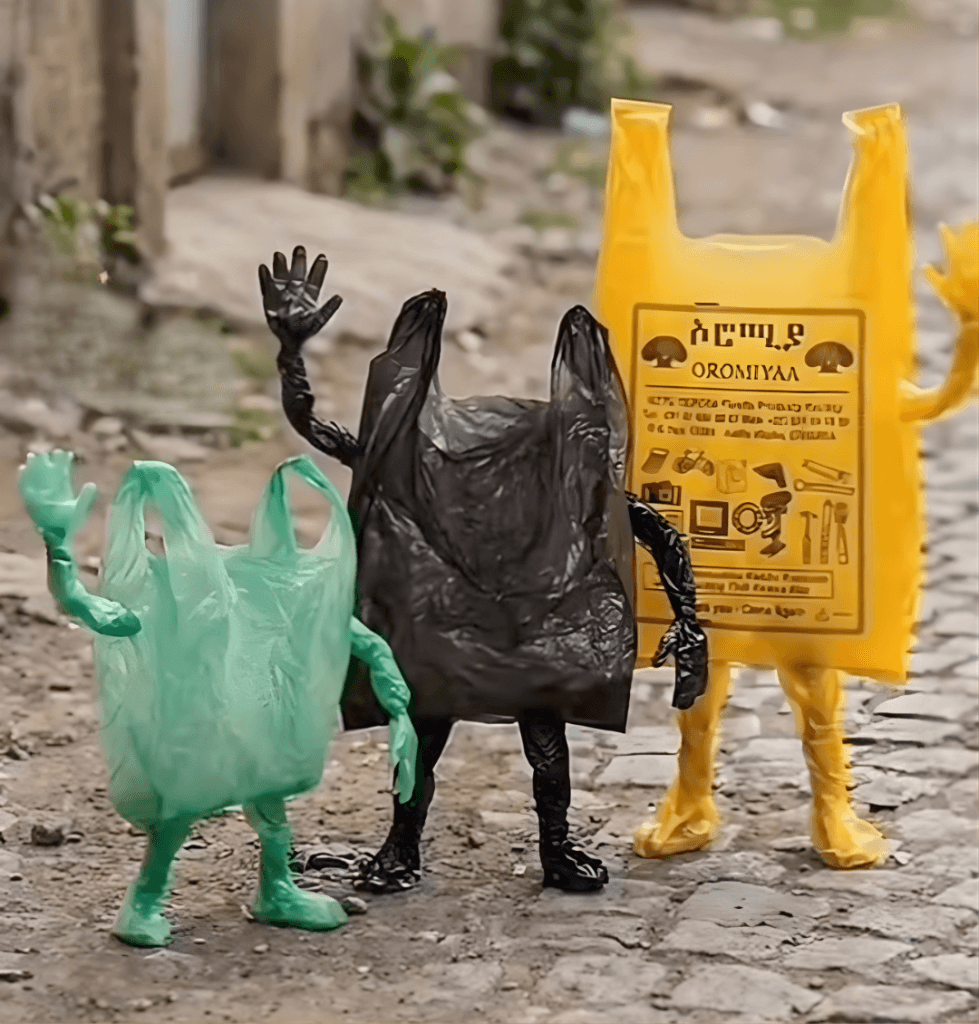
This week’s newsletter is inspired by the editor’s chronic forgetfulness. Once again, he stepped out without a zembil or even a paper bag, confidently assuming “I’ll figure it out.” Minutes later, reality struck, injera in hand, folded like a legal document, walking home like it’s perfectly normal.
With plastic bags officially banned, this newsletter is both a story and a reminder: check your pockets, grab your zembil, and respect the wisdom of our mothers. The era of improvising with bare hands is officially over.
Anyways, let’s dive in …
Mining & Investment: Ethiopia Emerges as a Strategic Gold Hub
Ethiopia has quietly moved into the global spotlight after China’s Zijin Gold International agreed to acquire Allied Gold Corporation in a USD 4 billion all-cash deal, highlighting the country’s growing importance in global gold mergers and acquisitions.
The acquisition, priced at CAD 44 per share, a 27% premium, includes Allied Gold’s African assets in Ethiopia, Mali, and Côte d’Ivoire, with Ethiopia’s Kurmuk gold project standing out as a long-life, high-quality deposit. Zijin described Kurmuk as a “generational asset” capable of supporting multi-decade production.
Fully funded from Zijin’s cash reserves, the deal is expected to close by late April 2026, pending regulatory and shareholder approvals. Once completed, Allied Gold will be delisted from North American exchanges.
For Ethiopia, the transaction signals a strategic shift—from a frontier exploration destination to a serious long-term gold producer attracting major global miners. As global gold companies race to secure scalable, long-life assets, Ethiopia is increasingly positioned at the center of Africa’s mining consolidation story. Source: Birrmetrics
Technology & Innovation: Ethiopia’s First AI University to Launch
Prime Minister Abiy Ahmed announced that Ethiopia’s first Artificial Intelligence (AI) university will become operational next Ethiopian year, marking a major step in the country’s technology-driven development agenda.
Speaking to the House of People’s Representatives, the Prime Minister said AI has been elevated to the highest level of government policy as one of five pillars of economic growth, with a strong focus on youth empowerment and future competitiveness.
Construction of the AI university, described as one of the largest of its kind globally, is progressing rapidly and is expected to be functional within months. The initiative complements Ethiopia’s Five Million Coders program, which has already trained three million young people, aiming to build a generation capable of developing applications, driving innovation, and competing in the global digital economy.
The government views the AI university as a long-term investment that will anchor Ethiopia’s transformation into a knowledge- and innovation-led economy.
Digital Finance: Mobile Money Users Hit 58 Million
Ethiopia’s shift toward a digital financial system is accelerating rapidly, with 58 million citizens using mobile money services, Prime Minister Abiy Ahmed told the House of People’s Representatives.
Introduced just three years ago, mobile money has driven one of the country’s most significant structural transformations, moving Ethiopia away from a cash-dominated economy.
Digital payments have grown by 60% in the past six months, matching strong year-on-year growth. The expansion is also boosting broader financial indicators: savings are up 15%, financial inclusion increased by 11%, and mobile-based lending reached 15% penetration.
This growth has been underpinned by major gains in telecom access, with mobile subscriptions surging from 37 million to over 97 million, providing the backbone for Ethiopia’s fast-growing digital finance ecosystem.
Debt & Finance: PM Abiy Defends Debt Strategy Amid Eurobond Dispute
Prime Minister Abiy Ahmed defended Ethiopia’s debt policy in parliament, emphasizing that the government has avoided new US-dollar commercial borrowing since the reform period began, even as private bondholders threaten a USD 1 billion lawsuit over Ethiopia’s Eurobond.
The dispute follows the suspension of a planned Eurobond restructuring after the Official Creditor Committee, co-chaired by China and France, ruled that the deal with private investors failed to meet the Comparability of Treatment principle.
In response, a bondholder group led by VR Capital and Farallon Capital warned it may pursue legal action in English courts.
Ethiopia has already restructured over USD 8 billion in official debt, securing USD 3.5 billion in relief, and its Eurobond has rebounded sharply from conflict-era lows. The standoff now risks becoming the first Common Framework case to reach the courts, potentially testing global debt restructuring architecture and complicating Ethiopia’s IMF-backed reform programme.
International Partnerships: Ethiopia and UK Sign $400M+ Deals
Ethiopia and the United Kingdom have signed three major cooperation agreements to support economic reforms, public investment systems, and green energy infrastructure.
Key agreements include:
- £17.5 Million for Public Investment Reforms: The UK will provide technical assistance through Phase II of the Ethiopia Investment Advisory Facility (EIAF), establishing a Public Investment and Asset Management (PIAM) Facility to strengthen investment planning, management, and implementation.
- $400 Million Power Transmission Deal: Through a Joint Development Agreement with Gridworks (UK/BII), Ethiopia will build two privately financed transmission lines:
- Degehabur–Kebridehar (206 km, 132 kV) connecting the Somali region to central and northeast grids.
- Hurso–Ayisha (198 km, 400 kV) unlocking wind and solar potential and strengthening connectivity with Djibouti.
These projects aim to improve grid reliability, accelerate industrial growth, expand rural electrification, and unlock renewable energy potential, supporting Ethiopia’s goal to reach 20 GW of power capacity by 2030.
Officials highlighted that the agreements deepen economic and development cooperation, promote private sector participation, and advance sustainable energy and investment frameworks in line with Ethiopia’s Homegrown Economic Reform Agenda.
Economic Performance: Ethiopia Mobilizes Over USD 18 Billion & Revises GDP Forecast
Prime Minister Abiy Ahmed reported that Ethiopia mobilized more than USD 18 billion in foreign exchange over the past six months, marking a record performance.
- Goods exports: USD 5.1 billion
- Service exports: USD 4 billion
- Remittances: USD 4.6 billion
- Foreign direct investment: USD 2.3 billion
- Aid and concessional loans: over USD 2 billion
Imports over the same period stood at USD 11.3 billion, while fiscal revenue collection reached 709 billion birr in the first half of the year, prompting the government to raise its full-year target to 1.5 trillion birr for the federal government, with regions expected to collect an additional 1 trillion birr by fiscal year-end.
Reflecting strong economic performance, the government raised the 2025/26 GDP growth forecast to 10.2%, up from 9.2% six months ago. The IMF projects growth at 9.3%, narrowing the gap between official and external estimates. Key drivers include unexpectedly strong agricultural output, with farmers producing nearly one billion quintals in six months—more than 50% above expectations.
Banking & Finance: NBE FX Auction & Customs Clarification
Foreign Exchange Auction No. 17: The National Bank of Ethiopia (NBE) conducted its 17th foreign exchange auction, clearing at 155.05 birr/USD, slightly weaker than the previous 154.82 birr/USD. Out of USD 127.25 million in bids, the central bank allocated USD 70 million, reflecting continued strong demand for foreign currency.
Accepted bid rates ranged from 154.8141 to 155.0519 birr/USD, signaling tighter market expectations and gradual formation of a market-reflective exchange rate. The modest depreciation reflects persistent pressure on the birr, despite regular NBE interventions.
Customs Indicative Prices: On February 7, NBE clarified that Ethiopian Customs Commission indicative prices are reference points only, meant to ensure consistency and transparency and are not fixed prices. Banks should apply them only in cases of significant discrepancies between declared import values and reference prices. Supervisory teams will monitor compliance to ensure consistent application across the banking system.
Energy & Utilities: EEU and Regional Fiber Expansion
Ethiopian Electric Utility (EEU): EEU reported 52.26 billion birr in revenue for H1 FY2025/26, reaching 96% of its 54.23 billion birr target. Energy sales contributed 34.34 billion birr, new customer connections added 16.7 billion birr, and non-core income brought in 1.2 billion birr.
EEU added 266,916 households, a 13.2% increase year-on-year, bringing the total customer base to over 5.46 million, with 93.3% on postpaid plans. Electricity procurement reached 8,790 GWh, nearly meeting planned volumes. Digital payments accounted for 94.8% of bill settlements, highlighting strong adoption of modern payment channels.
Regional Fiber Corridor: Ethio Telecom, Djibouti Telecom, and Sudatel signed an agreement to develop a high-capacity cross-border fiber corridor linking Djibouti, Ethiopia, and Sudan under the Horizon Fiber Initiative. This project will strengthen regional and global connectivity, promote digital sovereignty, and serve as a model for innovative African partnerships.
AI Leadership Forum in Addis Ababa
OpenAI, in partnership with ALX and the Africa Fintech Summit, will host a high-level AI Leadership Forum in Addis Ababa on February 17, during African Union Summit Week.
Under the theme “Talent, Infrastructure, and Opportunity in Africa,” the forum will bring together policymakers, business leaders, technologists, startups, and educators to discuss Africa’s role in the global AI economy. The program features a keynote and fireside chat with Emmanuel Lubanzadio, Africa Lead at OpenAI, building on initiatives such as the OpenAI Academy and the AU’s Continental AI Strategy.
Organizers highlight the urgency for African countries to not just adopt AI, but to build, govern, and benefit from it, positioning the continent’s young population for an AI-first global economy. Source: Shega News
Energy Market Update: EPSE FX Losses
Ethiopia’s state fuel importer, Ethiopian Petroleum Supply Enterprise (EPSE), incurred 208 billion birr in FX revaluation losses as of June 2025 due to exchange rate reforms and trade credit liabilities, creating short-term cash flow pressures.
The government has formalized fuel subsidies as direct budget spending, capping them at 100 billion birr (0.6% of GDP) for FY2025/26 and providing temporary fiscal support through monthly transfers. Measures to strengthen EPSE’s balance sheet include a planned capital increase, a shift to lower-cost letters of credit, and settlement of legacy subsidy debts.
The IMF noted that favorable global oil prices eased pressures, but cautioned that EPSE’s strain reflects broader fiscal challenges, emphasizing the need for tight expenditure control and sustained revenue mobilization.
Stay tuned for next week’s insights, where we unpack more sectoral trends and policy moves shaping Ethiopia’s future.
Enjoyed this edition? Forward it to your circle or reply with tips and scoops—we’re always listening. Stay curious, stay caffeinated, — Written by the StockMarket.et Newsroom