


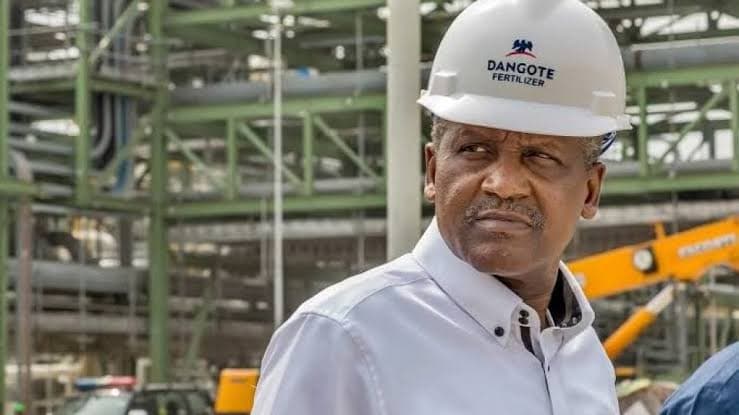
Pour the buna. This week’s number is 100. That is the maximum number of Ethiopian investors who can buy into Africa’s largest-ever IPO, under the notice the Ethiopian Capital Market Authority issued on Tuesday. The Dangote Petroleum Refinery offer is open in Addis Ababa until October 23, at ETB 74.90 a share, but only to qualified investors, and only up to 100 of them unless ECMA approves more.
Two days later, Aliko Dangote stood in front of a hall of bankers and regulators at the ESX-hosted roadshow and made a second promise: 10% of his group’s Ethiopian fertilizer business will be listed on the Ethiopian Securities Exchange.
The rest of the week was about who gets in, and who is still waiting at the door. The central bank’s bigger dollar auctions opened oversubscribed. The Finance Ministry published a 134-billion-birr Treasury bill calendar. Inflation eased slightly. And on the debt side, Ethiopia’s Eurobond exchange is still not closed, Fitch kept the country in Restricted Default, and the IMF’s next review has moved to early 2027.
Here is the week.
Capital Market
Dangote brings his IPO to Addis, and pledges a listing on the ESX
Aliko Dangote told Ethiopian investors on Thursday, October 15, that his group’s commitment to Ethiopia “has no limit,” StockMarket.et reports. He was speaking at the Dangote IPO Ethiopia Investor Roadshow, hosted by the Ethiopian Securities Exchange at the Ethiopian Skylight Hotel.
The biggest announcement for the local market: 10% of the group’s Ethiopian fertilizer business will be listed on the ESX. Dangote is building a $2.5 billion urea fertilizer complex in Gode, Somali Region, in partnership with Ethiopian Investment Holdings.
He also laid out the group’s Vision 2030, under which it plans to invest $50 billion and grow revenue to $100 billion by 2030. Ten percent of that investment across Africa, he said, is earmarked for Ethiopia. Beyond Ethiopia, the Lagos refinery is set to expand to 1.4 million barrels a day, and the group plans 10,000 megawatts of power generation across the continent. Dangote said the group expects $36 billion in revenue by the end of this year.
Speaker of Parliament Ahmed Shide described the deal as a model of African enterprises financed by Africans. ECMA’s new head, Dagmawit Shiferaw, said the offer creates a real opportunity for qualified investors and advances the connection of African capital markets.
The rules: qualified investors only
The roadshow followed a public notice from ECMA on Tuesday, October 13. For the first time, the regulator has exempted a foreign company from registration so it can offer shares to investors in Ethiopia. The condition is that the offer does not reach the general public.
Who can buy:
- High-net-worth individuals with a net worth of at least ETB 10 million, not counting one motor vehicle and their primary residence
- Institutional investors
The terms:
- Price per share: ETB 74.90
- Application deadline: October 23, 2026
- Where to apply: the appointed distributors, United Capital, CBE Capital Investment Bank and Wegagen Capital Investment Bank
ECMA’s notice puts several obligations on the intermediaries. They must cap participation at 100 qualified investors unless the Authority approves more, verify and document each investor’s status before they take part, state the restriction clearly in all offering material, get ECMA approval for any solicitation advertisement, and avoid mass marketing that could reach non-qualified investors. ECMA cited Capital Market Proclamation No. 1248/2021 and Directive No. 1030/2024 as the governing framework.
The regulator also stressed that approving a qualified-investor offering is not an endorsement of the shares, the issuer or the IPO, and that investors must review the offering documents and assess the risks themselves.
The wider offer: Dangote opened the IPO on the Nigerian Exchange on September 14. It comprises 4.1 billion new shares at ₦525 each, seeking about $1.6 billion and valuing the refinery at about $47 billion. The refinery reported $1.82 billion in profit after tax in the first half of 2026 on more than $13 billion in revenue, reversing a $476 million loss in 2025. The wider offer closes on October 27, and trading in Lagos is expected to begin in early December.
Economy and Policy
Inflation eases to 14.9% in September
Ethiopia’s annual headline inflation slowed to 14.9% in September from 15.1% in August, according to the Ethiopian Statistical Service, StockMarket.et reports. It is still 1.7 percentage points higher than in September last year, when it stood at 13.2%.
- Food inflation: 14.8%, down from 14.9%
- Non-food inflation: 15.1%, down from 15.4%
Within food, sugar, honey and chocolate rose the most at 39.8%, followed by meat at 22%. Bread and injera rose 8.6%, up from 8.1% in August. On the non-food side, education inflation fell sharply from 25.3% to 17.8%, and health from 12.8% to 10.9%, while transport edged up to 16% and alcohol and tobacco to 18.2%.
The bigger dollar auctions open oversubscribed
The National Bank of Ethiopia sold USD 140 million at Foreign Exchange Auction No. 30 on Tuesday, the first sale under its enlarged second-quarter programme, StockMarket.et reports. Banks bid USD 152.09 million, about 8.6% more than was on offer. Twenty-nine banks took part and 26 received allocations.
- Weighted average rate: 160.1072 birr per dollar (vs 160.2297 at Auction No. 29)
- Cut-off rate: 158.1724 birr
- Bid range: 153.0000 to 160.9878 birr
The result follows two auctions that fell short. At Auction No. 29, banks bid USD 123.49 million for USD 125 million on offer, and the September 9 auction also left $5 million unsold.
The NBE is allocating $840 million this quarter through six bi-weekly auctions of $140 million each, 12% more per auction than in the first quarter. The next auction, No. 31, is on October 27, followed by November 10 and 24, and December 8 and 22.
Finance Ministry sets a 134-billion-birr T-bill calendar
The Ministry of Finance plans to issue 133.97 billion birr in Treasury bills in the second quarter of the 2026/27 fiscal year, across six auctions between October 14 and December 23, Birrmetrics reports.
- 364-day bills: 73.23 billion birr (54.7%)
- 182-day bills: 42.43 billion birr (31.7%)
- 91-day bills: 15.26 billion birr
- 28-day bills: 3.05 billion birr
The largest auction is set for November 11 at 30.99 billion birr. The ministry says it will update the calendar monthly to keep a three-month forward view. Birrmetrics notes the figure is planned gross issuance, and the calendar does not say how much is new borrowing and how much will refinance maturing bills.
For reference, the June 24 auction drew 96.76 billion birr in bids for 28.09 billion on offer, with 364-day bills at a weighted average yield of 14.72%. In July, the IMF reported that the government’s new domestic financing had become entirely market-financed through competitively priced T-bills.
The IMF’s next review moves to early 2027
IMF discussions on Ethiopia’s sixth review under the Extended Credit Facility are now expected in November, with an Executive Board decision in early 2027, The Reporter reports. The fifth-review report had named October 15, 2026, as the earliest date for the next disbursement, projected at SDR 154.11 million, down from the originally planned SDR 191.70 million.
An IMF spokesperson told The Reporter that October 15 was the earliest possible window, not a deadline. IMF communications director Julie Kozack said a mission will first visit Ethiopia and then report to the Board. The sixth review assesses performance against end-June 2026 targets.
The fifth review, completed July 1, released about USD 464 million and brought disbursements under the four-year, USD 3.4 billion programme to about USD 2.647 billion. Federal tax revenue rose 76% in the first nine months of 2025/26, according to IMF data.
Five years in the Common Framework: 11 of 14 deals done, the Eurobond still open
Ethiopia has finalised 11 of the 14 bilateral agreements required with its official creditors, but its USD 1 billion Eurobond exchange has not yet closed, according to a World Bank Global Sovereign Debt Roundtable report released on October 14, Birrmetrics reports. Ethiopia is the only one of six major restructuring cases reviewed whose bond exchange is still pending. Zambia, Ghana, Sri Lanka and Suriname completed theirs between November 2023 and December 2024.
At the roundtable in Bangkok, NBE Governor Eyob Tekalign (PhD) called for clear deadlines for debt negotiations, early caps on the fees charged by financial and legal advisers, and easier access to financing for countries emerging from restructuring.
Ethiopia requested debt treatment in February 2021 and defaulted on the Eurobond in December 2023. A first deal with bondholders in January 2026 was rejected by the Official Creditor Committee. A revised agreement in principle reached on June 29 was assessed favourably by the committee in August.
Fitch keeps Ethiopia at Restricted Default
Fitch Ratings affirmed Ethiopia’s long-term foreign-currency rating at Restricted Default on October 16, Birrmetrics reports, citing the continued default on the Eurobond and other commercial external debt. Ethiopia is restructuring about $15 billion in external debt.
What Fitch reports:
- Reserves: an estimated $5.9 billion at the end of 2025/26, covering 2.5 months of external payments (2.1 months a year earlier; 0.7 months in 2023/24), supported by gold and coffee exports
- The Eurobond deal: the $1 billion bond would be exchanged for an $880 million, three-year instrument at 6.15%, plus a New Money Warrant. Fitch expects a consent solicitation in the coming weeks, needing 75% of bondholders, and settlement possibly before the end of 2026
- Still outstanding: a commercial loan of about $200 million remains under negotiation
- Fiscal deficit: 0.5% of GDP in 2025/26, forecast to widen to 2% in 2026/27 because of fuel subsidies reintroduced in March and the conflict in Tigray. Fitch called the risk of a larger deficit high
- Growth: forecast to moderate to 7% in 2026/27
- Debt: general government debt of about 33% of GDP in 2025/26, falling to 30% by 2027/28; total public-sector debt about 45%
Fitch affirmed the local-currency rating at CCC+. It said it will assign a new foreign-currency rating once the commercial debt restructuring is complete.
Tigray placed under a six-month federal caretaker administration
The federal government has set up a six-month caretaker administration for Tigray under direct federal oversight, following renewed fighting with the TPLF, Birrmetrics reports. The Council of Ministers regulation, authorised by the House of Federation, replaces the interim administration led by Lt. Gen. Tadesse Werede.
Five officials share executive responsibility: Asefa Abraha Hagos (administration and public service), Tewodros Aregay W/Selassie (economic affairs and reconstruction), Brig. Gen. Gebreegziabher Beyene Hailu (security and peace), Redai Halefom W/Selassie (political affairs) and Shishay Amare (Mayor of Mekelle). The mandate covers security, reconstruction, the return of displaced people and preparing elections within six months. Birrmetrics notes the announcement did not disclose a reconstruction budget or an election date.
Banking and Corporate
Coopbank reports ETB 11.47 billion pre-tax profit
The Cooperative Bank of Oromia (Coopbank) posted a profit before tax of ETB 11.47 billion for the 2025/26 fiscal year, StockMarket.et reports. The results were presented at the bank’s 22nd Ordinary General Assembly of Shareholders.
- Total deposits: ETB 193.26 billion
- Foreign exchange earnings: USD 570.8 million
- Coopay E-birr: 22.3 million users and ETB 2.74 trillion in digital transactions
- Michu digital lending: more than ETB 60 billion disbursed across about 3.169 million loan accounts
- Agricultural finance: more than ETB 6 billion to over 67,000 farmers
Coopbank was among the eight issuers whose shares ECMA registered on September 30, including 82 million new shares to be offered to existing shareholders.
Ethio Telecom names Tariku Demissie acting CEO
The Board of Ethio Telecom (TELE), the only non-bank company listed on the ESX, has appointed Tariku Demissie as Acting Chief Executive Officer, effective October 16, StockMarket.et reports, citing Tikvah Ethiopia. The appointment was communicated by Board Chairperson Frehiwot Tamiru, who led the company as CEO until Prime Minister Abiy Ahmed named her Minister of Innovation and Technology on October 8.
In her letter, Frehiwot said the company is in the second year of its three-year strategy, Next Horizon: Digital and Beyond 2028, and named three priorities for the transition: an orderly leadership handover, uninterrupted operations and services, and strengthening the capacity already built. Tariku’s mandate covers implementing the strategy, directing day-to-day operations, improving service quality and efficiency, and strengthening growth and competitiveness. The letter did not say how long the acting appointment will last or when a permanent CEO will be named.
Business and Industry
KEFI restarts work at Tulu Kapi
KEFI Gold and Copper has resumed development at its Tulu Kapi gold project, StockMarket.et reports. Work had been suspended after what the company called the Genji Incident, which began on September 4 and was resolved on September 10 after talks with community leaders. KEFI said it was the first fatality involving its personnel in 12 years on the project.
The restart is phased. It begins with reconnecting the site to the regional grid and building access roads, followed by resettlement and replacement housing, security upgrades, earthworks for the processing plant and staff accommodation. KEFI expects the mine to directly employ about 1,000 people from local communities once in production. The company signed a mining services agreement worth more than $400 million with BCM Group in June, and says its lenders remain committed while timelines and financing are revised.
💡 Weekly Tip: What Is a “Qualified Investor”?
The Dangote offer introduced many readers to a term they will see more often. Under Ethiopian capital market law, some offers can be made only to qualified investors, people and institutions considered able to judge the risk themselves. For this offer, ECMA set the bar at:
- A net worth of at least ETB 10 million, excluding one car and your main home, or
- Being an institutional investor
A few things to keep in mind:
- A qualified-investor offer is not a public offer. It is not advertised to everyone, and the investor protections that come with a full registered prospectus may not all apply.
- Your status is checked. Distributors must verify and document that you qualify before you take part.
- Regulator approval is not a recommendation. ECMA said clearly that allowing the offer is not an endorsement of the shares.
- Use only licensed firms. If someone you don’t know offers you “Dangote shares” outside the three appointed distributors, check with ECMA first.
For information only. Not investment advice.
🗓️ On the Calendar
- October 23: Deadline for qualified investors in Ethiopia to apply for Dangote refinery shares
- October 25: Comments due on ECMA’s draft Foreign Portfolio Investment Regulation (public forum on October 26)
- October 27: NBE FX Auction No. 31 ($140 million); the wider Dangote IPO closes
- November 11: Largest T-bill auction of the quarter (30.99 billion birr)
- November: IMF mission for the sixth ECF review
- Coming weeks: Fitch expects the Eurobond consent solicitation to launch
📖 Insight of the Week: How Two Economists Taught Policymakers to Steer by the Future
This year’s Nobel memorial prize in economics went to Robert E. Hall of Stanford and Michael Woodford of Columbia, for the microeconomic foundations of macroeconomic stabilisation.
In plain words, they rebuilt the models that central banks use, starting from how real households and firms make decisions. When the old models broke down in the 1970s, with inflation and unemployment rising together, Hall and Woodford built new ones from the ground up. Hall showed how families plan their spending. Woodford showed how forward-looking firms set prices in response to a central bank’s plans, which is why clear communication, or “forward guidance,” can matter as much as the interest rate itself.
In a week when Ethiopia’s central bank published a full quarter’s auction calendar in advance, the Finance Ministry promised a rolling three-month T-bill schedule, and economists are still debating how far people trust the inflation numbers, it is a timely read. Read the full piece
🎧 On our weekly Educational Content
This week brings the third part of our series on capital market service providers. After brokers, we turn to securities dealers: what they do, the services they offer, and how they differ from the firm that places your trades. A useful companion to the week’s tip, since dealers and distributors are the firms standing between you and offers like Dangote’s. Watch on YouTube
This week a door opened, with a guest list. Ethiopians with ETB 10 million can buy into Africa’s biggest IPO, and Dangote promised that a slice of his Ethiopian fertilizer business will one day trade on the ESX. The central bank’s dollars found buyers again, and the government laid out its borrowing for the quarter. Meanwhile, the debt story is still waiting on its last signatures: eleven creditor deals of fourteen, a Eurobond exchange not yet closed, a Fitch rating unchanged, and an IMF board decision now set for the new year.
See you next Monday ☕