


Not every company that rings the bell at the Ethiopian Securities Exchange (ESX) is raising money. Of the six companies on the ESX Main Market, most arrived without selling a single new share to the public.
That is not a flaw. It is a choice of listing route, and the route a company takes shapes what an investor is buying, how the price is set, and what risks come with it. As more banks and state-owned enterprises queue up for the exchange in EC 2019, knowing the difference between an IPO and a listing by introduction is basic investor literacy.
The IPO: new shares, new money
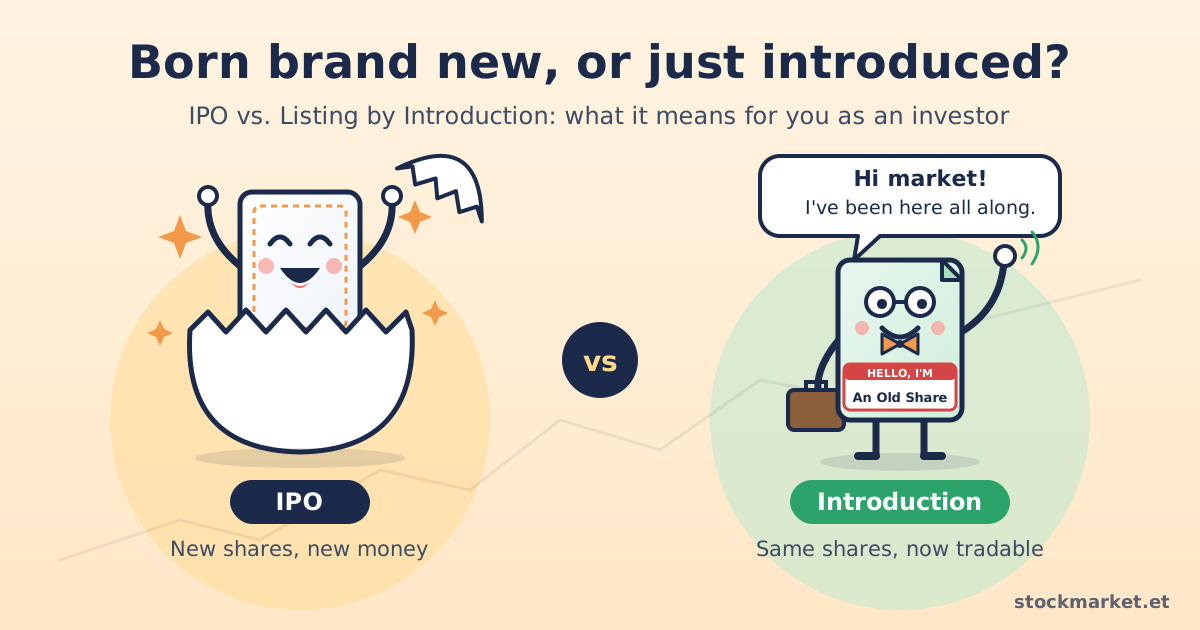
An initial public offering (IPO) is a capital raise. The company creates new shares, sets an offer price, and sells them to the public through a prospectus approved by the regulator, in Ethiopia’s case the Ethiopian Capital Market Authority (ECMA). The cash goes to the company’s balance sheet.
Three things define an IPO:
- Fresh capital: The company ends the process with more money to lend, build or expand.
- A fixed offer price: Investors subscribe at a price set by the issuer and its advisers before trading begins.
- New owners: Members of the public who held no stake before can buy in during the offer window.
Ethio Telecom is the clearest domestic example of a public share offer. The state-owned operator sold shares to the public before joining the ESX in May 2026 as the exchange’s first non-financial listing.
Listing by introduction: existing shares, no new money
A listing by introduction moves shares that already exist onto the exchange. No new shares are created and no capital is raised. The company’s existing shareholders simply gain the ability to buy and sell through licensed brokers on a regulated market.
For most Ethiopian banks, this is a natural fit. Private banks already have thousands of shareholders who bought in over decades, often through informal channels with little price transparency. An introduction gives those holders a formal exit and entry point.
Awash Bank, Ethiopia’s largest private bank, took this route in April 2026. It listed about 37.9 million of its 54.1 million registered shares under the ticker AWAB, without issuing new stock or raising fresh capital. Abay Bank followed in June 2026 under the ticker ABAYB, also by introduction.
The middle ground: rights issues
Some banks blend the two routes. They list their existing shares by introduction and raise a limited amount of new capital through a rights issue, which offers new shares to current shareholders first.
Bank of Abyssinia (BOAX) listed in July 2026 this way. It registered 15 million existing shares and offered 3.125 million new shares through a rights issue at 1,600 birr each. Dashen Bank’s registration follows a similar logic: 2.2 million additional shares go to existing shareholders first, with any leftovers offered to qualified investors or the public.
A rights issue raises money, but it is not a full IPO. The public gets access only to what existing shareholders leave on the table.
Side by side
| IPO | Listing by introduction | Introduction + rights issue | |
|---|---|---|---|
| New shares created | Yes | No | Yes, limited |
| Capital raised for the company | Yes | No | Yes, limited |
| Who can buy first | The public, during the offer | Anyone, once trading opens | Existing shareholders |
| How the first price is set | Fixed offer price | Reference price, then the market | Rights price, then the market |
| Dilution of existing holders | Yes | None | Only for holders who skip their rights |
| ESX examples | Ethio Telecom (public offer) | Awash (AWAB), Abay (ABAYB) | Bank of Abyssinia (BOAX) |
Why it matters for you as an investor
1. Price discovery works differently: In an IPO, you pay a price the issuer chose. In an introduction, there is no offer price, only a reference price, and the market sets value from the first trade. That can mean sharp moves on day one. Bank of Abyssinia’s shares climbed to 3,000 birr intraday from a 1,600 birr reference price on debut, an 87.5% jump. Early trades on thin volume can overshoot in either direction.
2. Your money goes to a seller, not the company: When you buy an introduced share, you pay an existing shareholder who is cashing out. The bank’s capital position does not change. That is fine, but it means the listing itself adds nothing to the company’s growth capacity.
3. Liquidity is not guaranteed: An introduction only brings supply if existing holders want to sell. If most shareholders sit tight, few shares trade, spreads widen, and it becomes harder to buy or exit at a fair price. Check how many shares actually change hands before assuming you can get in or out easily.
4. Dilution depends on the route: An IPO or rights issue adds shares, which spreads future profits across a larger base. An introduction leaves the share count unchanged. If you already hold a bank’s shares and it announces a rights issue, taking up your rights is how you avoid being diluted.
5. Disclosure is the same bar: Whatever the route, a listed company must meet ESX and ECMA disclosure rules. Listing by introduction is not a lighter-touch route on transparency, and investors now get regular financial reporting they did not have before.
What to check before you buy
- Did the company raise new money, and if so, what will it do with it?
- What share of registered shares is actually listed and tradable?
- How much volume trades each day, and how wide is the gap between bid and ask?
- How does the current price compare with the reference or offer price, and with the bank’s earnings and book value?
The bottom line
A listing by introduction opens the door to trading. An IPO opens the door and brings in new money. Neither is better. They answer different questions, and an investor should know which one a company is answering before placing an order.
The ESX has set out a goal of 50 IPOs by 2030. Reaching it will take more genuine capital raises, not only introductions. Until then, Ethiopian investors will mostly be trading shares that already existed, so reading the prospectus, the volume and the price history matters as much as the headline.


Comments