


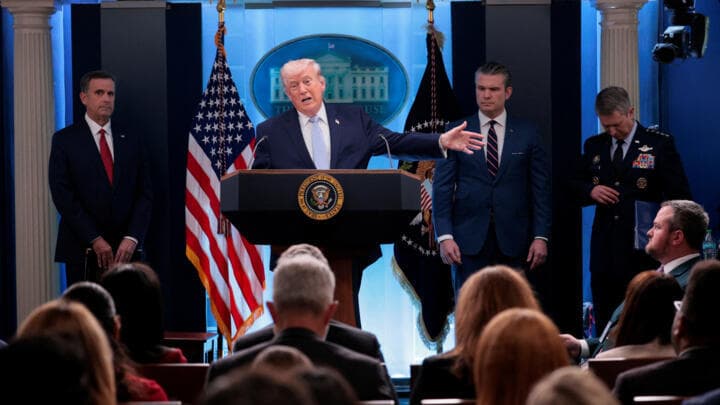
U.S. President Donald Trump has confirmed that Washington has agreed to a two-week suspension of planned military strikes on Iran. The pause follows high-level discussions involving Pakistan’s Prime Minister Shehbaz Sharif and Army Chief Asim Munir, who have played a central mediation role.
The White House stated that Trump had been briefed on Pakistan’s ceasefire proposal and would formally respond, signaling active diplomatic engagement at the highest levels.
The ceasefire is conditional on Iran fully reopening the Strait of Hormuz, a critical global oil transit route.
Iran has reportedly agreed to the ceasefire framework. According to the The New York Times, approval came from senior leadership, marking a significant shift after weeks of heightened tensions.
Iran’s Foreign Minister Abbas Araqchi confirmed that “safe passage” through the Strait of Hormuz will be guaranteed during the ceasefire period. However, he emphasized that all maritime traffic will operate under Iranian coordination and oversight.
This signals both de-escalation and a firm assertion of sovereignty, as Iran maintains that vessels must comply with its guidance while transiting the waterway.
A senior U.S. official confirmed that Israel is also part of the ceasefire arrangement. Trump previously indicated alignment with Israel’s military posture, stating, “When I stop, they stop,” underscoring coordinated action among allies.
The agreement is being framed as a significant diplomatic achievement, with Pakistan and China credited for helping de-escalate tensions and facilitate negotiations between Washington and Tehran.
The U.S. has reportedly accepted Iran’s 10-point peace proposal as a foundation for talks, while Iran is reviewing an expanded 15-point framework. Most key issues are said to have already been resolved, with a comprehensive agreement expected within two weeks.
Global oil markets responded immediately to the easing tensions.
U.S. West Texas Intermediate (WTI) crude dropped sharply by 18% to $92.60 per barrel, while Brent crude declined 6% to $103.40.
Analysts expect further downward pressure on prices as stability returns and the Strait of Hormuz remains open to international shipping.



Comments