


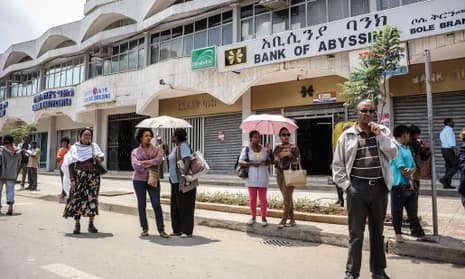
Addis Ababa has started to feel like two cities stacked on top of each other.
One runs on dollars, generators, imported marble, Telegram property listings, and rooftop gyms. The other runs on delayed salaries, rising transport fares, smaller grocery portions, and quiet panic every time the exchange rate moves again.
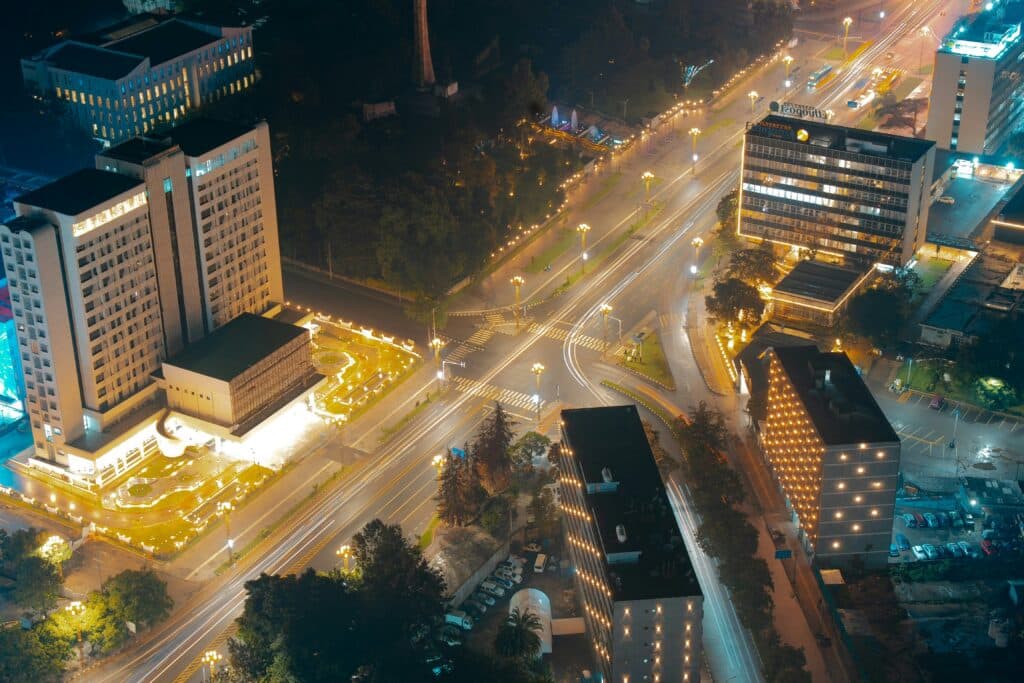
In Bole, the lifts work. Not metaphorically. Literally. The new towers rising around the airport and the diplomatic district have uninterrupted power, biometric doors, underground parking, infinity pools, and apartments quietly priced in dollars even though everyone pretends otherwise. A 150-square-metre apartment in Bole or Old Airport now sells for between $180,000 and $270,000. Luxury villas in the same areas regularly cross 40 million birr. Developers cannot build fast enough.
A few kilometres away, a civil servant earning under 5,000 birr a month is making impossible calculations with perfect precision. Rent or food. Fuel or school fees. Cooking oil or internet. Incomes are fixed in birr. Life is not.
That gap, between people whose assets move with inflation and people whose salaries do not, is becoming the defining economic story of modern Ethiopia.
For years, Ethiopia looked like the future. Between 2004 and 2019, the economy was one of the fastest growing in the world, averaging close to 10% annual GDP growth according to World Bank estimates. Roads expanded. Industrial parks opened. Construction cranes became part of Addis Ababa’s skyline. Poverty rates declined. A young urban middle class started forming around government employment, banking, telecom, education, construction, and small business activity.
The Ethiopian middle class was never wealthy, but it was stable enough to plan. Teachers could buy condominiums on installment plans. Junior bankers could finance a car. Nurses could support extended families while slowly building savings. Growth created optimism before it created wealth.
Then the math broke.
COVID disrupted supply chains and weakened incomes. Conflict consumed public resources and damaged productive regions. Repeated droughts hit agricultural output. Inflation stopped being an economic indicator and became a daily lifestyle. Prices moved faster than salaries. Then came the biggest shift of all: the birr float in July 2024.
Before the reform, Ethiopia’s exchange rate system had become increasingly unsustainable. The official rate and the parallel market rate were operating in different realities. Businesses struggled to access foreign currency. Importers faced long delays. Foreign reserves had fallen to critically low levels. Debt service pressures were mounting.
The reform was inevitable.
But inevitability does not make adjustment painless.
In June 2024, one US dollar traded at around 57 birr officially. By late 2025, the rate crossed 150 birr and briefly touched 177 birr during periods of volatility. That represents a depreciation of more than 200% in roughly 18 months.
The consequences moved through the economy immediately.
Fuel prices climbed from roughly 78 birr per litre in early 2024 to over 129 birr by the end of 2025. Imported medicine prices surged. Construction material costs exploded. Electronics became luxury purchases. Restaurant prices repriced almost monthly. Anything tied to foreign currency, which in Ethiopia means almost everything, started moving at a speed ordinary wages could never catch.
And this is where the story becomes less about inflation and more about sorting.
Because inflation does not hit everyone equally.
If you own land, property, gold, export businesses, or have access to remittances, inflation becomes survivable. Sometimes even profitable. Your assets appreciate. Your dollars become more valuable. Your real estate becomes a hedge. Your wealth protects itself.
But if you live entirely on a fixed salary paid in birr, inflation behaves like a slow extraction machine. Every month removes purchasing power. Every exchange rate movement quietly cuts your income again.
The people caught in the middle are the ones Ethiopia once depended on to become a middle-income economy.
University lecturers with master’s degrees driving ride-hailing apps after class. Doctors leaving public hospitals for private clinics or foreign countries. Teachers waiting months for salaries while still showing up to classrooms every morning. Engineers abandoning their professions to trade goods informally because trading moves with inflation while salaries do not.
A public university lecturer with years of experience can still earn below 10,000 birr monthly after tax. At current exchange rates, that is often under $70. Meanwhile, average apartment rents in parts of Addis Ababa have doubled or tripled within a few years.
Ten years ago, many of these professionals were buying condominiums, furnishing apartments, taking family trips to Bishoftu or Hawassa, and slowly building savings. Today, many are negotiating rent extensions and reducing meals.
Meanwhile, Addis Ababa’s luxury property market is booming.
At first glance, it makes no sense. How can a country experiencing such severe economic pressure produce a real estate explosion at the same time?
But the boom is not irrational. It is defensive.
Real estate in Ethiopia is no longer just housing. It is currency protection. A store of value. A substitute for financial markets people do not fully trust.
The Ethiopian diaspora sent home more than $5 billion in remittances in 2024 alone. A large portion of that money flowed into property purchases. Domestic elites increasingly shifted savings away from birr holdings into land, real estate, dollars, and gold. NGOs, embassies, and foreign organizations pushed rental demand even higher, with furnished apartments in Bole renting for between 90,000 and 250,000 birr monthly.
Developers are no longer building primarily for salaried professionals. They are building for capital preservation.
The cranes never disappeared because the wealthy stopped thinking in birr a long time ago.
That shift changes the entire structure of a city.
A doctor earning in local currency now competes for housing in the same market as someone receiving remittances in dollars. A teacher pays transport prices influenced by imported fuel costs. A small business owner restocks inventory at exchange rates that move faster than customer incomes.
The result is an economy where headline growth and lived experience increasingly diverge.
On paper, some of the reforms are working. Ethiopia’s foreign reserves improved significantly after the IMF-supported reform programme launched in 2024. Export revenues reached a record $8.3 billion in the 2024/25 fiscal year, helped heavily by strong coffee and gold prices. Official inflation moderated into single digits by late 2025 according to government figures. International lenders regained confidence. The country avoided a full-scale balance of payments crisis.
From a macroeconomic perspective, Ethiopia stabilized several critical pressures that could have become catastrophic.
But macro stabilization and middle-class stability are not the same thing.
The country solved part of its foreign exchange distortion while exposing a deeper structural weakness underneath: Ethiopia produces too few productive urban jobs relative to the size and ambitions of its educated population.
For years, growth leaned heavily on construction, state-led infrastructure, and consumption. But construction does not endlessly create durable middle-class wealth unless it is supported by strong productivity growth in sectors that generate exports, innovation, and scalable employment.
The country built towers faster than it built a diversified private sector.
You can see the consequences everywhere now.
Graduates entering a labour market that cannot absorb them. Young professionals abandoning their careers for migration pathways. Small businesses trapped between weak consumer purchasing power and rising operating costs. Families spending more of their income on survival and less on mobility.
And that may be the most dangerous economic shift of all: when people stop planning long term.
The World Bank estimates that the share of Ethiopians living below the $3 per day poverty line rose from 33% in 2016 to around 43% by 2025. That is not stagnation. That is reversal.
Middle classes matter because they consume, invest, educate, build businesses, pay taxes, and stabilize societies. They are the transmission system between growth and broad prosperity. Remove them, and economies become polarized very quickly, a small asset-owning class on one side and a much larger financially stressed population on the other.
That is increasingly what Addis Ababa feels like.
One economy orders furniture from Dubai and prices apartments in dollars. The other calculates whether taking two taxis in one day is financially irresponsible.
The uncomfortable reality is that both Ethiopias are real at the same time.
The optimistic case still exists. Ethiopia remains one of Africa’s largest untapped markets with more than 130 million people, improving digital infrastructure, growing financial liberalization, expanding capital markets, and significant long-term potential. Reform was necessary. Distortions had become unsustainable. A controlled crisis today may have prevented a much larger collapse tomorrow.
But reforms succeed only when societies can absorb them.
If the cost of stabilization is the erosion of the very class expected to power future productivity, entrepreneurship, and consumption, then growth becomes narrower, wealth becomes more concentrated, and opportunity becomes more inherited than earned.
The real danger is not that Ethiopia becomes poorer.
It is that it becomes permanently divided between those protected from the birr and those trapped inside it.
Because once a middle class disappears, rebuilding it is much harder than destroying it.
And in Addis today, you can already see the architecture of that future rising floor by floor.
Comments