


Good Morning!
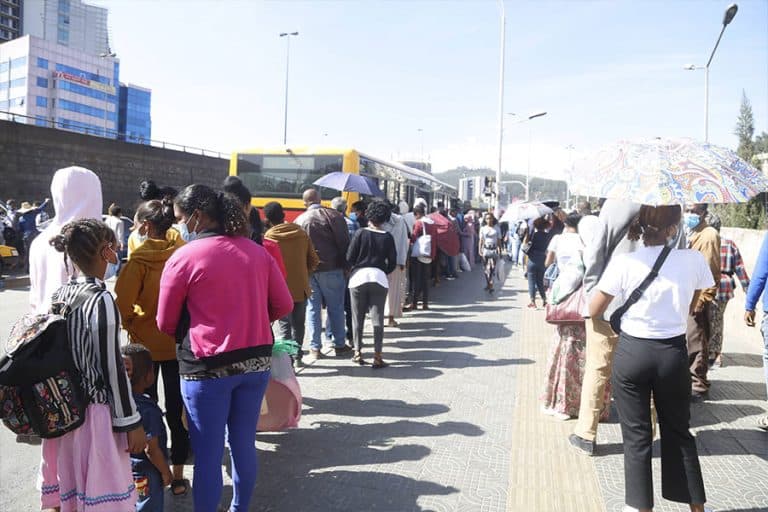
If you thought Monday traffic was bad, try it with half the fuel. Queues snake out of gas stations, taxis are playing hide-and-seek with diesel, and commuters are practicing patience like it’s a new national sport. Fuel shortages are making the daily grind even grittier, so maybe it’s time to embrace walking… or cycling!
Anyways Let’s Dive in!
Monetary Policy & Financial Regulation
NBE Holds Rates as Inflation Falls Below 10%
The National Bank of Ethiopia kept its policy stance unchanged, maintaining tight monetary conditions as inflation eased to 9.7% in February 2026, marking a return to single digits.
Food inflation dropped to 10.8%, while non-food inflation slowed to 8.1%, reflecting broad-based price moderation. The central bank credited restrictive policy, improved fiscal discipline, and easing supply pressures for the decline.
Despite the progress, the bank signaled caution, warning that rising global risks, particularly higher oil prices linked to Middle East tensions, could reverse gains. It emphasized readiness to act if conditions worsen.
Meanwhile, Ethiopia’s economy remains resilient, with strong GDP growth, improved external balances following the 2024 FX reforms, and a broadly stable banking sector, though some liquidity pressures persist.
NBE Cracks Down on Informal Remittances
National Bank of Ethiopia has stepped up its enforcement against unlicensed, hawala-style remittance networks, warning that both providers and users risk legal penalties. The regulator is urging all transfers, domestic and international, to go through licensed channels.
Approved providers include global firms like Western Union, MoneyGram, and PayPal, alongside local platforms such as telebirr and Yaya Wallet.
The move comes as formal remittance inflows surge, rising 36.5% to $4.6 billion in H1 2025/26, driven by recent FX reforms. Still, informal channels remain widespread, prompting tighter oversight as authorities aim to boost foreign reserves and improve financial transparency.
#Ad
Introducing the StockMarket.et Finance Job Board

Where Ethiopia’s finance talent meets real opportunity.
This isn’t just another job board, it’s a career acceleration platform built for the next generation of finance professionals.
🔎 Explore Real Opportunities: Access curated roles across Banking, Investment, Accounting, Insurance, and Financial Services, all in one place.
🧠 Prove Your Skills Before You Apply: With Ethiopia’s first-ever Job Simulation platform, complete real-world tasks from top firms and stand out instantly.
🏅 Earn Credentials That Matter: Get certified based on actual performance, not just CV claims.
📈 Career Advice That Actually Fits Ethiopia: No generic tips, only insights tailored to the realities of the Ethiopian finance market.
Get Discovered, Not Just Apply
Join our Talent Pool and let leading finance companies find you.
Banking & Finance
Dashen Bank Expands Super App with Virtual Card & 6M Birr Campaign
Dashen Bank has rolled out a major digital push, launching a virtual card, digital onboarding, and a 6 million birr creator campaign to scale its Super App ecosystem.
The new virtual card, developed with Mastercard, enables international payments on platforms like Amazon and Netflix, expanding access to global digital services. Meanwhile, digital onboarding using Fayda ID allows customers to open accounts remotely without visiting branches.
To drive adoption, the bank introduced a referral program targeting students and a TikTok-based content competition with 6 million birr in prizes.
With over 2 million users and 250 billion birr in transactions, Dashen’s move signals intensifying competition in Ethiopia’s emerging super app and digital banking space.
Nile Insurance Appoints New CEO
Nile Insurance has officially named Nibret Anteneh as its Chief Executive Officer, effective April 3, 2026, following regulatory approval from the National Bank of Ethiopia.
Nibret, who previously served as acting CEO, brings nearly 20 years of experience across underwriting, risk management, and operations. His appointment concludes a months-long transition after the tenure of former CEO Nigus Anteneh.
The leadership change comes as the company posts strong growth: pre-tax profit rose to 560.5 million birr (+16.6%), total assets reached 5.8 billion birr (+41%), and paid-up capital increased to 1.25 billion birr.
The insurer has also recently moved into its new headquarters in Addis Ababa’s emerging financial district, signaling an ambitious next phase under new leadership.
Stockmarket.et Insights

The National Bank of Ethiopia says Ethiopia’s banking sector is at its strongest in five years, with all key stability indicators improving.
Total assets jumped 44.5% to ETB 4.7 trillion, deposits rose 40.7% to ETB 3.5 trillion, and net profit nearly doubled to a record ETB 93 billion. Capital adequacy reached 19.1%, non-performing loans fell to 3.1%, and liquidity climbed to 30.4%, while return on equity hit 27.4%.
Stress tests show resilience, with banks remaining above regulatory thresholds even under severe shocks. However, sector concentration is rising, with the Commercial Bank of Ethiopia holding 49.1% of total assets.
The gains come amid major reforms, including exchange rate liberalization and new monetary tools.
Trade, FX & International Finance
Ethiopia Hits Record $6.76B in Export Revenue
Ethiopia generated a record $6.76 billion in export earnings in the first eight months of the fiscal year, according to the Ministry of Trade and Regional Cooperation, a $2.4 billion increase year-on-year.
The surge is driven by strong performance in key exports like coffee and gold, putting the country on track for a historic full-year outcome.
However, lawmakers caution the figure still falls short of long-term targets, with weaker performance in oilseeds and pulses due to declining global prices. Officials argue the focus should be on growth momentum, noting export volumes remain strong despite price pressures.
The results come at a critical time, as Ethiopia seeks to ease foreign exchange constraints and demonstrate progress under its ongoing economic reforms.
Ethiopia, China Deepen Financial Cooperation
The National Bank of Ethiopia and the People’s Bank of China have agreed to strengthen financial ties, focusing on currency swap lines, trade financing, and digital finance collaboration.
During talks in Beijing, governors Eyob Tekalign and Pan Gongsheng discussed boosting yuan (RMB) reserves, improving cross-border payments, and expanding systems like China UnionPay in Ethiopia.
The partnership also includes support for digital finance innovation, including central bank digital currencies (CBDCs), as both countries aim to enhance trade, investment, and financial integration.
Energy & Inflation Pressures
Fuel Prices Jump 16.6% as Subsidy Costs Surge
Ethiopia has raised fuel prices again, with white diesel increasing 16.6% to 163.09 birr per liter, according to the Ministry of Trade and Regional Integration. Gasoline and heavy diesel also saw notable hikes, marking the sharpest monthly rise in recent years.
Authorities say the move reflects mounting fiscal pressure, with fuel subsidies now reaching 272 billion birr. Despite the increase, the government still covers a large share of costs, about 71 birr per liter for diesel, to cushion consumers.
Officials attribute the surge to global supply disruptions, including tensions affecting the Strait of Hormuz, which have driven procurement costs sharply higher.
With supply strained and imports disrupted, Ethiopia has turned to costly spot markets while prioritizing fuel distribution to critical sectors. Analysts warn the hike will likely push up transport costs and add further pressure on food prices and inflation. Source: Capital Ethiopia
Hormuz Disruption Hits Ethiopia’s Fuel Supply
Ethiopia’s fuel supply is under pressure after a 180,000 metric ton oil shipment was disrupted by the closure of the Strait of Hormuz, sending global crude prices sharply higher.
According to officials, gasoline supply remains relatively stable, but diesel and jet fuel, critical for transport, agriculture, and aviation, have dropped to around 50% of demand. The shortage poses risks for logistics, mechanized farming, and operations at Addis Ababa Bole International Airport, a key regional hub.
Ethiopia, which relies heavily on imported fuel, is now scrambling for alternatives while setting up a crisis monitoring team. The disruption adds pressure on foreign exchange reserves and the birr, raising concerns about broader economic spillovers in the weeks ahead.
Agriculture & Food Security
Wheat Prices Surge as Import Dependence Persists
Ethiopia’s grain prices have climbed sharply over the past year, led by a 28% jump in wheat, according to the Foreign Agricultural Service of the U.S. Department of Agriculture. Corn, sorghum, and barley also rose, while teff dipped slightly but remains the most expensive staple.
The surge is driven by macro pressures, most notably the post-Ethiopia exchange rate reform July 2024 depreciation of the birr, alongside rising fuel (+56%) and fertilizer (+60%) costs. Imported wheat continues to undercut local supply, keeping Ethiopia reliant on external markets.
Despite record production and a projected 7.0 million metric tons of wheat output, demand still outpaces supply. Imports are forecast at 1.4 million metric tons for 2026/27, with shipments largely sourced from Black Sea exporters like Russia and Ukraine.
Urban households are adapting by shifting consumption, blending teff with cheaper grains and increasing reliance on wheat-based foods, highlighting growing food cost pressures and structural gaps in the domestic grain market.Source: Birrmetrics
That’s all for today’s Monday Breakfast Stories!
Stay fueled, literally and figuratively, through the week, keep your coffee strong, and may your commute be slightly less adventurous than your local gas station line. Catch you next Monday for more bites of Ethiopia’s business, economy, and finance news!