


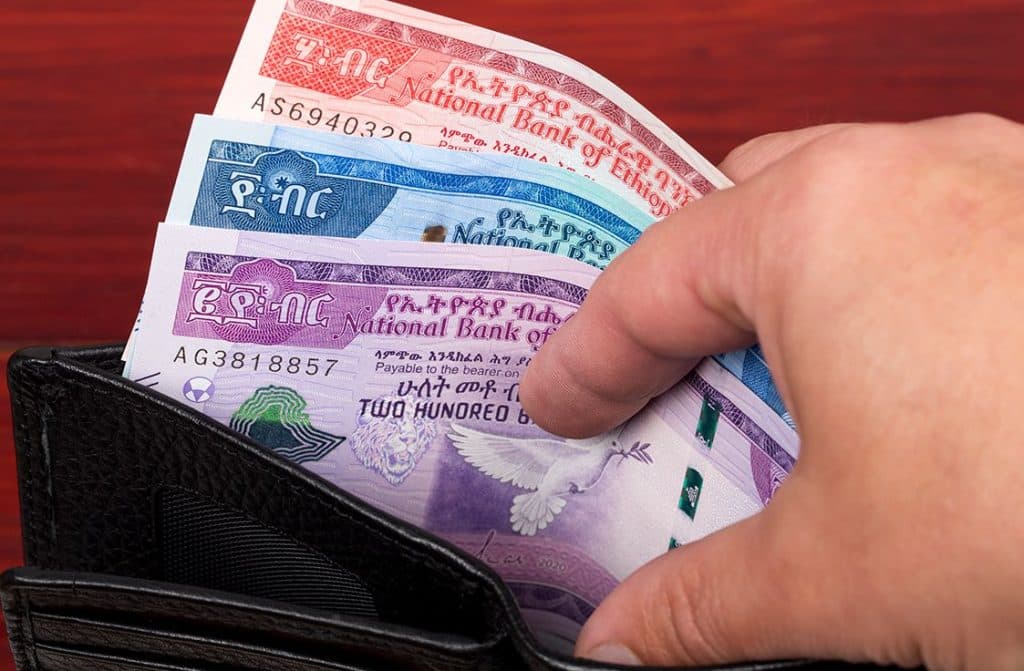
Ethiopia’s birr has ranked as the third-weakest currency globally in 2025, trailing only the Argentine peso and the Turkish lira, underscoring the depth of the country’s ongoing macroeconomic and debt-related challenges.
The birr has depreciated by more than 15% against the U.S. dollar this year, weighed down by persistent dollar shortages, elevated inflationary pressures, and cautious investor sentiment. According to international market data, the currency’s trajectory remains closely tied to Ethiopia’s progress on external debt restructuring and broader economic reforms.
Debt restructuring remains pivotal
Ethiopia is working to complete its debt restructuring under the G20 Common Framework by mid-2026. The government has already reached a memorandum of understanding with members of the Official Creditor Committee, including China and France, covering around $3.5 billion in bilateral loans.
However, negotiations with private creditors remain unresolved. Talks with holders of Ethiopia’s $1 billion Eurobond, which the country defaulted on in 2023, collapsed in October 2025 without a deal—continuing to cloud investor confidence.
IMF program and reform agenda
In July 2024, Ethiopia secured a $3.4 billion Extended Credit Facility (ECF) from the International Monetary Fund (IMF). By the end of 2025, the country had become the seventh-largest IMF debtor in Africa.
The IMF-backed program requires deep structural reforms, including:
- Liberalisation of the foreign exchange market and a floating birr
- Opening the financial sector to foreign participation
- Advancing privatisation of selected state-owned enterprises
On December 10, the IMF announced a staff-level agreement under the fourth review of the program, paving the way for about $261 million in additional financing, subject to Executive Board approval.
Mixed signals on the ground
The IMF acknowledged progress in several areas. Export earnings, led by coffee, have more than doubled, government revenues have improved, and annual inflation eased to 10.9% in November, down from 18.6% in July 2024, shortly after foreign exchange liberalisation.
Despite these gains, foreign currency shortages persist, keeping pressure on the birr. The gap between the official exchange rate (around 150 birr per dollar) and the parallel market rate (near 180 birr) remains wide, highlighting ongoing imbalances in the FX market.
As Ethiopia pushes forward with reforms and debt negotiations, markets will remain closely focused on whether policy execution and creditor agreements can restore confidence and stabilize the birr in the months ahead.
Source: Business Insider Africa

Comments