


For decades, COBOL has quietly powered the backbone of the global economy.
It runs an estimated 95% of ATM transactions in the United States. It processes airline bookings, government records, insurance claims, and retail payments. Hundreds of billions of lines of COBOL code are still running in production every single day.
But there’s a problem: the people who built and understand these systems are retiring.
The developers who wrote these programs in the 1970s, 80s, and 90s are mostly gone. Documentation is incomplete or outdated. The code has been patched and modified for decades. And very few universities still teach COBOL. As a result, companies are sitting on mission-critical systems that are extremely reliable, but increasingly difficult to understand or change.
That’s where the modernization challenge begins.
Why COBOL modernization has been so hard
Modernizing COBOL isn’t like cleaning up old Java or Python code.
It’s closer to digital archaeology.
Organizations aren’t just improving code quality, they are reverse engineering business logic written when Richard Nixon was president. They’re untangling systems that evolved over decades, often without clear documentation. Many workflows exist only inside the code itself.
Traditionally, modernization required large teams of consultants. They would spend months, sometimes years, simply mapping how the system worked before touching anything. That exploration phase alone made projects extremely expensive. In many cases, understanding the system cost more than rewriting it.
So companies delayed. They postponed upgrades. They lived with technical debt because the risk and cost of modernization felt too high.
Until now.
How AI changes the equation
Anthropic recently argued that AI tools like Claude Code fundamentally change the economics of COBOL modernization.
Their key idea is simple:
Legacy modernization stalled because understanding the code was too expensive. AI flips that equation.
Instead of armies of consultants manually tracing dependencies, AI can read the entire codebase in hours and map how everything connects.
AI tools can:
- Map dependencies across thousands of files
- Trace execution paths through subroutines
- Identify shared data structures and hidden couplings
- Document workflows nobody remembers building
- Surface risks that would take human analysts months to find
These aren’t just surface-level call graphs. COBOL systems often share data through files, databases, or global states, hidden relationships that traditional static analysis tools miss. AI can detect these deeper connections before they cause migration failures.
This automated discovery phase is where most modernization costs used to sit. If AI reduces that cost dramatically, the entire project becomes viable.
From analysis to strategy
Once AI maps the system, the process becomes more structured.
It can identify:
- Highly coupled modules that are risky to move
- Isolated components that are good early candidates
- Duplicated logic that should be refactored
- Areas with heavy technical debt
But AI doesn’t replace human judgment.
COBOL engineers and business leaders still decide:
- Which systems are most critical
- What regulatory constraints apply
- What the target architecture should look like
- What level of risk is acceptable
AI proposes priorities based on complexity and dependencies. Humans decide based on business value and strategy.
That combination is what makes the shift powerful.
Incremental modernization, not “big bang” rewrites
Instead of rewriting everything at once, AI enables gradual modernization.
One component at a time:
- AI translates COBOL logic into modern languages
- It creates API wrappers around legacy components
- It designs tests to ensure outputs match the original system
- Old and new code can run side by side during transition
If something fails, the scope is small. Teams fix it immediately. There’s no massive rollback of months of work.
This incremental approach reduces risk and builds confidence as each modernized component passes validation.
The market reaction: IBM under pressure
The announcement had immediate market consequences.
International Business Machines, better known as IBM, has long built its business around mainframes optimized for large-scale transaction processing, where COBOL is deeply embedded.
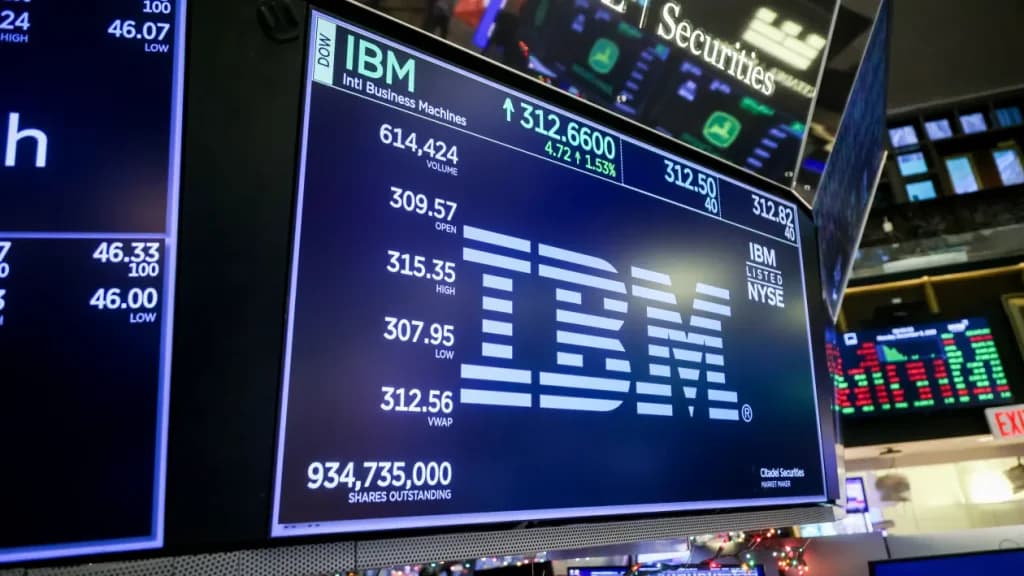
When Anthropic highlighted Claude Code’s ability to modernize legacy COBOL systems, investors reacted quickly. IBM shares fell nearly 13% in a single day, closing at $223.35. The stock is now down more than 24% year to date.
Markets interpreted the announcement as a potential threat to IBM’s traditional modernization and mainframe services business.
The sell-off reflects a broader trend: investors are increasingly nervous about how AI may disrupt legacy enterprise software and IT service models. In recent weeks, even cybersecurity firms have felt pressure after Anthropic introduced AI-driven security scanning capabilities.
Whether AI truly disrupts IBM’s long-term business remains to be seen. But the fear is real.
COBOL is not disappearing tomorrow. It still powers critical infrastructure across finance, airlines, retail, and government. Reliability matters. Stability matters.
But the economics of modernization are shifting.
If AI can automate the expensive discovery and analysis phases, organizations no longer need multi-year consulting engagements just to understand their own systems. Engineers can focus on strategy, architecture, and risk, the decisions that require human expertise.
For decades, modernization was postponed because it was too costly to even begin.
Now, AI may have made it affordable to start.


Comments