


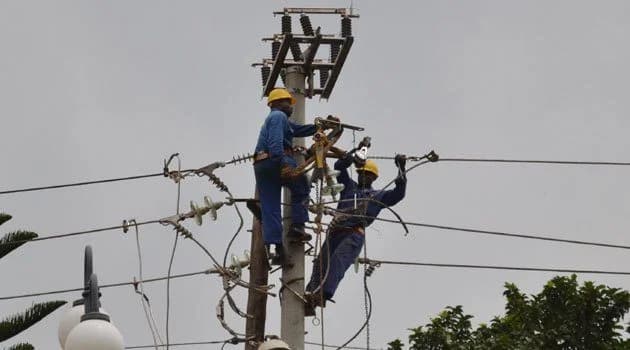
Ethiopia is on the move, and the engines of that progress are turning at full speed at Ethiopian Electric Power (EEP). For the 2025/26 fiscal year, the state-owned utility has approved a 251 billion birr budget, with the majority over 70% dedicated to building and expanding the nation’s energy infrastructure.
But this isn’t just any budget. More than half of it will come from EEP’s own power sales and other earnings, a sign of growing self-reliance. Another 31% will be financed through domestic loans and aid, while the remaining 14% will come from external sources.
EEP carries the weight of being Ethiopia’s most indebted state-owned enterprise, tasked with constructing multi-billion-dollar energy projects. Many of these initiatives are long-term, designed to serve public needs rather than generate immediate profit. That means balancing ambitious plans with relatively modest annual revenues.
Big Projects, Bigger Impact
CEO Eng. Ashebir Balcha laid out the roadmap:
Ongoing projects: 118 billion birr
New initiatives: 29 billion birr
Reconstruction works: 10.4 billion birr
Spare parts & maintenance: 17.4 billion birr
Among the top priorities are the Grand Ethiopian Renaissance Dam (GERD) and the Assela Wind Farm, alongside the Aysha, Koysha, and Aluto Geothermal Premium projects. Ten transmission lines and distribution stations are set to be completed, including major initiatives like the Southern Grid expansion, the Geda Special Economic Zone supply, the Bahir Dar-Woldiya-Kombolcha line, and the Awash-Woldiya railway power link.
Seven more projects are scheduled to break ground, such as the Ethio-Djibouti second circuit, the Gondar-Dansha-Humera-Ba’eker agro-industry supply, and the Mekelle-Dalol transmission line.
EEP plans to generate 38,120 gigawatt-hours of electricity this fiscal year, with GERD alone contributing 45% of the total output. Roughly 31,600 GWh will flow to domestic and international customers, generating around 109.5 billion birr in revenue. Over the past six years, the utility has added 3,784 megawatts to Ethiopia’s national grid, nearly half of the country’s total installed capacity.
Bridging the Budget Gap
Ambitious plans often come with funding challenges. To cover a shortfall in the 251 billion birr budget, EEP will raise a 76 billion birr domestic loan, complementing its internal revenue, foreign loans, and external financial support.
Here’s the financing mix in detail:
Internal financing: 138 billion birr
Domestic loans: 76 billion birr
Foreign loans: 12 billion birr
External financial support: 22 billion birr
Ministry of Finance & others: 3 billion birr
In the previous fiscal year, EEP generated 74.05 billion birr in revenue, selling 25,180 GWh, 93% for domestic consumption and 7% exported to neighbors like Kenya and Djibouti.
Ashebir Balcha emphasized that relying on domestic loans highlights the government’s commitment to building Ethiopia’s energy sector with local resources. Effective management of this funding is crucial, not just for completing projects, but for securing the nation’s energy future and supporting broader economic growth.
Source: Capital Ethiopia & Birrmetrics

Comments