


Good morning. Pour the buna.
The numbers this week pulled in two directions at once, which is becoming the signature of this moment. On the trading floor, Ethiopia’s capital market crossed a line it has been walking toward for two years. On the kitchen table, the cost of putting protein on a plate kept climbing. And out in the wider world, the ballots were counted and the government that has been building all of this earned another five years to keep going.
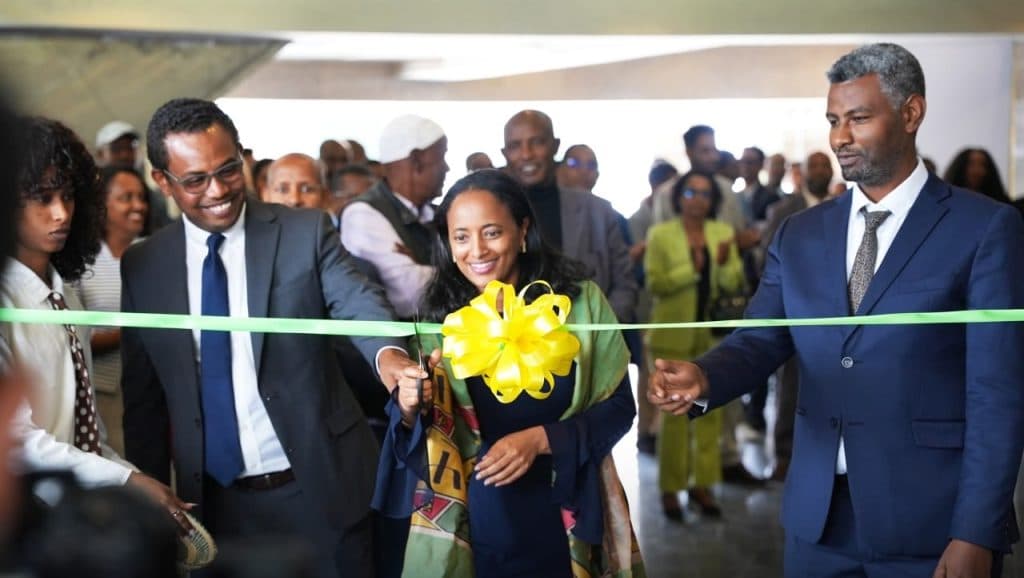
Meanwhile, Addis Ababa hosted the Ethiopian Capital Market Investor Days Expo, turning the week into a showcase for the country’s newest financial institution. Regulators, the exchange, service providers, issuers, and investors gathered under one roof to discuss the market’s progress, educate the public, and broaden awareness of investment opportunities in Ethiopia’s evolving capital market.
A market scaling up and a household squeezing down, under a mandate that just got renewed.
Capital Market
The exchange cleared a billion birr in a single week.
ESX equity transactions reached roughly 1 billion birr over the week, a milestone CEO Dr. Tilahun Esmael Kassahun was happy to put on the record. He was also honest about the context: some neighbouring markets do that kind of volume in a single day. But for an exchange that has been live for two years, on the back of four and a half years of groundwork, a billion-birr week is the sound of a market finding its legs. He expects another company to list next week, and sees room for 50 to 60 issuers within one to two years. “We have the potential, and there are enough companies for that,” he said.
The market minted its first gold-linked share.
Here is the proof that ESX is no longer only a place to trade bank stock. KME Minerals (Ethiopia) Holding, a subsidiary of London-listed KEFI Gold and Copper, appointed CBE Capital Investment Bank to advise on a proposed issue of US dollar-denominated, birr-settled, gold-linked preference shares aimed at selected Ethiopian financial institutions. Read that twice: a share whose value tracks gold, priced in dollars but settled in birr, sold to banks. That is a structured instrument, the kind of financial engineering you build once the plumbing exists. A year ago the question was can companies list at all. Now it is what can they list.
ECMA put the market in your pocket.
The Ethiopian Capital Market Authority launched a mobile application built to widen investor access to information and education. An unglamorous announcement that does heavy lifting: a billion-birr week and gold-linked paper mean little if the retail investor can’t find the front door. The milestone, the instrument, and the app belong together. They are the supply, the product, and the distribution channel of a market trying to grow up all at once.
Banking & Digital Finance
Dashen pushed past 20 billion birr in loans down a phone line.
Dashen Bank announced it has disbursed over 20 billion birr in digital loans through Telebirr, the lending partnership it launched with Ethio Telecom in August 2022. More than 3 million borrowers, over 13 million loan contracts, across products like Mela, Endekise, and Medaresha. This is credit reaching people no loan officer was ever going to visit, and it runs on the same digital infrastructure the capital market eventually wants to plug investing into.
The FX taps stayed open.
The National Bank ran its 23rd Special Foreign Exchange Auction, selling USD 100 million at about 158 birr to the dollar. The auctions have become routine, which is the point: a managed, repeatable mechanism for clearing FX demand is exactly what the post-2024 reform was supposed to deliver. Routine is an achievement when the alternative is a black market.
Macro & The Economy
Inflation came back to 13.4 percent, and food led it.
May’s print rose from 11.7 percent in April and 9.4 percent in March, the third straight month of food prices accelerating. Food inflation alone hit 15 percent. Look at what got more expensive and the story sharpens: coffee and non-alcoholic beverages up nearly 41 percent, sugar and honey up 37 percent, meat up almost 20 percent, milk, cheese and eggs up 19 percent. These are not luxuries. They are the staples of a household budget, and they set up the deep dive further down.
Addis Ababa wrote itself a half-trillion-birr cheque.
The city cabinet approved a record draft budget of 502.27 billion birr for 2026/27, a 43 percent jump, with 71 percent earmarked for poverty reduction and SDG-linked programmes and the rest for administration. The capital’s budget has grown more than sevenfold in five years, from roughly 70 billion birr to over 500, and the city says it now finances almost all of it without federal transfers. The ambition is real; so is the criticism, as the corridor redevelopment behind much of that spending continues to draw complaints over demolitions and displacement.
And the leaks in the old system are still open.
The Federal Office of the Auditor General told Parliament that of some 21.6 billion birr flagged for recovery over irregular financial practices in past years, only about 31 percent has come back, leaving roughly 15 billion birr still outstanding. A reminder that the same state racing to build new markets is still cleaning up after the old one.
Politics
The mandate that funds all of it just got renewed.
The National Election Board declared the Prosperity Party winner of the seventh general election, with 438 of 486 contested seats in the House of Peoples’ Representatives. Parliament reconvenes in October to seat the new government and return Abiy Ahmed for another five years. The party campaigned on improved food security and a growth forecast topping 10 percent for 2026, claims the rest of this newsletter will keep testing. For markets, the read is continuity: the reform agenda that built the ESX, floated the birr, and opened the FX auctions has another term to run.
Agriculture & Food Security
The deep dive: millions of cattle, empty plates.
Lydia Meried laid out one of Ethiopia’s hardest paradoxes. The country has Africa’s largest livestock population, more than 58 million cattle, among the top five on earth. And yet in 2026 an estimated 15.8 million Ethiopians face acute hunger, while meat, milk, and eggs slide out of reach for millions more. The question, she argues, is no longer whether Ethiopia produces enough animals. It is why so many Ethiopians can’t afford the nutrition those animals should provide. When a country this rich in herds eats only a few kilograms of meat per person a year, the problem isn’t the farm. It’s the price. Read the full piece on Stockmarket.et.
$600 million bet on the supply side.
The African Finance Corporation committed USD 600 million to Dangote’s USD 7 billion fertilizer expansion, including a new 3-million-tonne-per-year urea plant in Ethiopia. Trace the logic from Lydia’s piece backwards: affordable protein needs affordable feed and grain, grain needs yield, yield needs fertilizer, and fertilizer here has been scarce and expensive. A urea plant on Ethiopian soil is a long bet against exactly the squeeze the inflation numbers describe.
And the farmer got a safety net to match the loan.
The Commercial Bank of Ethiopia and the Ethiopian Insurance Corporation signed an agreement to serve farmers through integrated credit and insurance. The pairing matters more than either half alone. Credit without insurance just hands a farmer the risk of one bad season wiping out the loan. Bundle the two and you de-risk the smallholder, which is the unglamorous machinery that actually moves food from the field to the market at a price people can pay.
Energy & Infrastructure
Private money went into the ground, literally.
Taranis Operations signed a convertible loan agreement to invest up to USD 27 million in the Corbetti geothermal project, one of Africa’s first privately developed geothermal ventures, in the Corbetti Caldera south of Addis. The plan moves from a 50 MW first phase toward 150 MW of clean baseload power. In a grid that leans roughly 90 percent on hydropower, and therefore on rainfall, baseload geothermal is insurance against the next dry year.
The trade artery got another upgrade.
The World Bank approved an additional USD 45 million for the Djibouti–Addis southern corridor, taking total financing on the project to USD 205 million. The money goes into road-safety upgrades and widening on the Djibouti side of the route that carries more than 95 percent of Ethiopia’s trade by volume. Unsexy infrastructure, but every birr of import inflation in the stories above travels down this road.
Business
A fuel-market giant looks for the exit.
Per reporting picked up from Africa Business, TotalEnergies has reportedly agreed to sell its Ethiopian network of around 120 service stations to Pan-African operator OLA Energy (OiLibya). Neither side has publicly confirmed it, so treat it as unconfirmed, but if it lands it would reshuffle the top of Ethiopia’s fuel retail market after decades of Total operating here.
🎙️ One more thing.

Episode 2 of our podcast is live. We break down the journey of Ethiopian Capital market so far, licenses and share registrations, what they mean for investors and businesses, and where Ethiopia’s capital market is actually headed: the progress, the challenges, and what comes next. Watch here.
That is your Monday Breakfast Stories for this week. A billion-birr week, the market’s first gold-linked share, an investor app, 20 billion birr of loans down a phone line, and a renewed government to keep the reform machine running. Against all of it, the same stubborn fact: a country with 58 million cattle where putting meat on the table got harder. The scaffolding of a modern financial economy is going up fast. The job now is to make sure the people it’s being built for can still afford breakfast.
Keep your coffee strong. See you next Monday. ☕