


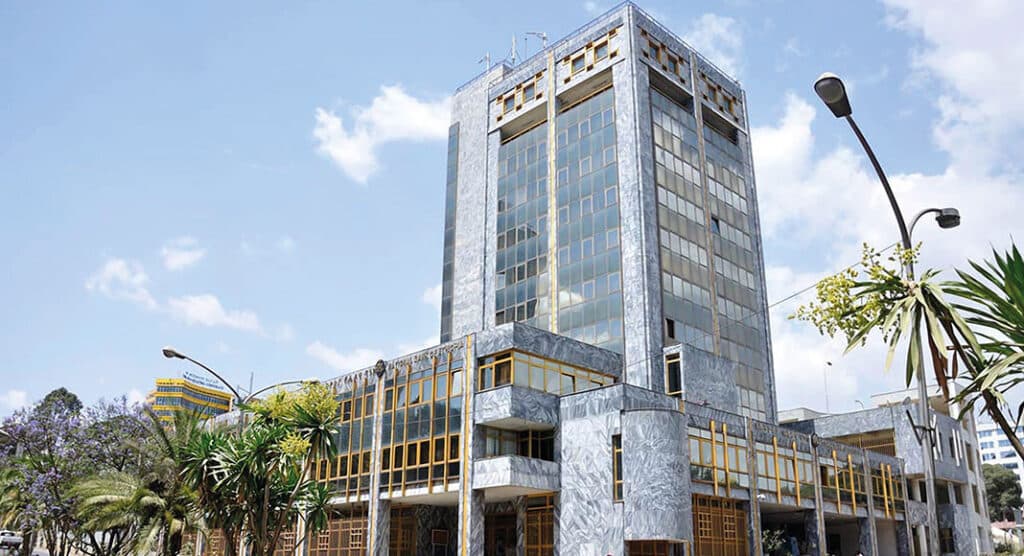
The National Bank of Ethiopia (NBE) has announced a major reform of its reserve requirement regime, issuing Directive No. SBB/97/2025, as part of broader efforts to modernize monetary policy and deepen the interbank money market.
The new directive, which replaces the 2022 framework, applies to all commercial banks operating in Ethiopia and will take effect on January 1, 2026. The reforms are aimed at improving liquidity management, stabilizing short-term interest rates, and enhancing the effectiveness of monetary policy transmission.
Unified Account Structure and New Benchmarks
Under the revised rules, banks are required to maintain a single Payment and Settlement Account denominated in Birr. Existing reserve accounts will be merged into this account and subsequently closed, streamlining reserve management and settlement operations.
The directive introduces two key statutory reserve benchmarks. Banks must maintain a daily minimum reserve balance of 5 percent of their previous month’s average reserve base, while also ensuring that the average reserve balance over the maintenance period reaches 10 percent of that same base.
To support this framework, the NBE has adopted a lagged reserve maintenance system. Reserve requirements will be calculated based on the previous month’s balance sheet data, with the maintenance period running from the first Thursday of the following month to the first Wednesday of the next month.
Gradual Transition to Full Compliance
Acknowledging the operational and liquidity implications for the banking sector, the central bank has introduced a phased transition toward the full 10 percent average reserve requirement.
Banks classified under Category 1 will be required to raise their average reserves from 8 percent in January 2026 to 10 percent by March 2026. Category 2 banks will follow a longer adjustment path, starting at 7.5 percent in January 2026 and reaching full compliance by June 2026.
Tight Reporting Standards and Penalties
The directive places strong emphasis on reporting discipline and enforcement. Banks are required to submit monthly reserve base reports on the first working day following the end of each calendar month, using the Ethiopian Automated Transfer System to report net monthly average reserve figures.
Non-compliance will attract significant penalties. Reserve shortfalls—whether on a daily or average basis—will be penalized at the National Bank’s Standing Lending Facility rate plus three percentage points. Repeated violations may also trigger administrative sanctions, including restrictions on lending and investment activities, bans on dividend declarations or branch expansion, and suspension of access to the NBE’s standing facilities.
Policy Rationale
According to the NBE, the revised framework is designed to introduce partial reserve averaging, giving banks greater flexibility to manage day-to-day liquidity while maintaining adequate system-wide buffers. By smoothing liquidity conditions, the central bank aims to reduce volatility in short-term interest rates and support the development of a more active interbank market.
The move marks another step in Ethiopia’s ongoing shift toward a more market-oriented monetary policy framework, as the central bank strengthens tools needed to manage liquidity in an increasingly liberalized financial system.



Comments