


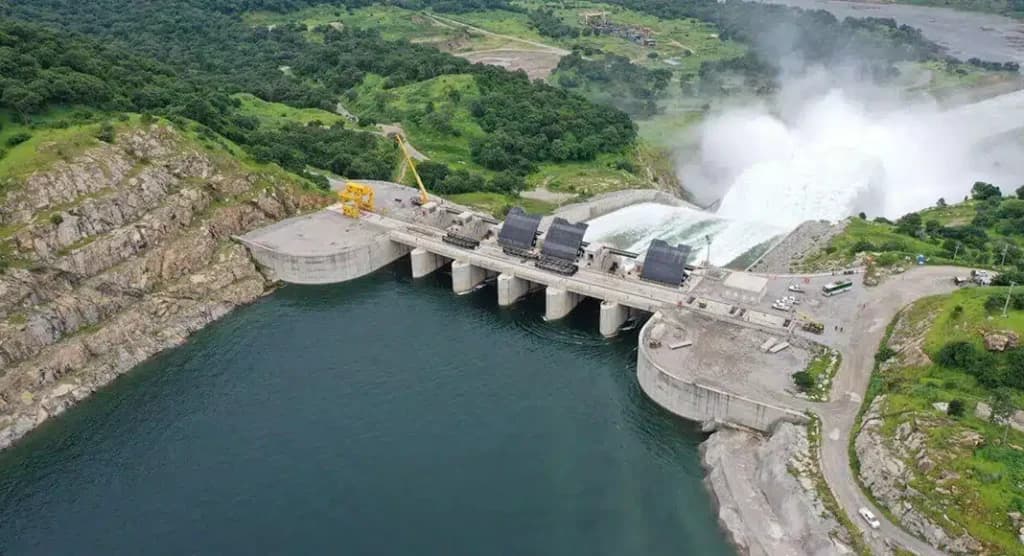
Ethiopia has completed the Grand Ethiopian Renaissance Dam (GERD), the largest hydroelectric project in Africa, financed almost entirely through domestic resources in what is widely regarded as a historic national achievement.
According to official figures, the Commercial Bank of Ethiopia (CBE) covered 91 percent of the financing, making it the cornerstone of the project’s funding model. Citizens and institutions also played a central role:
- 18.9 billion birr was raised through bond sales,
- 1.6 billion birr came from the Ethiopian diaspora,
- 3.2 billion birr was contributed in the form of gifts and donations, and
- 9 percent of the total cost was secured through direct public participation.
Launched in 2011, the GERD was self-financed after international funding was hindered by geopolitical tensions. Over the years, Ethiopians at home and abroad mobilized resources through salary contributions, donations, and investment schemes, turning the dam into a collective national mission.
With an installed generation capacity of 5,150 megawatts, the GERD has significantly boosted Ethiopia’s electricity supply, raising national electricity coverage to 54 percent. The government expects the project to transform industrial growth, expand access to millions of households, and generate export revenue by selling surplus power to neighboring countries.
Beyond its economic role, the GERD has become a powerful symbol of sovereignty, resilience, and unity. Its completion marks not just the realization of a multi-billion-dollar infrastructure project but also a rare example of how a nation can mobilize its people to deliver a transformative development milestone.
Comments