


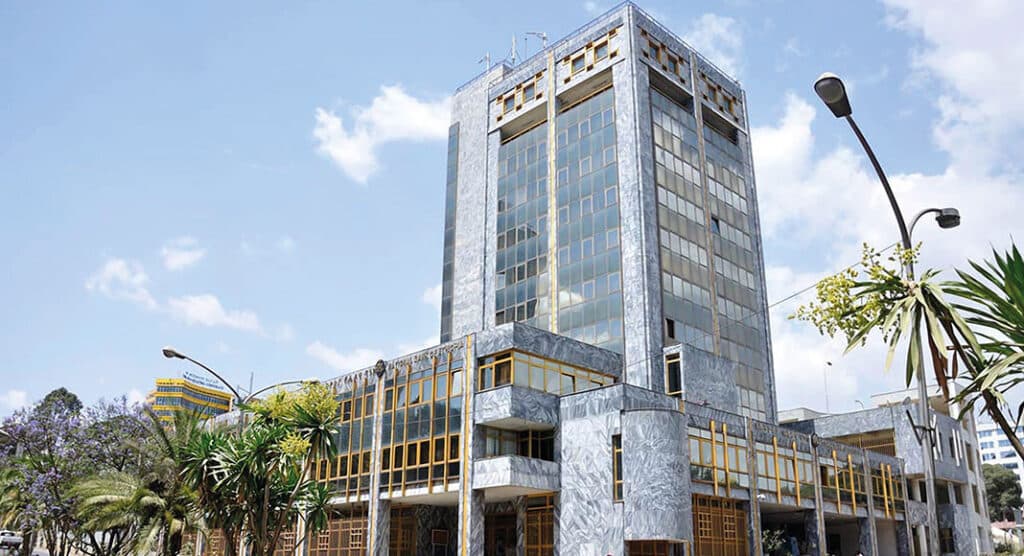
The National Bank of Ethiopia has released its third Financial Stability Report at a pivotal moment for the country’s economic reform agenda, offering a detailed assessment of a financial system that is holding firm, but not without emerging cracks beneath the surface.
Covering the fiscal year ending June 2025, the report presents a system that has remained resilient despite a difficult global backdrop marked by slowing growth, geopolitical tensions, and persistent external shocks. Domestically, however, the narrative is more encouraging.
Ethiopia recorded stronger economic growth alongside easing inflation, creating a more stable macroeconomic environment that has supported financial sector performance and improved the transmission of monetary policy.
This progress is closely tied to a series of reforms that have begun reshaping the economy. The shift toward a market-determined exchange rate and the gradual move to interest rate–based monetary policy have started to correct long-standing distortions.
These changes have improved foreign exchange inflows, narrowed external imbalances, and strengthened policy credibility. For financial institutions, the result has been improved liquidity conditions and a gradual return to positive real interest rates.
At the center of the system, the banking sector continues to demonstrate strength. Capital adequacy, asset quality, liquidity, and profitability have all improved compared to the previous year, while stress tests indicate that banks are capable of absorbing plausible shocks.
On the surface, this suggests a sector that is stable, well-capitalized, and positioned to support economic growth.
But the report makes it clear that stability does not mean the absence of risk. One of the most prominent structural concerns is the high level of concentration within the banking system. A single institution, the Commercial Bank of Ethiopia, accounts for a disproportionately large share of total assets.
Although it remains financially sound and has passed all major stress tests, its systemic importance introduces a level of vulnerability that cannot be ignored. Any disruption affecting this bank would have far-reaching implications for the entire financial system, making concentration risk one of the most critical issues to watch.
The transition to a more flexible exchange rate regime, while necessary and largely beneficial, also introduces new challenges. Currency depreciation has helped improve export competitiveness and external balances, but it comes at a cost.
A weaker birr increases the burden of external debt and can feed into domestic inflation through higher import prices. This creates a delicate balancing act for policymakers, as the gains from reform must be managed alongside the risks they generate.
Inflation itself, though on a downward trend, remains a source of uncertainty. The report points to progress in stabilizing prices, but the inflationary environment has not been fully tamed.
Persistent price pressures can erode purchasing power, distort investment decisions, and undermine confidence in financial institutions if they are not carefully controlled.
Another area of growing concern is the rapid expansion of digital financial services. Transaction values have surged dramatically, reflecting increased adoption and improved financial inclusion. However, this rapid growth is not without consequences.
As the system becomes more digitized, it is also more exposed to operational disruptions, cybersecurity threats, and fraud. The report underscores the need for stronger technological infrastructure, improved regulatory frameworks, and enhanced human capacity to manage these risks effectively.
Beyond these immediate concerns, the report highlights a deeper structural limitation: the lack of diversification within the financial system. Ethiopia remains heavily bank-dominated, with capital markets, insurance, and other financial institutions still playing a relatively small role.
While recent developments, including the emergence of a capital market and the growing role of institutional investors, are steps in the right direction, the system’s limited depth reduces its ability to distribute risk and absorb shocks efficiently.
External vulnerability also lingers in the background. Ethiopia’s economy remains sensitive to global developments, particularly in areas such as commodity prices, supply chains, and foreign exchange availability. In a world of continued geopolitical uncertainty, these external factors could quickly translate into domestic financial pressures.
Even the positive outlook for credit expansion carries its own risks. While increased lending is essential for supporting growth, rapid credit expansion can lead to a deterioration in asset quality if not accompanied by strong risk management practices.
The report implicitly warns that maintaining lending standards will be critical as the economy continues to recover and expand.
Across the broader financial sector, performance remains stable. Microfinance institutions, insurance companies, and capital goods finance firms all reported improvements in key indicators, while their relatively small size limits systemic risk.
At the same time, new pillars such as the capital market and the social security sector are gradually strengthening their role in liquidity management and long-term investment.
Taken together, the report presents a financial system that is stable, growing, and increasingly capable of supporting Ethiopia’s economic ambitions.
Yet it also makes clear that the nature of risk is evolving. The challenges ahead are no longer just about withstanding shocks, but about managing the complexities of reform, technological change, and structural transformation.
In that sense, Ethiopia’s financial system is entering a more sophisticated phase, one where resilience must be matched with adaptability. The foundation appears solid, but the path forward will depend on how effectively policymakers and institutions navigate the new risks that come with progress.

Comments