


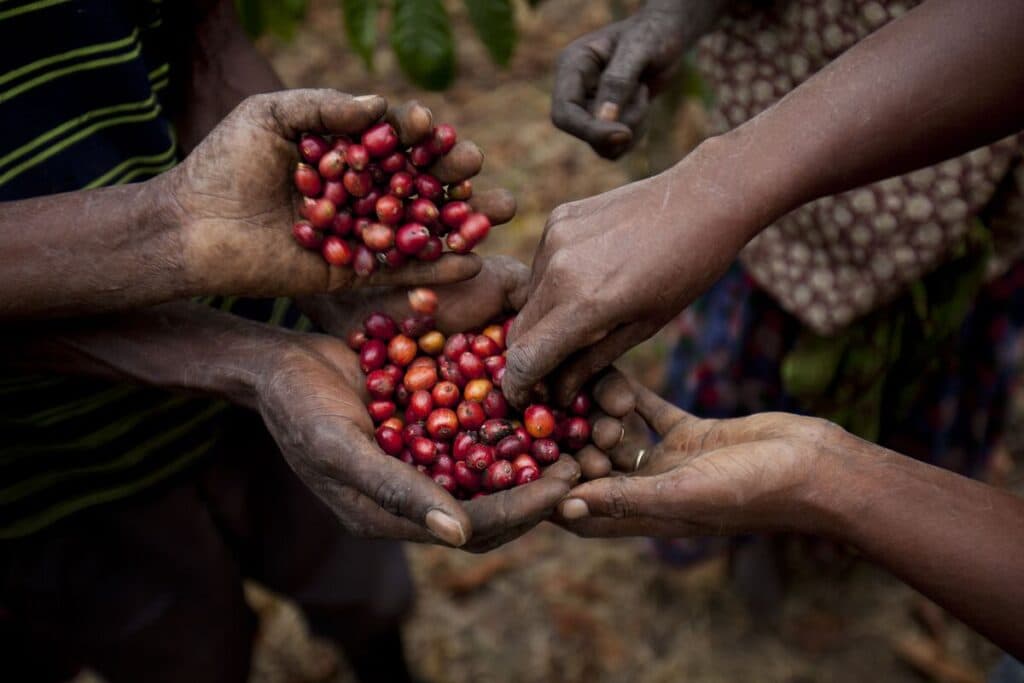
Ethiopia has set an ambitious target to double its annual coffee export earnings to $6 billion by 2031 after generating a record $3 billion from coffee exports during the 2025/26 fiscal year, prompting the government to launch a comprehensive five-year national coffee development package aimed at transforming the sector.
The announcement was made during a national consultative forum held at the Ministry of Agriculture on June 27, where government officials, researchers, coffee farmers, exporters, and industry representatives discussed a new strategy designed to significantly increase coffee production and productivity.
Agriculture Minister Addisu Arega said the record export performance provides a strong foundation for the country’s next phase of growth but acknowledged that Ethiopia’s coffee productivity remains well below global standards.
Despite being the birthplace of Arabica coffee, Ethiopia currently produces an average of 8–9 quintals of coffee per hectare, compared with around 15 quintals in Brazil and 22–25 quintals in Vietnam. Officials also noted that Ethiopian coffee farms typically cultivate only around 2,500 coffee trees per hectare, far below the international average of 5,000–7,000 trees, limiting overall output.
To address these gaps, the government has unveiled a national coffee development package that aims to raise average productivity to 21 quintals per hectare by 2031, more than doubling current yields.
The strategy combines nine major interventions across the coffee value chain, including the expansion of improved coffee varieties, increased planting density, better agronomic practices, enhanced post-harvest processing, and stronger research support.
A key component of the initiative is the construction of a tissue culture facility at the Jimma Agricultural Research Center, being developed in collaboration with the Agricultural Transformation Institute. The facility will enable the mass production of disease-resistant, climate-resilient, and high-yield hybrid coffee seedlings for distribution to farmers nationwide.
According to Ethiopian Coffee and Tea Authority Director General Adugna Debela, preparations have already been completed to modernize coffee production and processing systems across the country. He said the productivity improvements are expected to substantially increase both export volumes and foreign exchange earnings over the next five years.
Coffee remains Ethiopia’s largest agricultural export and one of the country’s most important economic sectors. The industry supports the livelihoods of more than six million smallholder farmers, while an estimated 30 million Ethiopians depend on the coffee value chain directly or indirectly.
The crop contributes around 35–40 percent of Ethiopia’s foreign exchange earnings, accounts for more than 30 percent of total export revenue, and represents roughly 4 percent of the country’s GDP.
Officials believe that achieving the productivity targets outlined in the new development package could enable Ethiopia to double annual coffee export earnings from the current $3 billion to $6 billion, strengthening its position in global specialty coffee markets while increasing foreign exchange inflows as the country continues broader economic reforms.
Source: Capital Ethiopia & EBR



Comments